

-
 Phone:+86 189 2494 9366
-
 E-mail:info@zsshengshi.com
-
 No.5, north of the first road, Guyi Changweiyong manufacturingdistrict, Guzhen, Zhongshan, Guangdong, P.R.C
Order Process Comparison: What B2B Buyers Should Verify Before RFQ

Order Process Comparison: What B2B Buyers Should Verify Before RFQ
Key Takeaways: A weak order process often shows up later as delayed samples, unclear revisions, finish variation, and avoidable rework. Before sending an RFQ, buyers should compare how suppliers control quoting, engineering review, sampling, production release, inspection, and change management—not just unit price. Reliable factories can prove their process with documents, records, and clear ownership at each stage.
In metal hardware and lighting accessories processing, many supplier problems begin before production starts. Buyers may receive acceptable quotations from several factories, yet the real difference appears in the order process: how the supplier reviews drawings, confirms materials and finishes, handles tolerances, manages samples, and releases production. For procurement teams comparing manufacturing partners, this is where commercial risk becomes visible.
An RFQ should not be treated as only a pricing event. It is also a process audit. If two suppliers quote similar parts but one cannot explain revision control, in-process inspection, or finish approval, the lower quote may become the more expensive option after delays, claims, and replacement shipments. This article focuses on what B2B buyers should verify before RFQ so supplier comparison is based on execution readiness, not assumptions.
Why This Decision Matters Commercially and Operationally
For custom metal brackets, stamped parts, threaded components, decorative covers, lamp body accessories, and other lighting hardware, the cost of a poor supplier decision is usually indirect at first. The initial purchase price may look competitive, but weak process control can increase total cost through engineering back-and-forth, repeated sample rounds, unstable plating color, packaging damage, missed vessel cutoffs, or mixed batches that are difficult to sort at receiving.
From a procurement perspective, the supplier’s order handling method affects more than lead time. It influences planning reliability, inventory exposure, cash flow, and customer service performance. From an engineering perspective, it affects whether critical dimensions, fit-up points, and surface requirements are understood before tooling or production starts. From a product manager’s perspective, it affects launch timing and the ability to scale without quality drift.
This is especially important when parts involve multiple secondary processes such as laser cutting, stamping, CNC machining, tapping, welding, polishing, powder coating, anodizing, electroplating, assembly, and custom packaging. The more process steps involved, the more buyers should verify how the supplier transfers information from quotation to production order and from production order to inspection standard.
Common Mistakes Buyers Make When Comparing Suppliers
A common sourcing mistake is comparing quotations line by line without checking whether suppliers are quoting the same scope. One factory may include tooling maintenance, finish testing, and export packaging, while another assumes basic packaging and no formal first article review. The quote looks cheaper, but the process is incomplete.
Another weak habit is relying on sample appearance alone. A good-looking sample does not prove the supplier can repeat the same finish, thread quality, assembly fit, or packaging protection across mass production. Buyers should verify whether sample approval is tied to a controlled specification, not only an email comment such as “sample approved.”
Other frequent mistakes include:
- Sending RFQs without final revision numbers or complete finish specifications.
- Comparing lead times without checking whether tooling, sample approval, and mass production are separated.
- Accepting MOQ statements without understanding if MOQ is driven by material purchase, plating lot size, or setup time.
- Assuming communication will improve after PO placement, even though quotation-stage responses were already slow or unclear.
- Failing to confirm who owns problem resolution when defects are found after shipment.
In factory-side practice, these gaps create preventable disputes. Most do not come from one major failure; they come from several small assumptions left unconfirmed before RFQ or before order release.
What Should Buyers Compare in a Supplier’s Order Process?
When comparing suppliers, buyers should review the process in sequence. The goal is to see whether the factory can move from inquiry to shipment with clear controls, measurable checkpoints, and accountable communication. The table below gives a practical side-by-side framework.
| Process Area | Supplier A: Strong Signal | Supplier B: Warning Sign | What Buyer Should Verify |
|---|---|---|---|
| RFQ review | Clarifies drawings, finish, MOQ | Quotes with many assumptions | Ask for excluded items, technical assumptions, and open points. |
| Engineering review | Reviews manufacturability before quote | No DFM feedback | Confirm tolerance capability, hole/thread control, and finish impact on fit. |
| Sampling stage | Defines sample plan and approval basis | Sends sample without records | Request dimensional report, finish reference, and revision traceability. |
| Production release | Uses approved sample and signed spec | Starts by email instruction only | Check how approved version is locked for mass production. |
| Quality control | Has in-process and final inspection | Only final sorting | Verify control plan, gauges, AQL, and defect escalation method. |
| Lead time control | Breaks out tooling, sample, mass production | One combined estimate | Ask for milestone dates and capacity assumptions. |
| Communication | Single owner with response discipline | Fragmented replies | Confirm who handles RFQ, project follow-up, and issue closure. |
| Change management | Controls revision updates formally | Uses latest email only | Ask how drawing revisions and ECNs are distributed internally. |
For supplier comparison, this type of process review is more useful than broad claims like “strict QC” or “fast delivery.” Buyers need to know how the factory actually controls variation and handoff points.
What Factory Capability Evidence Should Buyers Request?
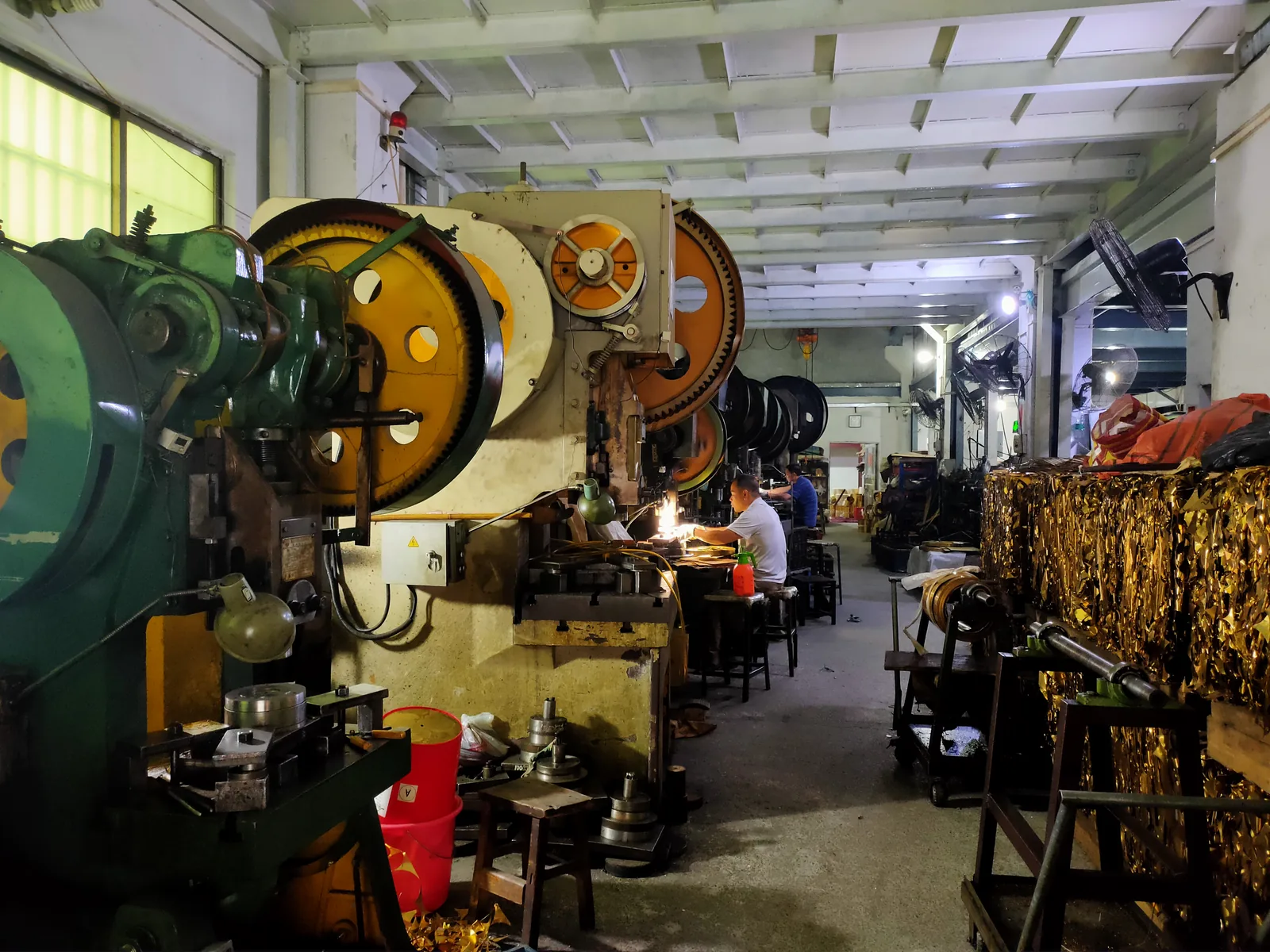
A reliable supplier should be able to prove capability with records, not just presentations. In metal hardware and lighting accessory projects, evidence should match the product risk. For simple flat parts, basic dimensional and finish controls may be enough. For visible decorative components or assembled parts, buyers should ask for stronger proof of repeatability.
Useful capability evidence includes:
- Recent dimensional inspection reports for similar part types.
- Material certificates for the proposed grade and thickness range.
- Finish samples or finish panels showing color, gloss, texture, or plating appearance.
- Photos or records of key equipment used for cutting, forming, welding, polishing, or coating.
- Examples of process flow charts, control plans, or first article forms.
- Packaging validation for scratch-sensitive or decorative items.
- Nonconformance and corrective action examples showing how issues are contained and closed.
If the supplier outsources critical finishing or secondary treatment, buyers should also confirm who manages that subcontractor and how incoming and outgoing quality is controlled. Finish consistency issues often come from this interface. A factory that owns fabrication but loosely manages plating or powder coating can still create major field complaints.
| Capability Area | Evidence to Request | Why It Matters |
|---|---|---|
| Dimensional control | Inspection report, gauge list | Shows tolerance control on critical features. |
| Surface finish | Approved finish panel, test result | Reduces color and texture disputes in visible parts. |
| Material traceability | Mill cert, receiving record | Confirms grade, thickness, and source consistency. |
| Process control | Flow chart, control plan | Shows where defects are prevented, not just found. |
| Packaging readiness | Pack-out spec, carton sample | Important for polished, coated, or assembled items. |
Practical Buyer Checklist Before RFQ
Before requesting quotation, buyers should make sure the technical and commercial package is strong enough to produce comparable offers. This reduces hidden assumptions and shortens the clarification cycle.
- Confirm drawing revision, units, tolerances, and critical-to-function features.
- Define material grade, thickness, hardness, and any substitution limits.
- Specify finish clearly, including color standard, texture, masking, and corrosion requirements.
- Separate prototype, pilot, and mass production quantities.
- State annual volume estimate and release pattern, not only first order quantity.
- Clarify packaging needs for export, retail, assembly line use, or drop-test sensitivity.
- Request quotation breakout for tooling, unit price, finish, assembly, and packaging if relevant.
- Ask for standard lead time by stage: tooling, sample, approval revision, and production.
- Define required documents such as first article report, material cert, or inspection report.
- Identify the commercial owner and technical owner on both sides.
If buyers do this well, the RFQ becomes a more accurate test of supplier fit. If not, the quote comparison will be distorted by missing scope and inconsistent assumptions.
How to Reduce Sourcing Risk Before Order Confirmation
Even after RFQ review, buyers should not release a production PO until key process risks are closed. For metal hardware and lighting accessories, the most common pre-order risk areas are quality interpretation, lead time realism, MOQ mismatch, and finish approval.
A practical approach is to convert each risk into a confirmation item. For example, if the part has visible cosmetic surfaces, define the cosmetic standard and acceptable viewing distance. If the part has threaded features after coating, confirm whether threads are masked, chased, or gauged after finish. If the order depends on a subcontracted finish line, confirm booking lead time and lot-size constraints. If MOQ is high, ask whether the supplier can separate raw material MOQ from finished goods MOQ or hold semi-finished stock for scheduled releases.
| Risk Area | Typical Failure | Pre-Order Confirmation |
|---|---|---|
| Quality | Spec interpreted differently | Approve sample against written criteria and inspection points. |
| Lead time | Quoted lead time not capacity-based | Request milestone plan and current loading assumptions. |
| Communication | Slow issue escalation | Set contact matrix, response timing, and approval owners. |
| MOQ | Excess stock or surcharge | Clarify MOQ driver and flexibility by process step. |
| Finish consistency | Batch color variation | Approve master sample or finish panel for batch reference. |
Buyers should also confirm what happens if a nonconformance is found. A dependable supplier can explain containment, replacement timing, root-cause analysis, and corrective action ownership. This is not only a quality question; it is a supply continuity question.
Conclusion: Compare the Order Process, Not Only the Quote
For B2B buyers sourcing metal hardware and lighting accessories, the safest supplier is not automatically the lowest-priced or fastest-responding one. The better choice is usually the factory that can show a disciplined order process from RFQ review through production release and shipment. That process should be visible in documents, sample controls, communication ownership, and realistic lead-time planning.
If you are comparing manufacturing partners, the next useful step is to review service capability against your part type, finish requirements, and order profile. You can also prepare a structured RFQ package and discuss OEM/ODM details, approval standards, and production expectations before moving to quotation.
For teams that want a more reliable sourcing decision, review the relevant Services information first, then move to an RFQ discussion with drawings, finish standards, and expected volumes prepared.
If your project involves finish, tolerance, or custom production questions, the next useful step is to review lighting hardware sourcing support and rfq before finalizing drawings, samples, or mass-production requirements.
 Floor Lamp Sets
 Wall Lamp Sets
 Table Lamp Sets
 Custom Hotel Parts
 Custom Made Parts
 Panels
 Tubes
Tubes Universal joints
 Machined Parts