

-
 Phone:+86 189 2494 9366
-
 E-mail:info@zsshengshi.com
-
 No.5, north of the first road, Guyi Changweiyong manufacturingdistrict, Guzhen, Zhongshan, Guangdong, P.R.C
Engineering Collaboration Proof: Factory Capabilities and QC Checks to Verify

Engineering Collaboration Proof: Factory Capabilities and QC Checks to Verify
Key Takeaways: Strong engineering collaboration should be verified through factory evidence, not sales claims. Buyers should compare process control, drawing review discipline, sample feedback speed, finish consistency, and QC records before approving a supplier. The best sourcing decisions come from confirming how a factory handles design changes, tolerances, inspections, and production risk before the first order is placed.
In metal hardware and lighting accessories processing, buyers often hear that a supplier offers good engineering collaboration. The problem is that this phrase is easy to say and hard to prove. For procurement teams, product managers, and engineers, the real question is whether a factory can convert drawings, samples, and performance requirements into repeatable production without creating hidden cost, delay, or quality exposure.
This matters especially when the project includes custom brackets, stamped parts, bent tubes, threaded components, decorative metal fittings, lamp body accessories, surface finishing, or assembly requirements. A supplier may quote competitively, but if their engineering review is weak, the buyer often pays later through rework, finish mismatch, assembly fit issues, unstable lead times, or repeated clarification rounds.
When buyers evaluate manufacturing partners, they should look for proof that the factory can support design intent, manufacturability, process control, and inspection discipline from first sample through mass production. That is the practical meaning of sourcing confidence.
Why this decision matters commercially and operationally
A weak supplier is not only a quality risk. It is also a commercial risk. In metal hardware and lighting accessory projects, engineering gaps usually appear in five places: quotation accuracy, sample turnaround, tolerance control, finish consistency, and change management. Each of these affects landed cost and launch timing.
For example, if a factory reviews drawings only at the quoting stage and does not issue a manufacturability check before tooling or production, the buyer may face late claims about difficult bends, hole position shifts, plating marks, weld cleanup, or packaging damage. These are not minor workshop issues. They directly affect scrap rate, assembly efficiency, return risk, and customer complaints.
Reliable suppliers help buyers reduce total sourcing cost by identifying these issues early. They can explain where tolerance is critical, where cosmetic standards need reference samples, where MOQ is driven by tooling or finishing batches, and where process sequence affects appearance and yield. That level of support is a stronger indicator of supplier value than a low initial price alone.
Common sourcing mistakes that weaken supplier comparison
Many supplier comparisons fail because buyers compare quotations without comparing production readiness. In practice, that creates a distorted view of supplier capability.
- Comparing unit price without confirming process route, material grade, and finishing assumptions.
- Approving samples without documenting critical dimensions, appearance standards, and acceptance limits.
- Assuming a responsive salesperson means the factory has strong engineering response.
- Requesting custom work without clarifying MOQ impact from tooling, setup time, or plating batch economics.
- Skipping QC document review and relying only on sample photos or verbal assurance.
- Not checking whether the factory controls outsourced processes such as plating, powder coating, anodizing, polishing, or salt spray testing.
These mistakes are common in hardware and lighting accessory sourcing because many parts look simple on paper. A stamped plate, threaded rod, canopy, clip, mounting bracket, or decorative sleeve may appear straightforward, but production stability depends on process discipline. Small deviations in burr control, hole alignment, coating thickness, color tone, or weld finishing can create visible problems in the final assembly.
What should buyers compare between suppliers?
A practical supplier review should compare how each factory handles engineering input, production execution, and quality evidence. Buyers should ask the same questions to each supplier and review the same proof set. This makes commercial evaluation more objective.
| Comparison Area | Weak Supplier Signal | Reliable Supplier Proof | Buyer Question |
|---|---|---|---|
| Drawing review | No DFM comments | Marked-up drawing with risk notes | What dimensions or finishes are high risk? |
| Sampling response | Only promises fast lead time | Sample plan with checkpoints | How are deviations reported during sampling? |
| Process capability | Generic machine list | Process flow matched to part type | Which steps are in-house and outsourced? |
| QC control | Final inspection only | Incoming, in-process, and final records | What checkpoints control critical dimensions? |
| Finish consistency | No master sample standard | Approved reference sample and test data | How is color or plating variation controlled? |
| Change management | Verbal updates only | Revision log and approval record | How are drawing changes released to production? |
| Lead time reliability | Single date with no breakdown | Lead time by tooling, sample, mass production | What are the schedule risks and buffers? |
| Communication discipline | Slow or vague replies | Clear issue list and action owner | Who owns technical follow-up inside the factory? |
This type of side-by-side comparison helps buyers separate presentation quality from execution quality. A supplier with fewer marketing materials but stronger process evidence is often the safer long-term partner.
What factory capability evidence should buyers request?
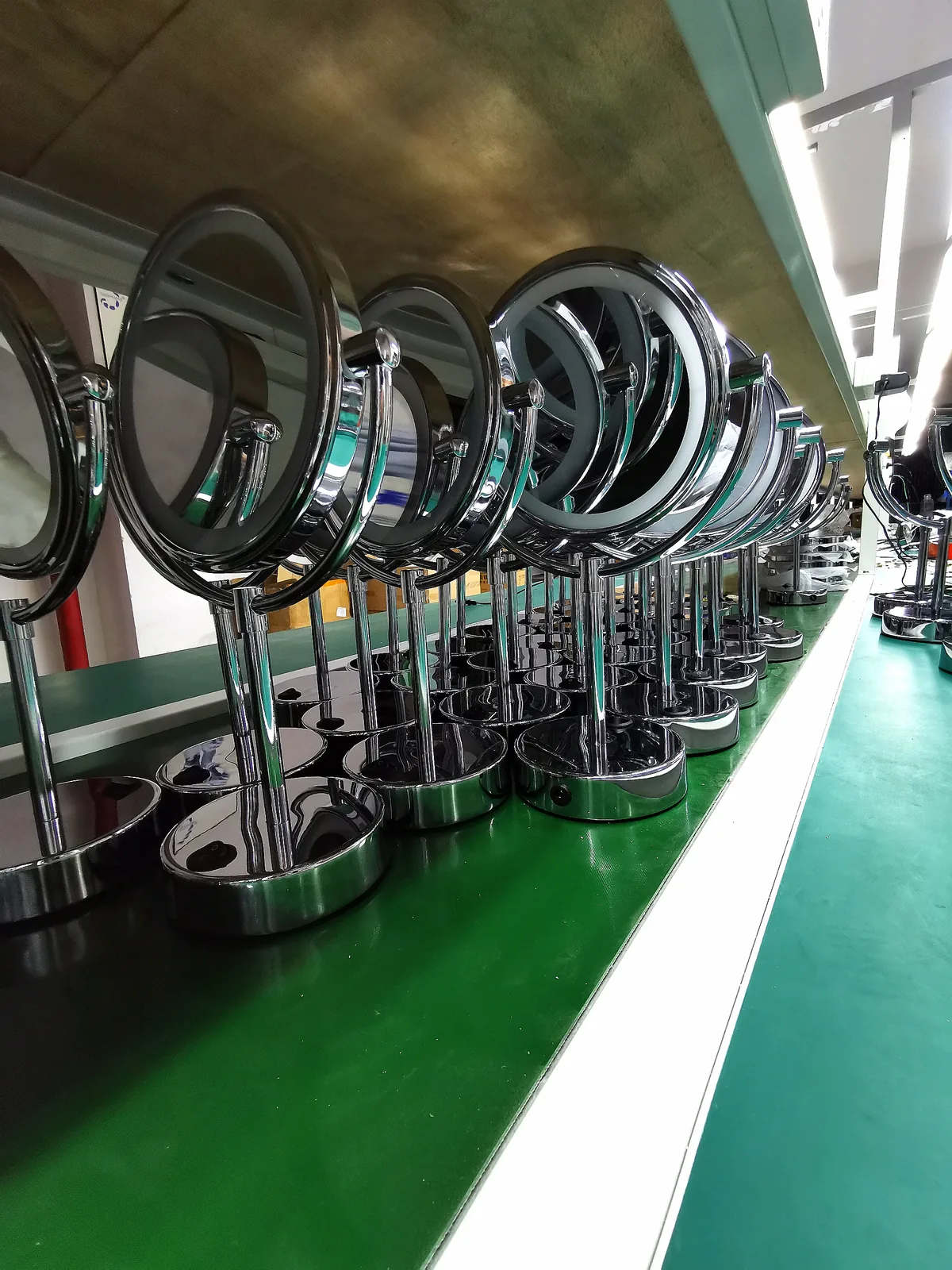
If buyers want proof instead of promises, they should request evidence tied to the actual part family being sourced. General factory photos are not enough. The evidence should show that the supplier can control the same type of manufacturing challenge your project contains.
For metal hardware and lighting accessories, useful capability evidence typically includes:
- Marked-up drawings or DFM feedback from a similar project.
- Process flow chart covering cutting, stamping, bending, welding, machining, polishing, plating, powder coating, assembly, and packing where relevant.
- Inspection plan showing critical dimensions, cosmetic checks, gauge use, and sampling frequency.
- First article or sample inspection report with measured results.
- Photos or records of fixture, tooling, gauges, and jigs used to stabilize repeatability.
- Material certificates and finish test reports such as salt spray, adhesion, thickness, or color reference controls.
- Nonconformance and corrective action examples showing how problems are traced and closed.
- Packaging validation for parts vulnerable to scratch, dent, deformation, or mixed-finish contamination.
A reliable supplier should also explain which operations are done in-house and which are subcontracted. This is especially important for surface finishing. Many quality complaints come from poor control of outsourced plating or coating, not from the base metal fabrication itself. Buyers should confirm who owns finish specifications, incoming checks after subcontracting, and lot traceability if appearance issues occur.
Practical evaluation checklist for engineering and QC readiness
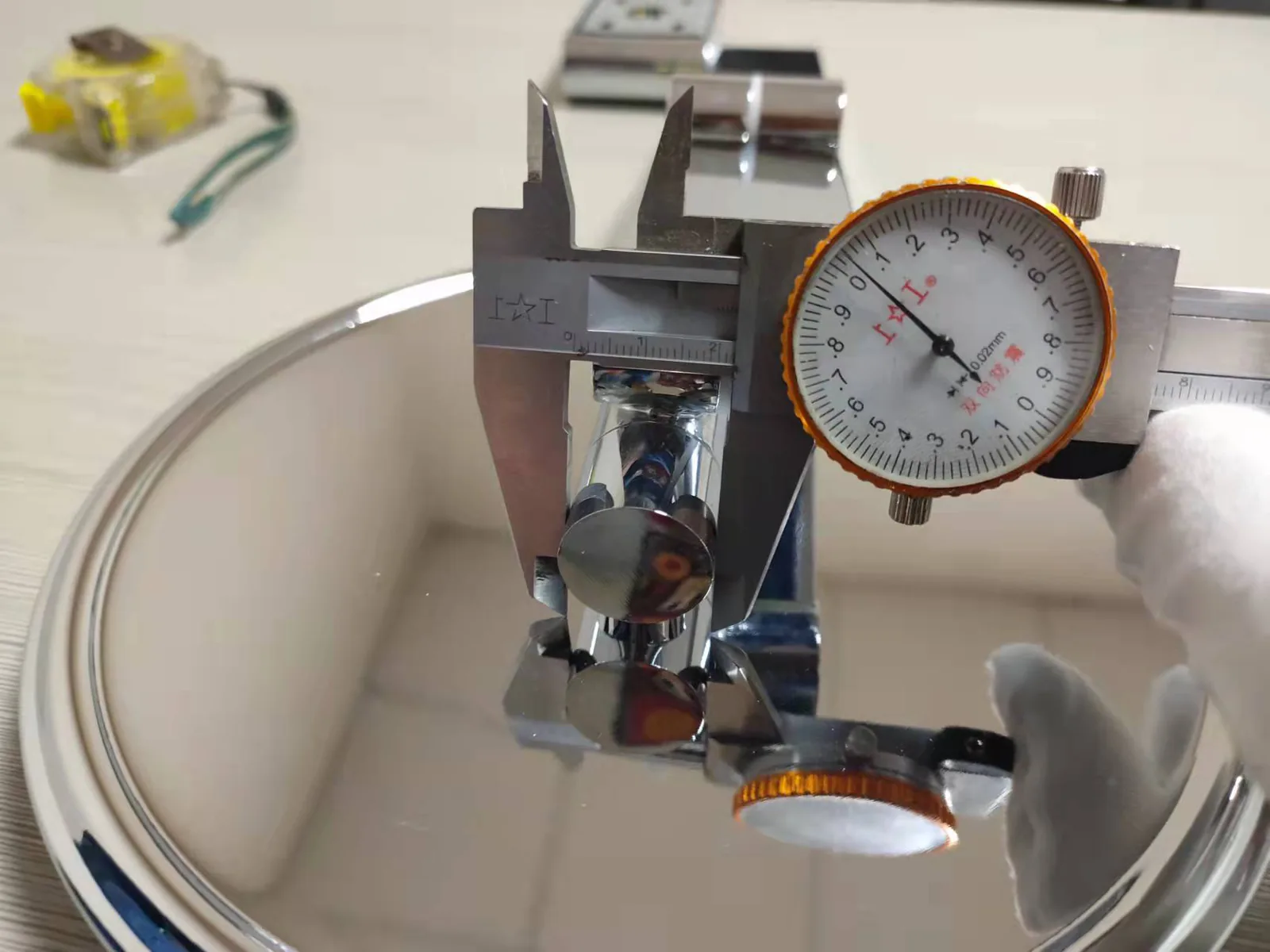
Before moving from quotation to order placement, buyers can use the following framework to test whether a supplier is truly ready for custom or repeat production.
| Checkpoint | Status | What to Confirm |
|---|---|---|
| Drawing and revision are formally confirmed | Yes/No | Latest file, tolerances, finish code, assembly notes |
| Critical dimensions are identified | Yes/No | Fit-related features, hole positions, threads, flatness |
| Appearance standard is documented | Yes/No | Reference sample, allowable marks, color expectation |
| Process route is approved | Yes/No | Main operations, outsourced steps, bottlenecks |
| QC checkpoints are defined | Yes/No | Incoming, in-process, final inspection criteria |
| Sample deviations are closed | Yes/No | Open issues list and corrective actions |
| MOQ and batch logic are explained | Yes/No | Tooling, setup, finish lot, packaging impact |
| Lead time breakdown is realistic | Yes/No | Material, tooling, sample, production, finishing |
| Packaging method is validated | Yes/No | Scratch prevention, separation, carton strength |
This checklist is useful because it forces technical clarity before commercial commitment. It also helps procurement and engineering teams align internally. Many order problems start when one side assumes a point was already understood by the factory.
How to reduce sourcing risk before order confirmation
The best time to reduce risk is before PO release, not after first shipment failure. Buyers should use the sample stage to validate both the product and the supplier’s working method.
First, require a formal sample review record. This should capture measured dimensions, cosmetic observations, finish test results if relevant, and all deviations against drawing or approved sample. If a supplier corrects issues quickly and documents the changes clearly, that is a positive signal of production discipline.
Second, confirm communication ownership. For custom hardware and lighting accessories, unclear responsibility between sales, engineering, production, and QC creates delay. Buyers should know who answers technical questions, who signs off on revisions, and who reports nonconformance.
Third, test lead time claims against the real process. A supplier that quotes twenty days but depends on overloaded outside plating vendors may be less reliable than one quoting twenty-five days with a transparent schedule. Buyers should ask what can delay the order and what contingency exists.
Fourth, verify finish consistency controls. In lighting accessories and visible hardware, appearance is often the acceptance driver. Buyers should confirm reference samples, finish codes, gloss or color standards where applicable, rack marks or contact-point expectations, and packaging methods that prevent abrasion during transport.
Finally, do not leave MOQ discussions too late. Low-volume custom projects can become commercially difficult if tooling amortization, setup waste, or plating minimums were not discussed early. A reliable supplier should explain the cost structure and suggest practical adjustments, such as combining finishes, standardizing thickness, or aligning order quantities with process economics.
Conclusion: verify engineering collaboration with evidence, not assumptions
Real engineering collaboration in manufacturing is visible in how a factory reviews drawings, identifies risks, controls process steps, documents inspections, and communicates changes. For buyers sourcing metal hardware and lighting accessories, that proof matters more than broad capability claims.
Before selecting a supplier, compare the evidence behind sampling, QC, finish control, lead time planning, and revision management. If you are reviewing potential manufacturing partners, the next useful step is to examine the supplier’s About Us and Services information to see how their stated capabilities match your product requirements, then discuss OEM/ODM or custom project details with the team if your drawings or specifications need a practical factory review.
If your project involves finish, tolerance, or custom production questions, the next useful step is to review factory capability overview and lighting hardware sourcing support before finalizing drawings, samples, or mass-production requirements.
 Floor Lamp Sets
 Wall Lamp Sets
 Table Lamp Sets
 Custom Hotel Parts
 Custom Made Parts
 Panels
 Tubes
Tubes Universal joints
 Machined Parts