

-
 Phone:+86 189 2494 9366
-
 E-mail:info@zsshengshi.com
-
 No.5, north of the first road, Guyi Changweiyong manufacturingdistrict, Guzhen, Zhongshan, Guangdong, P.R.C
Design Support Capabilities to Verify Before Approving a Metal Hardware Supplier

Design Support Capabilities to Verify Before Approving a Metal Hardware Supplier
Key Takeaways: Strong design support is not just a quoting convenience; it directly affects manufacturability, finish consistency, tooling cost, lead time, and change control. Before approving a metal hardware supplier, buyers should verify engineering response quality, drawing review discipline, sample validation, and documented proof of process capability. The safest sourcing decisions are based on evidence, not claims.
For buyers of metal hardware and lighting accessory components, supplier approval often focuses on price, capacity, and basic quality records. Those factors matter, but they do not tell the full story. In custom or semi-custom projects, design support is often the difference between a smooth launch and repeated engineering corrections, finish disputes, tooling rework, or delayed delivery.
This is especially true when parts involve stamping, bending, welding, threading, die casting, polishing, plating, powder coating, or assembly steps that interact with each other. A supplier may be able to make the part eventually, but if its engineering team cannot review drawings early, flag manufacturability risks, and control revisions correctly, the buyer absorbs the cost later through scrap, schedule pressure, and commercial friction.
For procurement teams, product managers, and engineers comparing manufacturing partners, the practical question is simple: what should a supplier be able to prove before you trust its design input?
Why this decision matters commercially and operationally
In metal hardware sourcing, poor design-stage alignment rarely stays confined to engineering. It shows up in total landed cost, line stoppage risk, and supplier relationship strain. A supplier with real design review capability can help reduce unnecessary tolerances, simplify part geometry, improve fixture access, recommend finish-compatible edge conditions, and identify assembly interference before tooling is cut.
From a commercial standpoint, this affects:
- Tooling investment and whether modifications are needed after first samples
- MOQ pressure caused by inefficient process routing or unstable setups
- Lead time reliability when engineering changes occur mid-project
- Finish consistency across batches, especially for visible lighting accessories
- Quality cost tied to dimensional drift, burrs, weld marks, or coating defects
- Communication efficiency between buyer, factory, and downstream assembly teams
For lighting accessories in particular, cosmetic acceptance and fit-up requirements are often tighter than buyers first expect. A bracket, housing ring, mounting plate, tube, or decorative metal trim may be structurally simple, but if hole position, flatness, surface preparation, or coating thickness is not considered during design review, final assembly quality can still fail.
That is why supplier comparison should not stop at “Do they have engineers?” The better question is whether those engineers can translate design intent into repeatable production.
Common mistakes buyers make when comparing design support
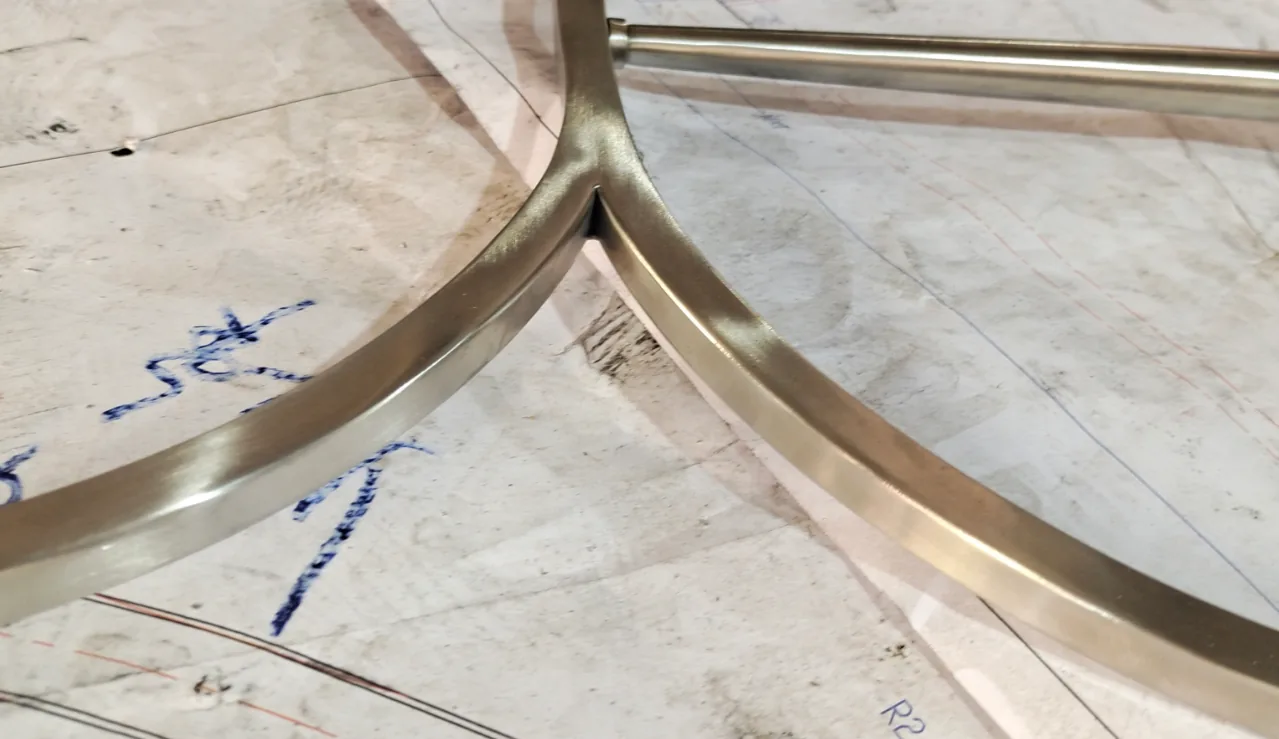
Many sourcing teams ask for technical support, but they do not evaluate it in a structured way. This creates false confidence during supplier selection.
The most common weak comparison habits include:
- Accepting verbal claims of engineering capability without reviewing actual output
- Comparing only quote speed instead of the quality of DFM feedback
- Assuming sample approval proves process stability for mass production
- Not checking whether drawing revisions are controlled formally
- Ignoring how finish requirements affect edge prep, weld cleanup, and masking
- Failing to confirm whether the supplier can support OEM changes after pilot run
- Overlooking communication gaps between sales staff and factory engineering teams
A fast quotation with no technical comments is not always a positive sign. In many cases, it means the supplier has not reviewed stack-up tolerances, process feasibility, or finishing constraints deeply enough. That may help secure the order, but it increases the chance of later exceptions, price adjustments, or nonconformance claims.
What should buyers compare between suppliers?
When evaluating metal hardware suppliers, buyers should compare design support as a capability set, not as a general promise. The table below provides a practical side-by-side framework.
| Evaluation Area | Weak Supplier | Acceptable Supplier | Reliable Supplier to Prefer |
|---|---|---|---|
| Drawing review | Quotes with no comments | Flags obvious issues | Provides structured DFM notes with dimensions, process, and risk points |
| Tolerance understanding | Agrees to all tolerances | Questions difficult tolerances | Recommends critical-to-quality control points and realistic process limits |
| Finish review | Treats finish as final step only | Confirms finish type | Reviews substrate, edge condition, surface prep, and appearance standard |
| Prototype support | Only offers production route | Can make samples | Defines prototype purpose, deviation list, and transition plan to mass production |
| Revision control | Email-based only | Tracks latest files | Uses formal document control with version confirmation before release |
| Cross-functional response | Sales relays answers slowly | Engineer joins when needed | Engineering, quality, and production align on response and action plan |
| Change management | Handles changes informally | Updates quote and drawing | Confirms cost, tooling impact, lead time, stock exposure, and sample need |
This comparison method helps buyers separate responsive suppliers from capable ones. The right partner does not simply say yes; it identifies where the design, process, and quality plan must align.
What factory capability evidence should buyers request?
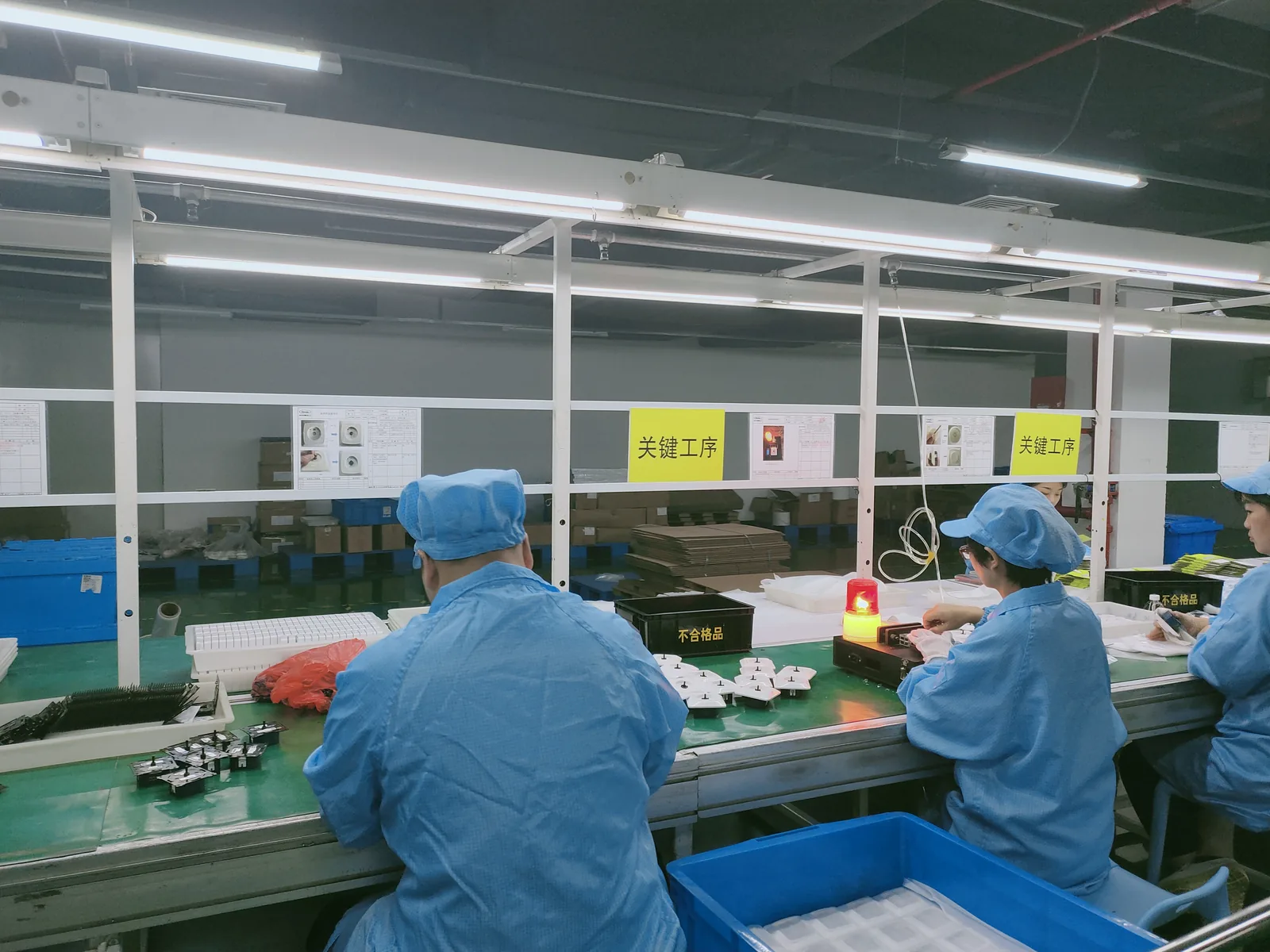
If a supplier claims strong design support, ask for evidence that can be reviewed before nomination. Buyers should request proof that the engineering function is connected to actual production control, not isolated from it.
Useful capability evidence includes:
- Sample DFM reports or marked-up drawing reviews from similar metal parts
- Engineering change notice format and revision control procedure
- First article inspection reports tied to drawing balloon numbers
- Process flow chart for the quoted part family
- Control plan or in-process inspection checkpoints
- Tooling design review records or fixture validation examples
- Finish specification verification records, such as coating thickness or salt spray reports where relevant
- Photos or videos showing prototype, welding, polishing, plating, coating, or assembly capability
- Case examples of how a manufacturability issue was corrected before mass production
The key is not to collect documents for formality. Review whether the evidence shows practical thinking. For example, a marked-up drawing that identifies burr-sensitive edges, hidden cosmetic zones, thread protection needs, or weld distortion risk is more valuable than a generic capability brochure.
Procurement teams should also confirm who creates and approves these records. If all technical documents are outsourced or prepared only after an issue occurs, the supplier may not have enough internal control to support complex OEM work.
A practical checklist before approving a supplier
Below is a compact buyer checklist that can be used during RFQ review, technical meetings, or supplier audits.
| Checkpoint | Yes/No | What to Confirm |
|---|---|---|
| Supplier reviewed drawings before quoting | Written comments on feasibility, tolerance, and finish | |
| Critical dimensions are identified | CTQ points linked to process and inspection method | |
| Prototype route is defined | Prototype limitations versus mass production route | |
| Finish standard is mutually understood | Color, gloss, texture, masking, and cosmetic acceptance area | |
| Revision control is documented | Latest drawing, BOM, and sample status confirmation | |
| MOQ and tooling assumptions are clear | Batch size, setup logic, and tooling amortization basis | |
| Lead time includes engineering steps | Time for review, samples, correction, and approval cycle | |
| Quality evidence matches the part type | Relevant reports for welding, plating, coating, or assembly |
This checklist is useful because it converts broad supplier claims into approval points that can be verified. It also helps internal teams align procurement, engineering, and quality before committing to a factory.
How to reduce sourcing risk before order confirmation
Even after a supplier performs well during quoting, buyers should still reduce execution risk before issuing the first production order. This is where many sourcing programs fail: they approve the supplier generally, but do not lock down the part-specific requirements clearly enough.
Before order confirmation, buyers should verify five points:
- Approved technical package: drawing revision, material grade, finish standard, assembly notes, and packaging requirements must match the quote and sample records.
- Defined sample status: confirm whether the approved sample was hand-made, soft-tool, production-tool, or pilot-run output.
- Known process risks: document any open issues such as weld pull, flatness variation, plating buildup on threads, or color variation between lots.
- Inspection agreement: align on critical dimensions, appearance criteria, measurement method, and reporting format.
- Change communication path: confirm who approves design updates, who receives revision notices, and how old stock or WIP will be handled.
This step is particularly important when MOQ is meaningful. If the supplier requires a larger batch to stabilize cost, but the design is still evolving, the buyer may end up holding inventory that no longer matches the latest assembly requirement. Strong design support should include the discipline to warn against this situation.
Buyers should also watch for finish-related misunderstandings. In lighting accessories and visible hardware, finish consistency is often a bigger source of complaints than dimensional failure. Confirm whether the supplier has master samples, color boundaries, gloss tolerance, and defined viewing conditions. Without that, “acceptable appearance” becomes subjective and difficult to enforce commercially.
Conclusion: approve suppliers based on proof, not confidence alone
When sourcing custom metal hardware, reliable design support should be treated as an approval criterion, not an extra service. Buyers should compare how suppliers review drawings, challenge weak assumptions, manage revisions, and connect engineering decisions to production control. The supplier that gives the most reassuring answer is not always the one with the lowest risk.
A practical next step is to review the factory’s Services and About Us information with your current RFQ checklist in hand. If your project includes OEM or ODM requirements, visible finishes, or multi-step metal processing, a direct sourcing conversation can help confirm whether the supplier’s engineering and production teams are aligned before you move to tooling or production approval.
If your project involves finish, tolerance, or custom production questions, the next useful step is to review factory capability overview and lighting hardware sourcing support before finalizing drawings, samples, or mass-production requirements.
 Floor Lamp Sets
 Wall Lamp Sets
 Table Lamp Sets
 Custom Hotel Parts
 Custom Made Parts
 Panels
 Tubes
Tubes Universal joints
 Machined Parts