

-
 Phone:+86 189 2494 9366
-
 E-mail:info@zsshengshi.com
-
 No.5, north of the first road, Guyi Changweiyong manufacturingdistrict, Guzhen, Zhongshan, Guangdong, P.R.C
Customization Process: What to Compare Before Choosing a Metal Hardware Supplier

Customization Process: What to Compare Before Choosing a Metal Hardware Supplier
Key Takeaways: In metal hardware and lighting accessories sourcing, the customization process should be compared as a full factory system, not just a quoted unit price. Buyers should verify engineering support, process control, finish consistency, MOQ flexibility, and communication discipline before approving samples or placing production orders.
For procurement teams and product managers, choosing a supplier for custom metal parts is rarely a simple price comparison. In the metal hardware and lighting accessories sector, the real difference between suppliers often appears inside the customization process: how they review drawings, control tolerances, manage finishing, handle engineering changes, and move from sample approval to stable mass production.
A supplier may look competitive on paper but still create avoidable cost through delayed sampling, inconsistent plating color, unclear DFM feedback, or poor communication on tooling and lead times. That is why buyers need to compare suppliers based on production readiness and execution discipline, not just sales responsiveness.
This guide focuses on what to compare before selecting a metal hardware supplier, what evidence reliable factories should provide, and what to confirm before releasing an order.
Why This Decision Matters Commercially and Operationally
In custom metal hardware programs, early supplier selection affects more than the first PO. It influences tooling cost, defect exposure, launch timing, field reliability, and the amount of internal coordination required from your team. If the supplier lacks process discipline, the buyer often becomes the project manager, quality engineer, and escalation point at the same time.
This matters especially for lighting accessories and decorative hardware, where appearance standards are often as important as dimensional fit. A factory that can machine, stamp, bend, weld, polish, and finish parts is not automatically capable of keeping surface appearance consistent across batches. Finish variation, burr control, thread quality, and assembly fit can all affect downstream product performance and brand perception.
From a commercial standpoint, weak supplier selection typically shows up in five areas:
- Higher total landed cost due to scrap, rework, and repeated sampling
- Longer development cycles because drawings are not reviewed properly upfront
- Unstable lead time caused by poor planning or overloaded subcontract finishing
- Quality claims tied to tolerance drift or inconsistent surface treatment
- Internal resource drain from excessive follow-up and issue resolution
A capable supplier reduces these costs by making the customization process predictable. That is usually more valuable than a slightly lower quoted price.
Common Mistakes Buyers Make When Comparing Suppliers
Many sourcing teams use RFQ responses to shortlist suppliers, but the comparison method is often too narrow. In custom metal projects, this creates blind spots that only become visible after tooling starts or trial production begins.
The most common weak comparison habits include:
- Comparing quoted unit price without separating tooling, setup, finish, packaging, and secondary operations
- Assuming all factories interpret drawings and tolerance notes the same way
- Failing to confirm whether critical processes are in-house or outsourced
- Approving samples without clarifying mass-production inspection standards
- Ignoring MOQ logic until after design freeze or launch planning
- Accepting generic quality claims without process records or inspection examples
- Overlooking communication speed and issue-closure discipline during development
One practical rule: if a supplier cannot explain risk before production, they are unlikely to control it during production. Strong factories usually ask specific questions about material grade, finish standard, use environment, assembly method, cosmetic zones, and acceptance criteria. Weak suppliers simply quote fast and wait for problems to appear later.
What Should Buyers Compare Between Metal Hardware Suppliers?
When reviewing suppliers, buyers should compare the full execution path from drawing intake to shipment. The table below gives a practical side-by-side framework for metal hardware and lighting accessory sourcing.
| Comparison Area | What Strong Suppliers Show | Warning Signs | Buyer Question |
|---|---|---|---|
| Drawing review | DFM feedback with tolerance and process notes | Quotes without technical comments | What risks do you see in this design? |
| Process capability | Clear in-house and outsourced scope | Vague answers on secondary operations | Which steps are controlled internally? |
| Finish consistency | Sample panels, finish specs, batch controls | Only promises to match color visually | How do you control plating or coating variation? |
| Quality control | Inspection plan, records, gauge list | Generic “100% inspection” claim | What is checked at sample and mass-production stage? |
| Lead time control | Milestone schedule by process step | Single total lead time only | What are the longest lead-time operations? |
| MOQ flexibility | Explains MOQ by process economics | Rigid MOQ with no cost logic | Can MOQ change by finish or tooling setup? |
| Communication | Fast answers with technical ownership | Sales-only responses, no engineer input | Who owns technical changes after approval? |
| Change management | Revision control and approval flow | Informal updates by email only | How do you prevent old revision production? |
This kind of comparison helps buyers evaluate whether a supplier is ready for repeatable production, not just prototype support.
What Factory Capability Evidence Should Buyers Request?
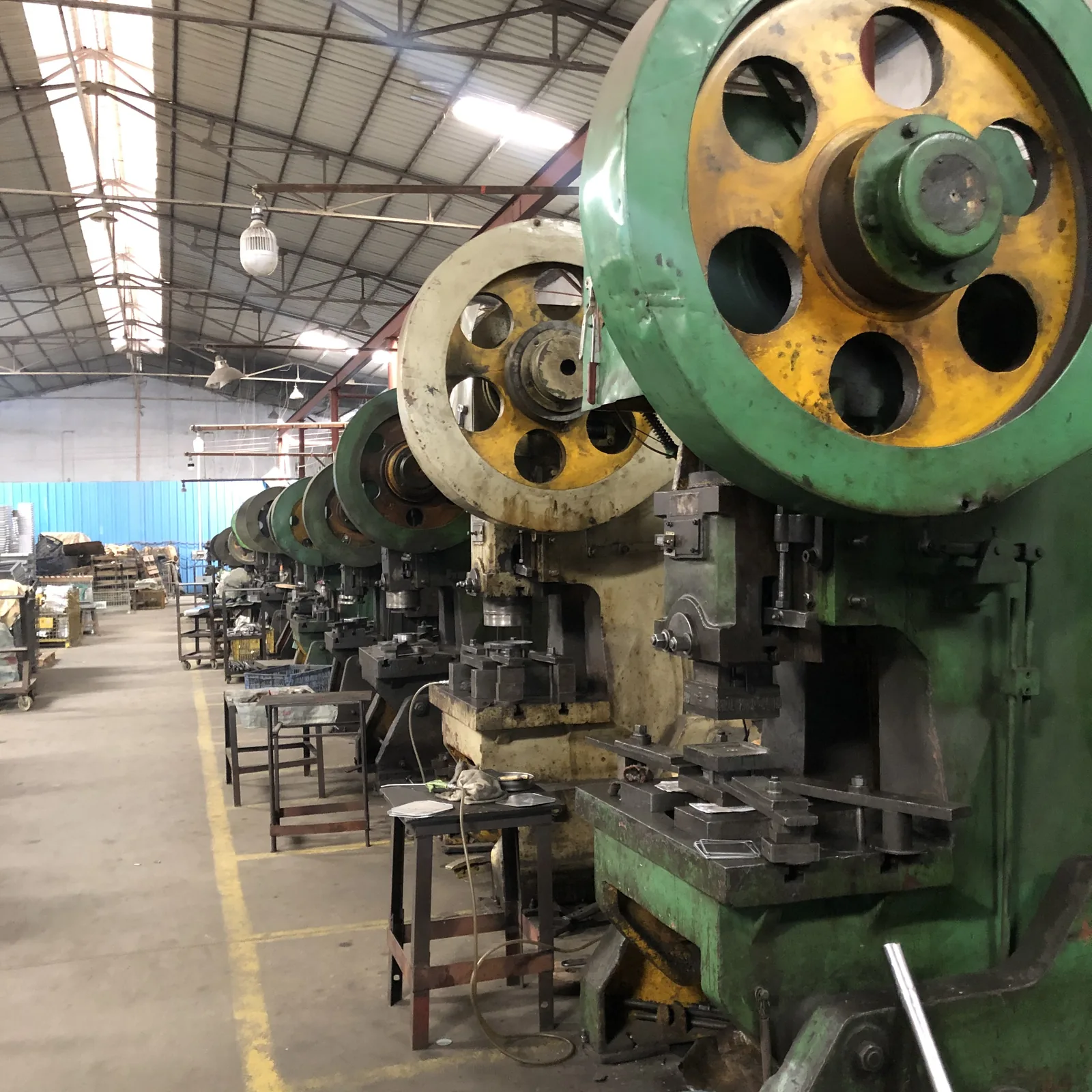
Reliable suppliers should be able to prove capability with documents, samples, records, and process visibility. Buyers should not rely on capability statements alone. Requesting evidence early is one of the best ways to test whether the supplier has real control over the customization process.
Useful capability evidence includes:
- DFM or technical review comments against your drawing
- Material certificates for the specified grade
- Dimensional inspection reports from similar parts
- Finish test reports or salt spray records where relevant
- Photos or videos of key equipment and secondary operations
- Examples of packaging methods for scratch-sensitive parts
- Control plan, inspection flow, or first article format
- Sample retention and traceability method
For lighting accessories and decorative hardware, finish evidence is especially important. Surface issues often create the highest complaint rate because they are visible immediately. Ask suppliers to show how they define acceptable color range, gloss, texture, adhesion, and cosmetic defect limits. If finishing is outsourced, confirm who approves the standard and who owns corrective action when lots vary.
| Evidence Type | Why It Matters | What Buyers Should Confirm |
|---|---|---|
| First article report | Shows dimensional understanding | Critical dimensions are identified and measured |
| Finish sample board | Sets visual acceptance baseline | Approved standard is retained for future lots |
| Process flow chart | Reveals production sequence and risk points | High-risk steps have checkpoints |
| Gauge and test list | Confirms inspection readiness | Measurement method matches tolerance requirement |
| Packaging sample | Protects finished surfaces in transit | Prevents scratches, dents, and mixed-part issues |
Practical Supplier Evaluation Checklist
A simple scoring framework helps procurement and engineering teams align before supplier nomination. The point is not to create a complex audit system, but to compare the factors that most affect delivery and quality performance.
| Evaluation Item | Weight | Minimum Acceptable Signal | Buyer Note |
|---|---|---|---|
| Technical review quality | 20% | Specific DFM comments | Tests engineering depth early |
| Process and equipment fit | 20% | Clear process ownership | Checks real manufacturing match |
| Quality documentation | 15% | Reports and control plan | Confirms inspection discipline |
| Finish control capability | 15% | Approved finish sample method | Critical for visible parts |
| Lead time realism | 10% | Milestone-based plan | Avoids optimistic quoting |
| MOQ and commercial fit | 10% | Transparent MOQ logic | Supports launch planning |
| Communication and response speed | 10% | Fast, clear, technical replies | Predicts project management quality |
If two suppliers are close on price, this framework usually makes the better long-term choice more visible.
How to Reduce Sourcing Risk Before Order Confirmation
Before issuing a production PO, buyers should close the gap between sample approval and mass-production reality. Many disputes happen because the approved sample, technical file, and commercial assumptions are not fully aligned.
Confirm these points before order release:
- Final drawing revision, including material, tolerance, thread, and finish notes
- Approved sample reference and retention method
- Critical quality checkpoints and acceptance standard
- Packaging method for transport and storage conditions
- Tooling ownership, maintenance responsibility, and replacement terms
- Mass-production lead time by process stage
- MOQ by SKU, finish, and packaging configuration
- Change approval method for engineering or cosmetic updates
For custom hardware, finish consistency deserves extra emphasis. The supplier should confirm whether the approved sample is the exact production route, not a hand-finished sample prepared differently from mass production. This is a common source of disappointment in decorative and lighting-related components.
It is also good practice to request a pilot run or pre-production lot for new programs with tight cosmetic requirements. This gives buyers a better view of process stability, packaging effectiveness, and communication quality under production conditions.
Conclusion
A reliable supplier comparison should examine the full customization process, from technical review and sampling to finish control and production execution. The best metal hardware partner is not simply the one with the lowest quote, but the one that can prove process capability, communicate risk early, and deliver repeatable quality at the agreed commercial terms.
If you are reviewing potential suppliers for custom metal hardware or lighting accessories, the next practical step is to compare service capability against your drawing, finish, and volume requirements. You can also submit an RFQ to review manufacturability, lead-time assumptions, and production-fit questions before moving into sampling.
 Floor Lamp Sets
 Wall Lamp Sets
 Table Lamp Sets
 Custom Hotel Parts
 Custom Made Parts
 Panels
 Tubes
Tubes Universal joints
 Machined Parts