

-
 Phone:+86 189 2494 9366
-
 E-mail:info@zsshengshi.com
-
 No.5, north of the first road, Guyi Changweiyong manufacturingdistrict, Guzhen, Zhongshan, Guangdong, P.R.C
How to Match Replacement Parts to Your Project Requirements

How to Match Replacement Parts to Your Project Requirements
Key Takeaways: Choosing replacement parts is not just about matching dimensions; buyers also need to confirm material grade, finish performance, tolerance control, and supplier production capability. The right sourcing decision reduces fit failures, finish inconsistency, and avoidable delays, especially in metal hardware and lighting accessory projects with repeat production needs.
For procurement teams and engineers, sourcing replacement parts often starts with an urgent need: a lamp fitting must match an installed assembly, a bracket must fit existing mounting points, or a metal hardware component must perform like the original without forcing a redesign. In practice, the challenge is rarely limited to shape alone. Buyers must confirm whether the new part will match the project’s mechanical function, surface finish, assembly process, compliance expectations, and replenishment timeline.
In metal hardware and lighting accessories processing, a replacement part can look correct on paper and still fail in use. Hole position drift, plating mismatch, burrs, weak threads, poor weld consistency, or packaging damage can all create downstream cost. That is why experienced buyers compare suppliers based on project fit, not just quoted unit price.
This article focuses on practical buyer scenarios: when you are replacing an existing component, aligning with current assemblies, or evaluating a factory for ongoing supply. The goal is to help you make a better commercial and technical decision before placing an order.
Why This Decision Matters Commercially and Operationally
A poor replacement part decision usually shows up after purchasing, not during quotation. If the part does not fit, the real cost is not just scrap. It may trigger line stoppage, rework, customer complaints, field replacement, extra freight, and engineering time spent correcting a problem that should have been screened earlier.
For lighting accessories and metal hardware, replacement demand often comes from one of three business situations:
- Maintaining continuity for an existing product line without changing mating parts
- Replacing an underperforming supplier while keeping the same part function and appearance
- Supporting aftermarket, service, or project-based replenishment where visual consistency matters
Each scenario requires a different sourcing emphasis. For example, an aftermarket decorative cap may prioritize finish and color stability, while a structural mounting plate may prioritize flatness, strength, and hole accuracy. Buyers who treat all replacement parts as standard catalog items usually miss these differences.
Common Sourcing Mistakes Buyers Make
Many sourcing problems come from weak comparison habits rather than supplier intent. A quote may look competitive, but if the RFQ does not define the real project requirement, the comparison is incomplete.
Common mistakes include:
- Comparing only by drawing dimensions and ignoring assembly conditions
- Accepting “same material” without confirming grade, hardness, or corrosion requirement
- Approving a finish by photo instead of sample, salt spray data, or color reference
- Skipping tolerance review for threaded, welded, or stamped features
- Assuming a factory that can make prototypes can also hold consistency in batch production
- Not clarifying MOQ, tooling responsibility, or replenishment lead time for repeat orders
- Failing to define packaging needs for polished, plated, or decorative parts
For replacement projects, one of the most expensive mistakes is assuming interchangeability without testing the part in its actual use environment. A part may pass dimensional inspection and still create installation resistance, cosmetic mismatch, or premature wear.
What should buyers compare when selecting replacement parts suppliers?
When comparing suppliers, buyers should review more than price, lead time, and claimed experience. The better approach is to compare each supplier against the specific function of the part, the production method required, and the quality risks tied to that use case.
For example, a CNC-machined replacement shaft, a stamped mounting bracket, and a decorative lighting trim ring each require different factory strengths. One supplier may be strong in dimensional precision but weak in finish consistency. Another may offer low cost but struggle with low-volume repeat orders or communication speed.
| Comparison Area | Why It Matters | What to Ask | Reliable Supplier Signal |
|---|---|---|---|
| Material control | Affects strength, corrosion, and process stability | Can you confirm exact grade and source? | Provides mill certs or traceable material records |
| Tolerance capability | Impacts fit with existing assemblies | Which dimensions are controlled in production? | Shares control plan and inspection method |
| Finish consistency | Critical for visible hardware and lighting parts | How do you match color, gloss, and coating thickness? | Offers approved samples and finish test data |
| Process fit | Wrong process raises cost or quality risk | Is this stamped, cast, machined, or fabricated in-house? | Explains process route clearly |
| MOQ and repeat supply | Important for service parts and rolling demand | What is MOQ for first run and repeat orders? | Can support low-volume replenishment with stable pricing logic |
| Lead time reliability | Late parts disrupt maintenance and shipment plans | What are sample and mass production lead times? | Breaks down tooling, sampling, and production timing |
| Communication quality | Prevents assumption-based errors | Who handles technical review and change control? | Responds with structured technical feedback |
This type of side-by-side comparison helps buyers separate a quote supplier from a production-ready supplier. The difference becomes especially important when the part must match existing tooling, housings, threads, finishes, or installation methods.
Matching Replacement Parts to Typical Buyer Scenarios
Project fit improves when buyers define the sourcing scenario first. Below are common situations in metal hardware and lighting accessories processing, along with the sourcing priority in each case.
| Buyer Scenario | Primary Requirement | Main Risk | Best Supplier Fit |
|---|---|---|---|
| Existing assembly replacement | Exact fit and interface stability | Installation failure | Strong dimensional control and sample validation |
| Visible lighting accessory refresh | Finish match and cosmetic consistency | Color or gloss mismatch | Reliable finishing and appearance inspection |
| Supplier change with same design | Process replication and cost control | Hidden process differences | Factory with documented process review |
| Aftermarket spare parts | Flexible MOQ and repeat availability | Supply interruption | Supplier with replenishment planning support |
| Performance upgrade without redesign | Material or coating improvement | Compatibility issue | Engineering-capable supplier with test evidence |
The practical lesson is simple: the right supplier for one replacement project may not be the best fit for another. Buyers should align factory selection with the project’s actual risk profile.
What factory capability evidence should buyers request?
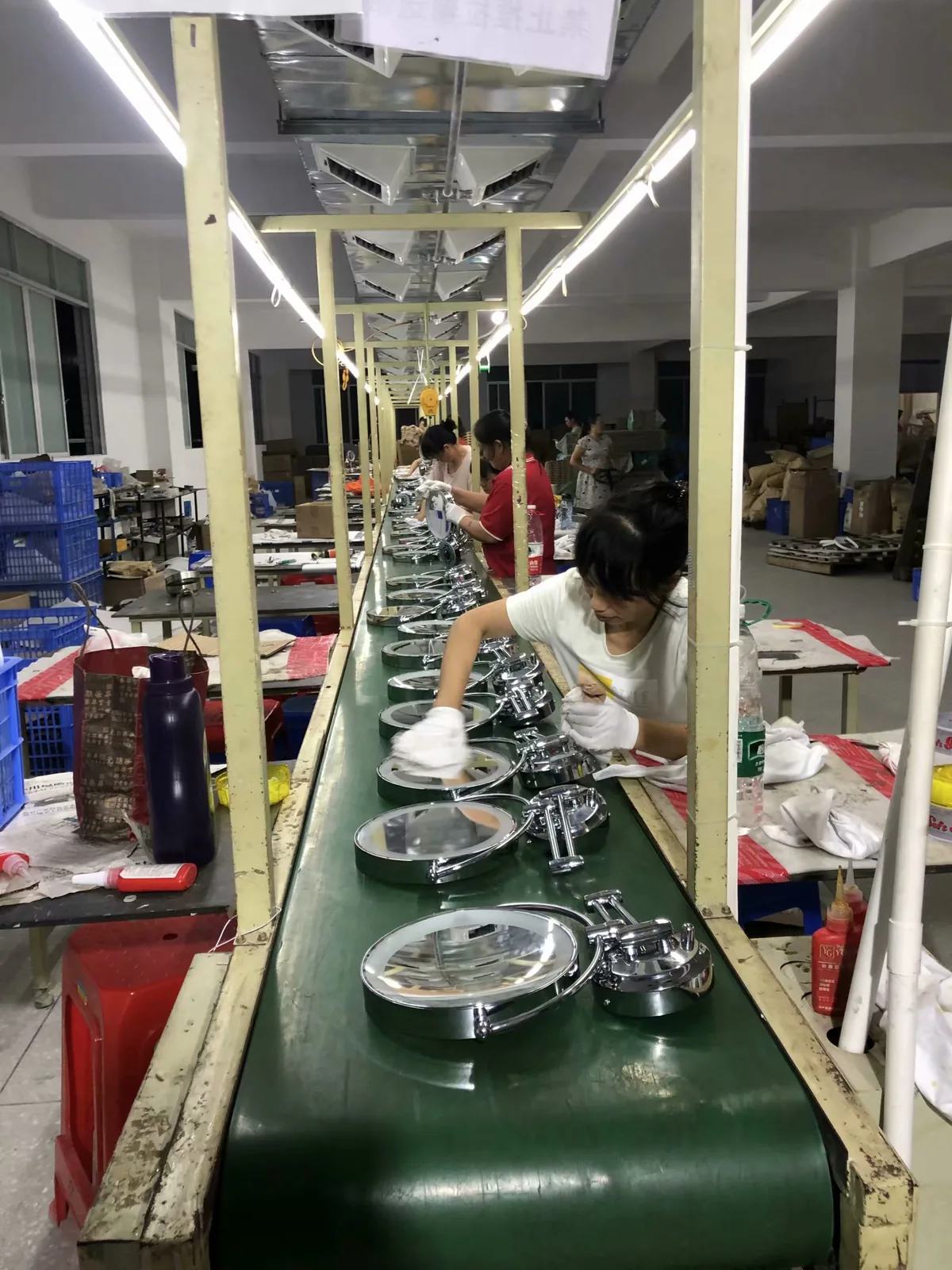
Claims are easy to make in sourcing. What matters is evidence that a factory can repeatedly produce the part you need. For replacement parts, buyers should request proof tied to the exact process and quality points that matter for the project.
Useful capability evidence includes:
- Material certificates for the specified grade
- Dimensional inspection reports for critical features
- Finish test results such as coating thickness, adhesion, or salt spray performance where relevant
- Sample photos plus controlled reference samples for appearance parts
- Process flow chart showing stamping, machining, welding, polishing, plating, or assembly sequence
- Tooling ownership and maintenance plan if custom dies, fixtures, or jigs are involved
- Packaging standard for scratch-sensitive or plated items
- Records of corrective action handling if prior issues occurred
Reliable suppliers should also be able to explain which operations are in-house and which are subcontracted. This matters because outsourced finishing or secondary processing can affect lead time, consistency, and accountability. If plating, powder coating, polishing, or laser cutting is outsourced, buyers should confirm how that supplier controls the subcontractor.
Practical Evaluation Checklist Before You Place an Order
Before confirming a supplier, buyers can use the following checklist to test whether the project is ready for production rather than just quotation.
| Checkpoint | Confirmed? | Why It Matters |
|---|---|---|
| Critical dimensions identified | Yes / No | Prevents fit and assembly issues |
| Material grade approved | Yes / No | Avoids substitution risk |
| Finish standard defined | Yes / No | Protects appearance and corrosion performance |
| Sample tested in real assembly | Yes / No | Validates interchangeability |
| Inspection method agreed | Yes / No | Reduces acceptance disputes |
| MOQ and repeat pricing clarified | Yes / No | Supports long-term planning |
| Packaging standard approved | Yes / No | Prevents transit damage |
| Lead time by stage confirmed | Yes / No | Improves delivery predictability |
If several boxes remain unconfirmed, the sourcing process is not ready for a clean production launch. In that case, buyers should pause and resolve the gaps before issuing the PO.
How to Reduce Sourcing Risk Before Order Confirmation
The best time to reduce risk is before commercial commitment. In replacement part projects, small upfront verification steps can prevent larger downstream losses.
A practical risk-reduction approach is to:
- Send both drawings and photos of the installed application
- Highlight function-critical dimensions, not just full drawing tolerances
- Approve a golden sample for appearance and fit
- Request first article inspection for initial production
- Clarify acceptable defect criteria for cosmetic and functional features
- Break down lead time into tooling, sampling, approval, and mass production stages
- Confirm who approves engineering changes if a manufacturability issue appears
For custom or semi-custom metal hardware, it is also smart to discuss whether the factory sees any process optimization opportunities. A capable supplier should be able to point out if a bend radius, hole edge distance, thread method, or finish route creates unnecessary cost or instability. That kind of feedback is a useful sign that the supplier is thinking beyond basic order taking.
Communication discipline matters as much as manufacturing skill. If technical questions are answered slowly or vaguely during quotation, buyers should expect the same pattern during production issue handling. In replacement projects, that delay can directly affect customer commitments and maintenance schedules.
Conclusion: Choose Replacement Parts Based on Project Fit, Not Assumption
The right replacement parts decision comes from matching the part to the real project requirement: function, assembly fit, finish expectation, order pattern, and supplier capability. Buyers who compare factories only on piece price often inherit avoidable problems in quality, lead time, or consistency. Buyers who compare process fit, evidence, and communication readiness make stronger sourcing decisions.
If you are reviewing a current part, replacing an existing supplier, or planning a custom metal hardware or lighting accessory program, the next useful step is to review the relevant service capability and compare how the part would be produced, inspected, and supported in repeat supply. If needed, you can also discuss your drawings, samples, or OEM/ODM requirements with the team through the Home or Services pages before moving to quotation.
If your project involves finish, tolerance, or custom production questions, the next useful step is to review main company website and lighting hardware sourcing support before finalizing drawings, samples, or mass-production requirements.
 Floor Lamp Sets
 Wall Lamp Sets
 Table Lamp Sets
 Custom Hotel Parts
 Custom Made Parts
 Panels
 Tubes
Tubes Universal joints
 Machined Parts