

-
 Phone:+86 189 2494 9366
-
 E-mail:info@zsshengshi.com
-
 No.5, north of the first road, Guyi Changweiyong manufacturingdistrict, Guzhen, Zhongshan, Guangdong, P.R.C
Factory Case Study: Matching Project Requirements to the Right Production Process

Factory Case Study: Matching Project Requirements to the Right Production Process
Key Takeaways: This factory case study shows why the best supplier is not always the one with the lowest quoted price, but the one whose process capability matches the product’s geometry, finish, tolerance, and delivery plan. Buyers should compare process fit, tooling logic, finishing control, communication speed, and evidence of repeatability before confirming an order. Clear technical review upfront reduces quality disputes, lead time slips, and unnecessary cost.
Introduction: the sourcing challenge behind one part drawing
In metal hardware and lighting accessories processing, many sourcing problems start with a simple assumption: if two factories can make the same part, they are equally suitable. In practice, that is rarely true. A bracket, lamp cup, mounting plate, threaded tube, stamped cover, or decorative ring may look straightforward on a drawing, but the correct production route depends on material behavior, dimensional tolerance, surface finish, annual volume, assembly method, and packaging requirements.
This factory case study focuses on a common buyer scenario. A customer needs a metal lighting accessory for a new product launch. The part must meet appearance standards, fit an existing assembly, and arrive on a schedule that supports pilot build and mass production. Three factories submit quotations. Prices differ, tooling recommendations differ, and lead times differ. The real decision is not just who can produce it, but which process is the right fit for the project stage and commercial target.
For procurement teams and product managers, this is where good supplier selection creates measurable value. The right process choice can reduce scrap, stabilize finish consistency, shorten ramp-up time, and avoid redesign after sampling. The wrong choice can lock the buyer into hidden rework cost, weak cosmetic quality, or unstable delivery performance.
Why this decision matters commercially and operationally
Process matching is not only a technical issue. It directly affects landed cost, approval speed, and supply continuity. In lighting accessories and metal hardware, a part that is over-engineered for the production method may carry unnecessary tooling cost or slower output. A part that is under-engineered for the selected method may show distortion, burrs, inconsistent plating, or assembly mismatch.
Buyers often see the commercial impact in five areas:
- Unit price stability across volume changes
- Tooling payback versus expected order quantity
- Yield loss caused by difficult forming or finishing
- Lead time risk during sample approval and first production
- Warranty or return exposure if cosmetic parts vary between lots
For example, a decorative lighting trim ring may be cheaper in theory with stamping at scale, but if the edge quality requires extra polishing and the plating supplier rejects parts due to surface marks, the total cost picture changes. In another case, CNC machining may be suitable for pilot volume but become commercially uncompetitive once annual demand rises and a progressive die or deep drawing route becomes viable.
Common mistakes buyers make when comparing factory options
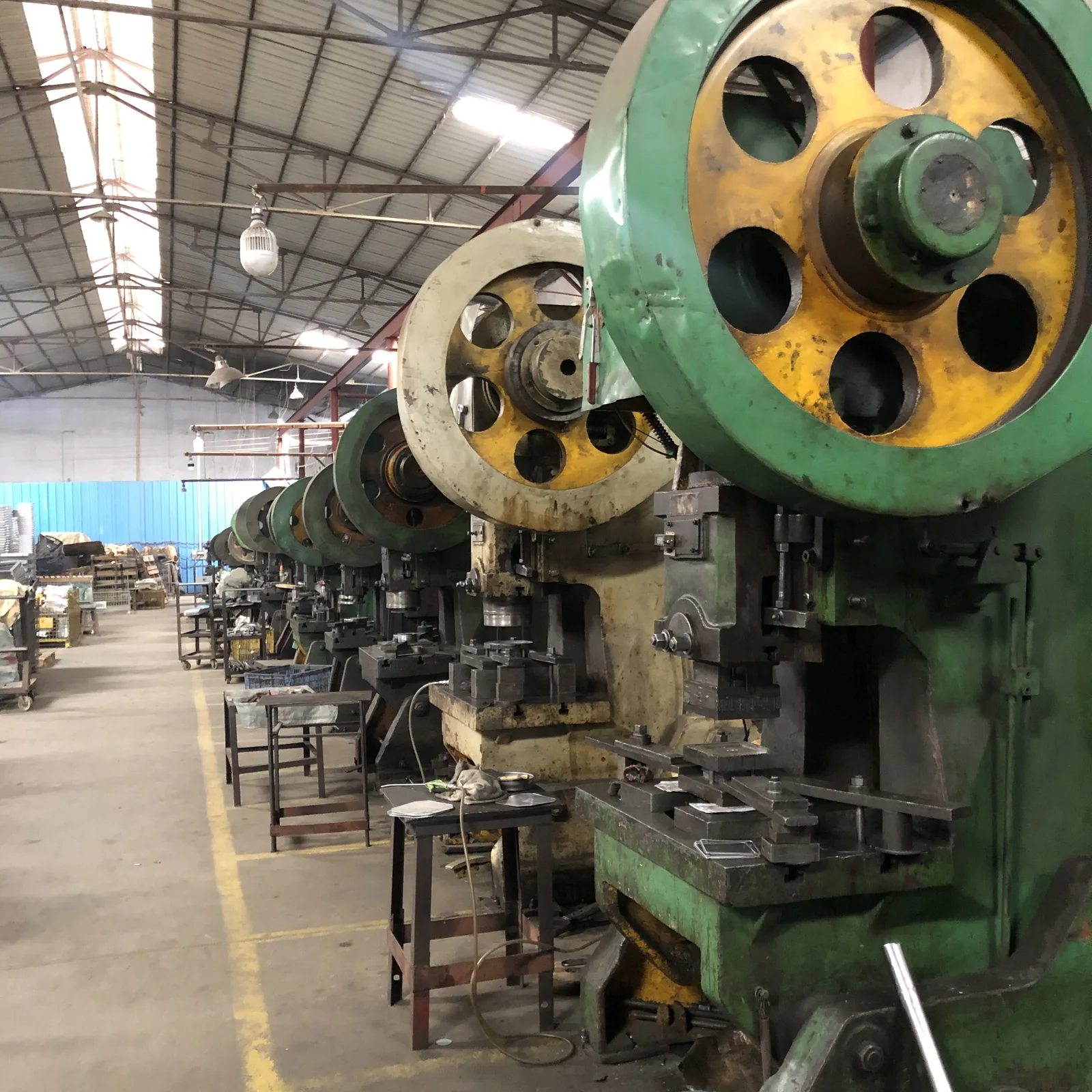
Most sourcing mistakes do not come from lack of effort. They come from comparing suppliers on incomplete criteria. In this segment, the most common weak habits are easy to recognize.
- Comparing only quoted unit price without checking process assumptions
- Approving samples without confirming mass-production control points
- Ignoring finish capability differences between subcontractors
- Accepting broad tolerance promises without measurement evidence
- Not clarifying MOQ impact on setup cost and replenishment flexibility
- Failing to align packaging method with cosmetic protection requirements
- Assuming communication during quotation will remain the same during production
A frequent issue in lighting hardware is finish inconsistency. The sample may look acceptable because it was manually sorted or processed in a small batch. But when the first 5,000 pieces run through regular production, color variation, edge marks, or hanging-point differences appear. If the buyer did not ask how the factory controls lot-to-lot finish repeatability, the sourcing review was incomplete.
What should buyers compare between suppliers for the same project?
The most effective comparison is side-by-side and evidence-based. Buyers should review not only price and lead time, but also whether each supplier’s proposed process is suitable for the actual use case. The table below shows a practical comparison framework for a metal lighting accessory project requiring forming, threading, surface finishing, and assembly fit.
| Comparison Item | Factory A: Stamping-Focused | Factory B: CNC/Fabrication-Focused | Buyer Reading |
|---|---|---|---|
| Best volume fit | Medium to high volume | Low to medium volume | Match annual demand to process economics |
| Tooling cost | Higher upfront die cost | Lower upfront fixture cost | Check payback over forecast volume |
| Per-piece cost | Lower at scale | Higher at scale | Pilot and mass production may need different routes |
| Tolerance control | Good if die is mature | Flexible for tight features | Confirm critical dimensions separately |
| Surface quality before plating | May need deburring control | Machining marks possible | Ask how pre-finish defects are managed |
| Lead time for samples | Longer if die required | Faster for prototypes | Useful for design validation stage |
| Engineering change flexibility | Lower after tooling | Higher before scale-up | Consider project maturity |
| MOQ pressure | Usually higher | Usually lower | Important for slow-moving SKUs |
For many projects, the best answer is not choosing one process forever. It may be using a flexible process for early samples and pilot orders, then shifting to a more efficient production method once the design, forecast, and finish standard are stable.
A practical factory case study: one project, three process paths
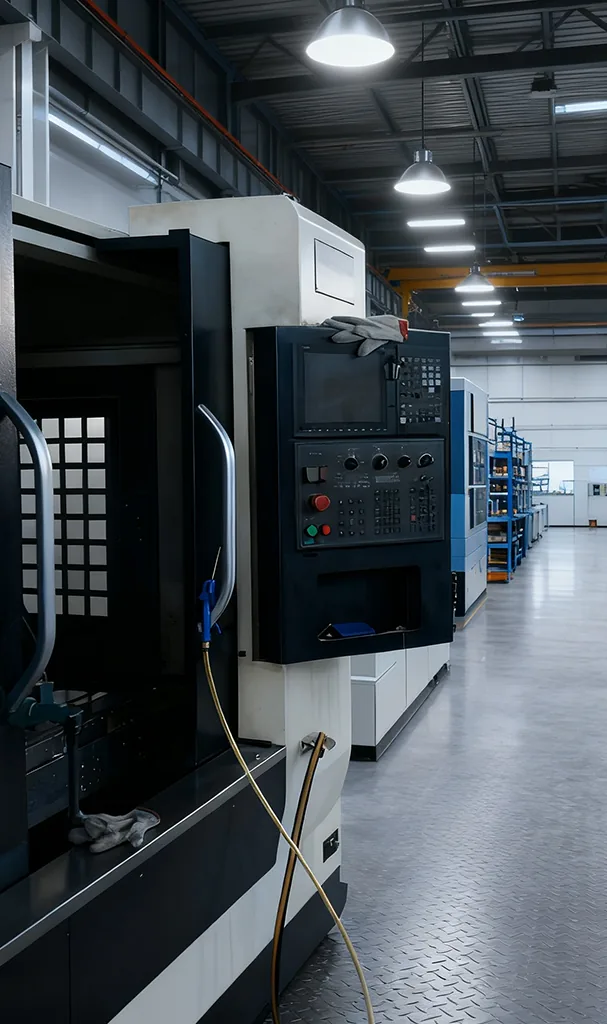
Consider a buyer sourcing a powder-coated steel mounting canopy for a commercial lighting fixture. The part requires a clean visible surface, threaded features for assembly, consistent hole position, and reliable fit with electrical components. Annual demand is projected at 30,000 pieces, but the first order is only 2,000 units due to launch uncertainty.
Three production paths are proposed:
- Laser cutting plus bending plus tapping
- Turret punching plus bending plus secondary machining
- Progressive stamping with integrated forming and later tapping
At first glance, the laser-cut route wins on speed and low setup cost. It is suitable for pilot quantity and supports drawing changes. But the edge condition may require more finishing work, and unit cost stays relatively high. The turret route offers better productivity for repeat orders, but may still need multiple setups. The progressive stamping route has the best cost position for stable volume, yet only makes sense when the drawing is frozen and volume confidence is real.
The buyer’s correct decision depends on project stage:
- For design validation: prioritize flexibility and faster sample iteration
- For launch with uncertain forecast: control tooling exposure and MOQ risk
- For stable annual program business: optimize around repeatability and unit economics
This is the central lesson of the factory case study: process fit is dynamic. The right manufacturing partner should be able to explain not only how to make the part now, but when a process transition will improve cost and consistency later.
What factory capability evidence should buyers request?
A reliable supplier should prove capability with records, samples, and process logic. Buyers should not rely on verbal assurance alone, especially for appearance parts and assembly-critical hardware.
Request evidence in the following areas:
- Similar product references by material, thickness, and finish type
- Process flow showing in-house versus outsourced steps
- Dimension inspection reports for critical features
- Surface finish samples from multiple lots, not one hand-picked sample
- Tooling ownership and maintenance plan
- First article approval process and change control method
- Packaging standard for scratch-sensitive or plated parts
- On-time delivery performance for comparable projects
For plated, painted, brushed, or polished lighting accessories, ask specifically how the supplier controls color, gloss, adhesion, and visible defect criteria. If finishing is outsourced, confirm whether the factory manages that subcontractor with incoming and outgoing inspection, or simply sends parts out and receives them back. That difference affects accountability when defects appear.
| Evidence Type | What Good Suppliers Show | Buyer Concern if Missing |
|---|---|---|
| Inspection report | Measured critical dimensions | Tolerance claims are unverified |
| Lot samples | Appearance consistency across runs | Sample may not reflect production reality |
| Process flow | Clear in-house and outsourced steps | Hidden lead time and quality gaps |
| Tooling plan | Maintenance and revision control | Long-term repeatability is uncertain |
| Packaging standard | Protection by finish sensitivity | Transit damage may erase factory quality |
Buyer checklist: what to confirm before placing an order
Before issuing a PO, buyers should confirm that process fit, commercial terms, and quality expectations are aligned. This short checklist helps avoid preventable disputes.
- Is the quoted process appropriate for current order volume and future forecast?
- Are critical dimensions, cosmetic zones, and finish standards documented?
- Has the supplier identified which steps are outsourced?
- Are sample approval criteria identical to mass-production criteria?
- Is there agreement on acceptable defect level and inspection method?
- Have MOQ, tooling charges, and replenishment terms been clarified?
- Is packaging approved for the part’s finish and transport route?
- Is lead time based on actual capacity, not only sales commitment?
- Has the supplier confirmed change-control handling after approval?
How to reduce sourcing risk before order confirmation
Risk reduction starts before production, not after a defect appears. For custom metal hardware and lighting accessories, buyers can lower exposure with several practical controls.
First, separate prototype approval from production approval. A prototype proves basic design feasibility. It does not automatically prove stable production capability. Ask for a pre-production sample made with the intended process, finish route, and packaging method.
Second, identify the true bottleneck step. In many projects, the main risk is not cutting or forming. It is plating, painting, polishing, thread quality, or final assembly fit. The supplier should state which step carries the highest variability and how it is controlled.
Third, align on communication discipline. Reliable factories respond with drawing comments, tolerance questions, and process suggestions early. If a supplier gives a fast quote but asks few technical questions, that may signal weak review depth rather than strong capability.
Fourth, use staged commitment where appropriate. For uncertain programs, buyers can start with a pilot order, confirm field performance, and then release tooling for higher-efficiency production. This approach protects cash flow while preserving a scale-up path.
Conclusion: use this factory case study approach in your next supplier review
The main lesson from this factory case study is simple: the right production process depends on project stage, part function, finish expectation, and order economics. Buyers who compare suppliers only on price often miss the deeper question of process fit. Buyers who compare process capability, quality evidence, MOQ logic, finish control, and communication discipline make stronger sourcing decisions.
If you are reviewing a new metal hardware or lighting accessory project, the next practical step is to compare service capability against your drawing, volume plan, and finish requirements. You can also review the broader manufacturing scope on the Home page, explore relevant Services for OEM/ODM or custom processing, or contact the team for a focused sourcing discussion before finalizing supplier selection.
If your project involves finish, tolerance, or custom production questions, the next useful step is to review main company website and lighting hardware sourcing support before finalizing drawings, samples, or mass-production requirements.
 Floor Lamp Sets
 Wall Lamp Sets
 Table Lamp Sets
 Custom Hotel Parts
 Custom Made Parts
 Panels
 Tubes
Tubes Universal joints
 Machined Parts