

-
 Phone:+86 189 2494 9366
-
 E-mail:info@zsshengshi.com
-
 No.5, north of the first road, Guyi Changweiyong manufacturingdistrict, Guzhen, Zhongshan, Guangdong, P.R.C
Sample Request Buyer Guide: What to Compare Before Approval

Sample Request Buyer Guide: What to Compare Before Approval
Key Takeaways: A sample request is not just a formality before mass production; it is one of the most useful checkpoints for comparing supplier readiness, process control, and communication quality. Buyers should evaluate not only the part itself, but also how the factory documents specifications, manages finish consistency, responds to revisions, and proves production capability before approval.
For metal hardware and lighting accessories, a sample request often decides more than appearance. It reveals whether a supplier can translate drawings into manufacturable parts, control dimensional tolerances, match surface finish expectations, and support repeatable production at order scale. Many sourcing teams focus on unit price too early, then discover later that the approved sample does not represent real production conditions.
That is why buyers should treat sampling as a structured comparison stage. A strong supplier uses the sample process to clarify specifications, identify risk points, and prove process discipline. A weak supplier treats it as a quick handmade submission that looks acceptable once, but cannot be reproduced consistently in stamping, CNC machining, die casting, bending, polishing, plating, powder coating, or assembly.
If your team is reviewing multiple factories, this guide shows what to compare before approval, what evidence to request, and what to confirm before moving from sample request to production order.
Why sample approval matters commercially and operationally
In B2B manufacturing, sample approval affects cost, lead time, launch timing, and warranty exposure. For lighting accessory parts such as brackets, housings, mounting plates, threaded fittings, clips, and decorative metal components, a sample can expose hidden production issues early. That matters because defects found after tooling release or mass finishing are much more expensive than issues found during evaluation.
From a procurement perspective, the sample stage is where buyers should test whether the supplier can manage the full chain of execution:
- drawing review and requirement confirmation
- material selection and substitution control
- surface treatment consistency
- tolerance capability and inspection method
- packaging protection for finished surfaces
- revision tracking and communication speed
From an operational perspective, a poor sample process can delay the project even if the final sample looks acceptable. If the supplier cannot explain how the part was made, what process window was used, or what changes are needed for stable production, the buyer is approving uncertainty rather than approving readiness.
Common mistakes buyers make during a sample request
The most common sourcing mistake is comparing only the physical sample. In metal hardware and lighting accessory programs, that is too narrow. A polished bracket or plated cap may look good in hand, but still carry serious production risk if the finish thickness is unstable, the weld area is reworked manually, or the dimensions were adjusted outside the drawing without disclosure.
Other weak comparison habits include:
- approving samples without a clear revision record
- failing to confirm whether the sample was handmade, soft-tool, or production-process made
- ignoring packaging during sample review, even when cosmetic damage is a known risk
- accepting verbal promises on lead time, MOQ, or finish match without written confirmation
- not asking how the supplier will control the same quality in volume production
- using different evaluation criteria for different suppliers, making comparison unreliable
A disciplined sample request process reduces these gaps. It gives procurement, engineering, and product teams a common basis for supplier comparison instead of relying on subjective impressions.
What should buyers compare between suppliers before sample approval?
When two suppliers submit similar-looking samples, the better partner is usually the one with stronger process transparency and lower execution risk. Buyers should compare the sample itself, but also the factory response behind it. The table below provides a practical side-by-side framework for supplier evaluation.
| Evaluation Area | Supplier A Signal | Supplier B Signal | What Buyer Should Check |
|---|---|---|---|
| Drawing review | Questions raised early | No clarification needed | Did the supplier identify tolerance, finish, or assembly risks? |
| Sample method | Production-like process | Handmade shortcut | Will the approved sample represent mass production reality? |
| Dimensional control | Inspection report included | Visual approval only | Are critical dimensions measured and recorded? |
| Surface finish | Finish spec confirmed | Finish matched by eye | Is plating, coating, or polishing standard defined clearly? |
| Communication | Structured and documented | Slow and reactive | Does the team respond with actions, dates, and revisions? |
| Lead time realism | Timeline with process steps | Generic promise | Can they explain tooling, finishing, and inspection timing? |
| MOQ flexibility | Explains cost breakpoints | Flat MOQ only | Is MOQ based on process logic or only sales policy? |
| Corrective action | Root cause proposed | Resample without analysis | Can the supplier explain why issues occurred? |
In practice, the strongest supplier is not always the one with the cheapest first sample. It is the one that shows the highest probability of stable production, predictable communication, and controlled quality after approval.
What factory capability evidence should buyers request?
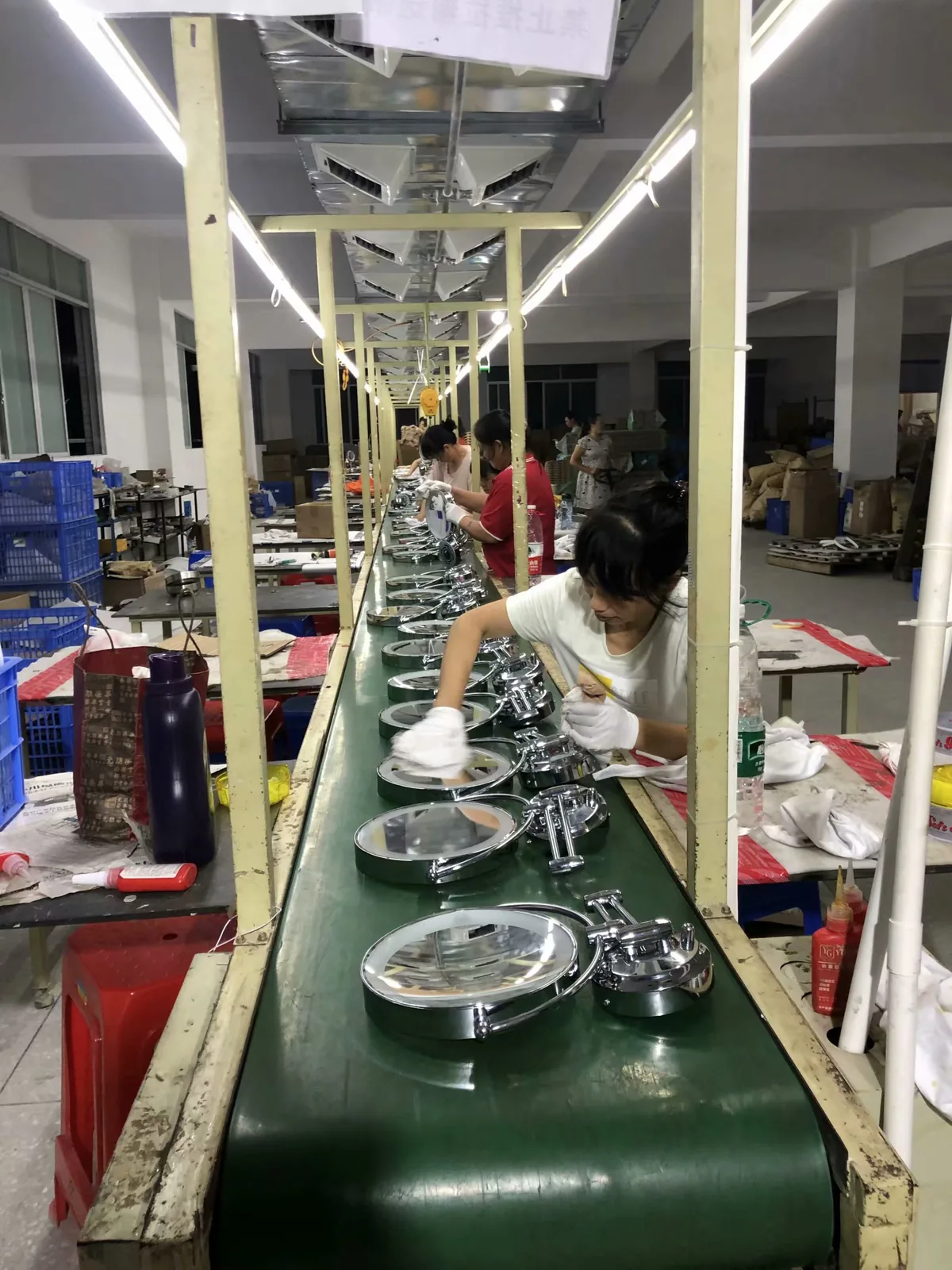
A reliable supplier should be able to prove capability with documents, records, and process evidence. This is especially important for custom metal hardware and lighting accessories where multiple operations affect final quality. Buyers should not rely only on a sales statement that the factory can “do it.” They should request evidence tied to the actual part family and process route.
Useful capability evidence includes:
- sample inspection report with critical dimensions marked to drawing
- material certificate or grade confirmation
- surface treatment specification, test standard, or finish sample board
- photos or records of similar products made with comparable process complexity
- tooling plan or process flow for stamping, casting, machining, welding, polishing, coating, and assembly
- packaging proposal for scratch-sensitive or plated parts
- quality control checkpoints for incoming, in-process, and final inspection
- nonconformance or corrective action format used when issues appear
If the part has cosmetic requirements, ask how the supplier manages color, gloss, grain direction, edge smoothness, and visual acceptance criteria. If the part has assembly requirements, ask for fit-check evidence with mating parts. If the part will be installed in lighting products, ask whether burr control, thread quality, and finish adhesion have been validated under expected use conditions.
| Evidence Type | What It Proves | Buyer Follow-Up Question |
|---|---|---|
| Inspection report | Measured compliance | Which dimensions are controlled in production? |
| Material certificate | Material traceability | Will the same grade be used in bulk orders? |
| Finish spec or panel | Surface consistency target | How will color and texture variation be controlled? |
| Process flow | Manufacturing logic | Which step carries the highest defect risk? |
| Similar project record | Relevant experience | Was that part similar in finish and tolerance? |
| Packaging proposal | Transit protection planning | How will cosmetic surfaces be separated and labeled? |
A practical sample request checklist for procurement teams
To keep supplier comparison objective, use one checklist across all candidate factories. This prevents approval decisions from being driven only by visual impression or quoted price.
| Checkpoint | Yes/No | Notes |
|---|---|---|
| Sample matches latest drawing revision | Confirm revision code in writing | |
| Critical dimensions measured and reported | Mark CTQ features clearly | |
| Material grade confirmed | No unapproved substitution | |
| Finish standard defined | Color, gloss, texture, thickness | |
| Sample production method disclosed | Handmade, soft-tool, or production route | |
| Assembly or fit test completed | Use mating parts when needed | |
| Packaging method reviewed | Important for plated and polished parts | |
| Lead time for repeat samples confirmed | Check engineering response speed | |
| MOQ and price break logic explained | Separate tooling and unit economics | |
| Corrective action path agreed if issues appear | Define owner and response timeline |
How to reduce sourcing risk before order confirmation
Before placing a production order, buyers should close the gap between sample approval and manufacturing reality. This is where many projects fail. A sample may be approved, but the order still carries risk if process conditions, quality standards, and commercial assumptions remain unclear.
To reduce risk, confirm the following in writing:
- approved drawing revision, finish code, and material specification
- whether the approved sample was made using production-equivalent methods
- critical quality points and acceptance criteria
- mass production lead time by stage, including tooling, finishing, inspection, and packing
- MOQ, price validity, and cost impact of design or finish changes
- packaging standard for export handling and cosmetic protection
- rework, remake, and claim handling process if the first lot fails requirements
For custom OEM or ODM work, it is also wise to confirm which changes are still open after sample approval and which are now frozen. This avoids a common problem: engineering continues to revise the part while procurement expects stable pricing and lead time. Reliable suppliers usually help buyers separate technical changes from commercial commitments so both sides know what is approved and what remains under review.
If you are comparing new suppliers, one practical risk-control step is to place a pilot order or limited first batch rather than moving directly to full volume. This approach is especially useful for parts with cosmetic finish requirements, complex secondary operations, or mixed manual and automated processes.
Conclusion: use every sample request as a supplier test, not just a part test
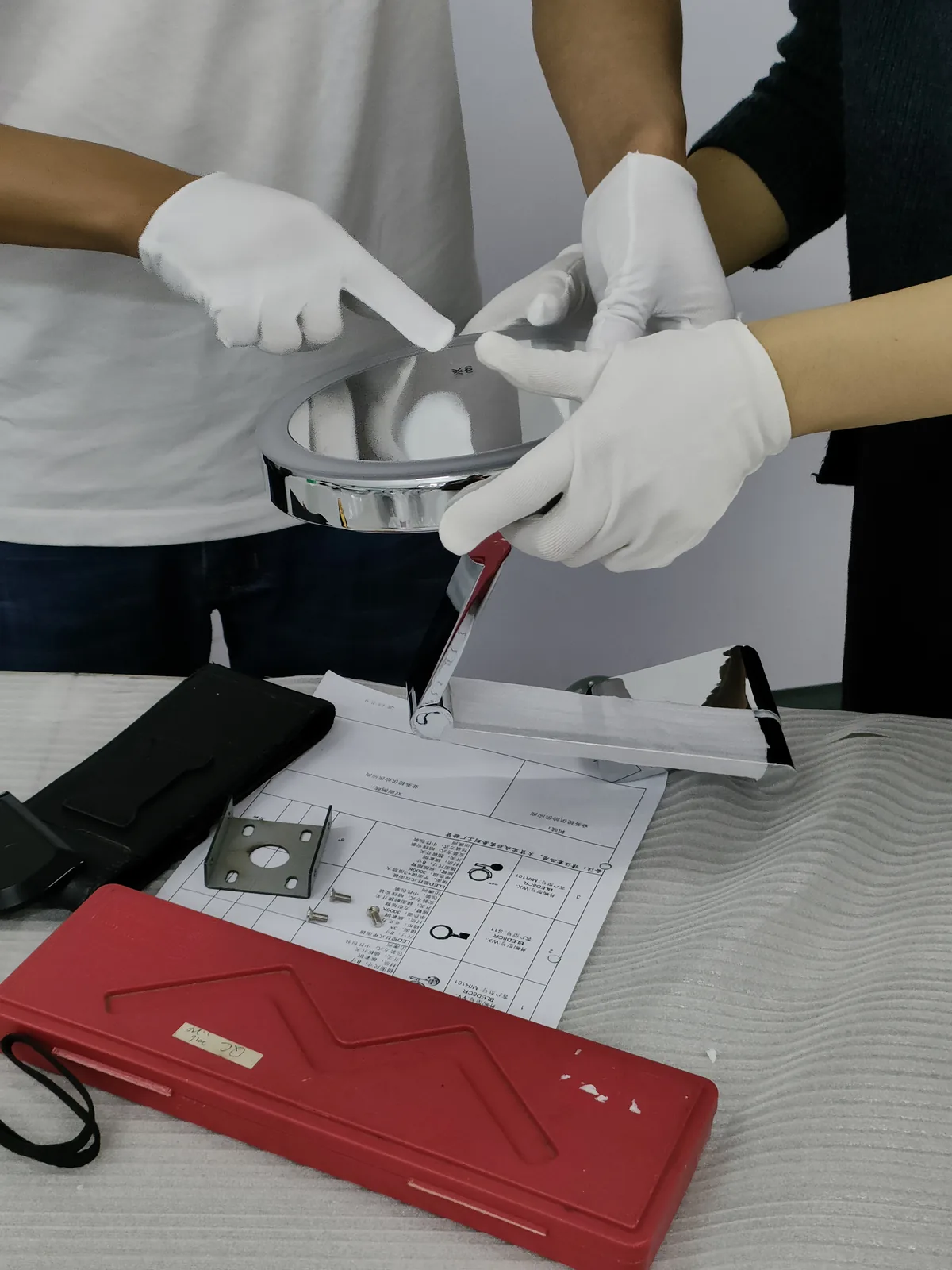
A well-managed sample request gives buyers more than a pre-production part. It shows how a factory thinks, communicates, documents, and controls risk. That is why the best approval decisions compare supplier behavior as carefully as product appearance. In metal hardware and lighting accessories processing, this discipline helps prevent finish inconsistency, dimensional drift, avoidable delays, and costly order corrections later.
If your team is evaluating manufacturing partners, the next step is to review service capability against your actual part requirements, then align technical details through a structured RFQ process. For custom projects, it also helps to discuss OEM or ODM expectations early so the sample request reflects real production needs instead of a one-off demonstration.
You can start by reviewing our Services to compare process fit, or send an RFQ if you want feedback on drawings, finish requirements, MOQ, and sample planning before approval.
If your project involves finish, tolerance, or custom production questions, the next useful step is to review lighting hardware sourcing support and rfq before finalizing drawings, samples, or mass-production requirements.
 Floor Lamp Sets
 Wall Lamp Sets
 Table Lamp Sets
 Custom Hotel Parts
 Custom Made Parts
 Panels
 Tubes
Tubes Universal joints
 Machined Parts