

-
 Phone:+86 189 2494 9366
-
 E-mail:info@zsshengshi.com
-
 No.5, north of the first road, Guyi Changweiyong manufacturingdistrict, Guzhen, Zhongshan, Guangdong, P.R.C
Quality Assurance Checks to Verify Before Approving a Hardware Supplier

Quality Assurance Checks to Verify Before Approving a Hardware Supplier
Key Takeaways: Strong quality assurance is not just about inspection reports; it is about verifying whether a hardware supplier can repeatedly control materials, dimensions, finishes, packaging, and delivery performance. Before approval, buyers should compare documented process control, factory capability evidence, communication discipline, and pre-order risk controls to avoid expensive sourcing surprises.
For procurement teams sourcing metal hardware and lighting accessories, supplier approval is rarely decided by price alone. A supplier may quote competitively, send acceptable samples, and still fail when production scales. The real buyer challenge is confirming whether the factory has a working quality assurance system that can protect consistency across raw material intake, machining or stamping, surface finishing, assembly, and shipment.
This matters especially in hardware programs where tolerances, thread fit, plating adhesion, color matching, burr control, and packaging protection directly affect downstream assembly and customer complaints. If the supplier cannot prove process discipline before the first order, the buyer often ends up paying through rework, delayed launches, replacement claims, or repeated communication cycles.
Why this decision matters commercially and operationally
Approving the wrong supplier creates more than a quality issue. It affects inventory planning, customer commitments, engineering timelines, and total landed cost. In metal hardware and lighting accessories processing, one unstable process can create chain reactions: poor die maintenance causes dimensional drift, inconsistent polishing changes appearance, weak plating control creates corrosion failures, and loose packing standards lead to scratches during transit.
From a commercial standpoint, buyers should evaluate supplier approval as a risk decision. A lower unit price is quickly offset if the supplier requires heavy incoming inspection, frequent sorting, emergency air shipments, or repeated corrective actions. Reliable quality assurance reduces these hidden costs by making output more predictable. That predictability supports better ordering cadence, fewer line stoppages, and stronger confidence when launching OEM or ODM programs.
For product managers and engineers, the supplier approval stage is also where manufacturability concerns should surface. If a factory cannot explain how it will hold tolerance, control finish variation, or protect cosmetic parts in transit, it is signaling that production readiness is not yet mature.
Common mistakes buyers make when comparing hardware suppliers
Many supplier comparisons look complete on paper but miss the operating details that separate a dependable factory from a risky one. The most common mistake is treating a sample as proof of mass-production capability. A hand-picked sample can be acceptable even when the production process is not controlled.
Another weak habit is focusing on certifications without checking how the factory actually applies them. A quality document alone does not confirm that incoming material is traceable, first-article approval is enforced, or nonconforming parts are segregated.
Buyers also underestimate communication as a quality factor. In cross-border sourcing, delayed replies, vague technical answers, and incomplete issue reporting often correlate with weak internal control. If the supplier cannot answer clearly before the order, problem resolution after the order is usually worse.
Other frequent mistakes include:
- Comparing only quoted price instead of total risk-adjusted cost.
- Failing to confirm MOQ flexibility for pilot runs or engineering changes.
- Not reviewing finish consistency across multiple batches or lighting conditions.
- Skipping packaging validation for plated, polished, or decorative hardware.
- Approving a supplier without checking subcontractor control for plating, coating, or secondary processes.
What should buyers compare between hardware suppliers?
A useful supplier comparison should show whether the factory can repeatedly meet specification, not just whether it wants the business. Buyers should compare process control, evidence quality, responsiveness, finish management, capacity realism, and escalation discipline side by side.
| Evaluation Area | Weak Supplier Signal | Reliable Supplier Signal | What Buyer Should Ask For |
|---|---|---|---|
| Material control | General verbal assurance | Lot traceability by batch | Material certs, incoming inspection records |
| Dimensional control | Checks only at final stage | In-process checks with records | Control plan, first-article report, gauge list |
| Finish consistency | Sample-only approval | Defined finish standards | Color panel, plating spec, salt spray data |
| Issue handling | Slow or defensive replies | Structured corrective action | 8D or CAPA example, response timing |
| Capacity planning | Aggressive promise with no data | Realistic lead-time commitment | Capacity overview, bottleneck process review |
| Packaging protection | Standard bulk packing only | Part-specific protection method | Packing spec, drop-test or transit examples |
| Communication | Incomplete technical answers | Clear owner and timeline | Project contact map, escalation path |
This comparison method helps buyers move beyond generic supplier claims. In practice, the most reliable factories are usually the ones that can show how they control variation at each step, not just state that they “inspect everything.”
What factory capability evidence should buyers request?
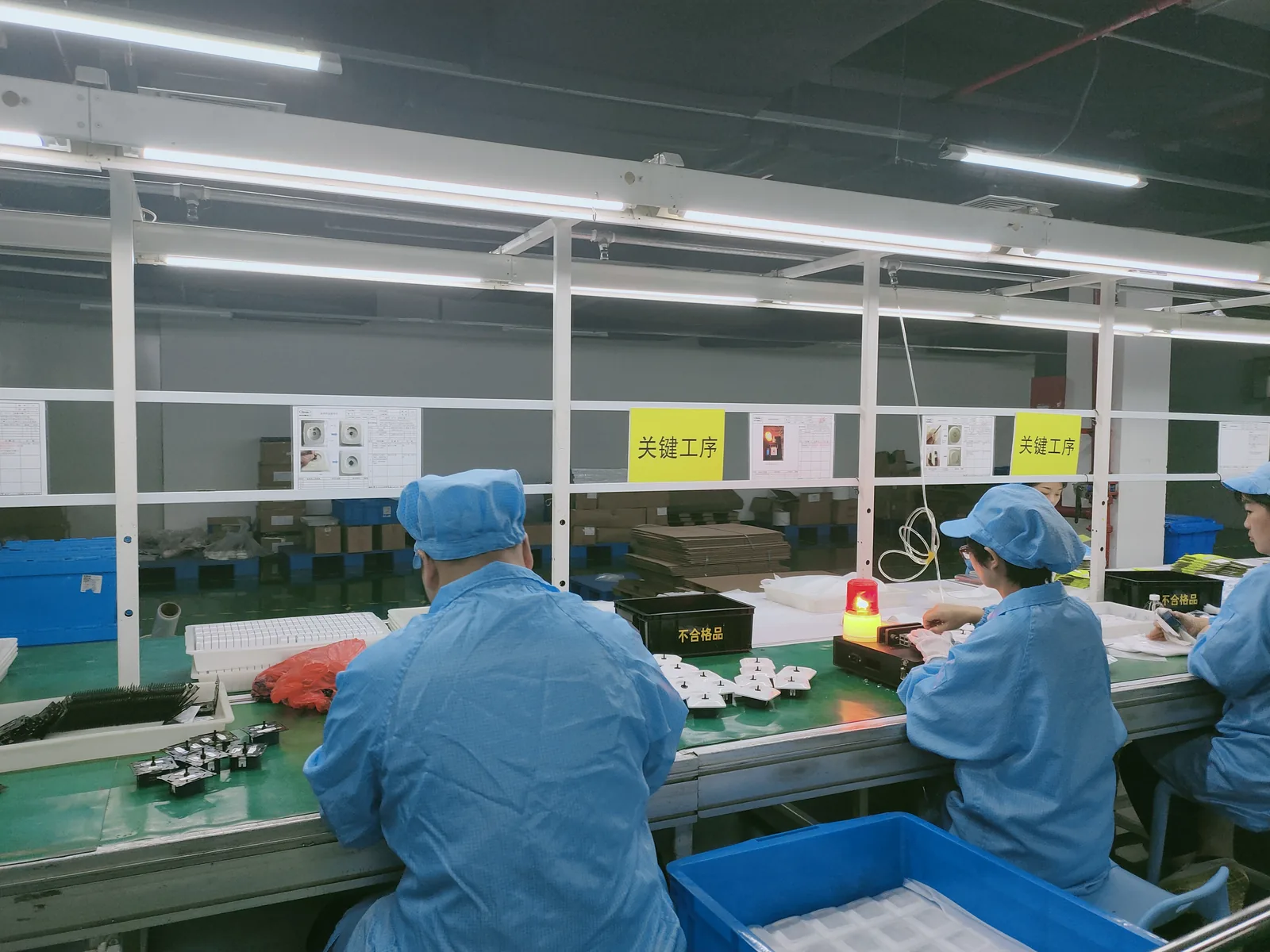
Capability evidence is where sourcing confidence is built. For metal hardware and lighting accessories, buyers should ask for proof tied to the actual product family and process route. A supplier making simple brackets may not be equally strong in decorative threaded components with cosmetic plating requirements.
The most useful evidence includes process-specific records and real production examples. Ask for documents that show how the supplier manages the same type of risk your product carries.
- First-article inspection reports for similar parts.
- Control plans covering key dimensions, threads, flatness, burrs, and finish checkpoints.
- Calibration records for gauges, thread gauges, calipers, coating thickness meters, and salt spray test access if relevant.
- Material certificates and traceability examples by heat number, batch, or lot.
- Plating, coating, polishing, or anodizing standards used for appearance parts.
- Photos or videos of production lines, fixtures, jigs, packaging methods, and segregation of nonconforming goods.
- Corrective action reports showing root-cause analysis and recurrence prevention.
- Subsupplier management records if finishing or heat treatment is outsourced.
If the program includes custom development, ask how engineering changes are controlled. A capable OEM or ODM supplier should be able to explain drawing revision control, sample sign-off flow, and how new tooling or fixtures are validated before mass production. This is often more important than a broad capability brochure.
| Evidence Type | Why It Matters | Buyer Interpretation |
|---|---|---|
| First-article report | Shows dimensional discipline | Confirms the supplier measures critical features formally |
| Process control plan | Shows prevention logic | Indicates control before defects reach final inspection |
| Calibration record | Supports measurement credibility | Reduces risk of false pass results |
| Finish test data | Validates coating performance | Important for corrosion and appearance-sensitive parts |
| CAPA example | Shows problem-solving maturity | Useful predictor of post-order support quality |
Practical supplier approval checklist
Before approving a hardware supplier, buyers can use a simple checkpoint framework. This keeps procurement, engineering, and quality teams aligned and helps prevent approval based on incomplete information.
| Checkpoint | Status | What to Confirm |
|---|---|---|
| Drawing, tolerance, and finish specs reviewed | Yes/No | No ambiguity on critical requirements |
| Material and finish standards agreed | Yes/No | Certs, grade, color, coating thickness |
| Sample approval linked to production method | Yes/No | Sample is not from a nonstandard process |
| Inspection plan defined | Yes/No | Critical dimensions and cosmetic checks listed |
| Packaging method approved | Yes/No | Scratch, dent, and moisture protection verified |
| Lead time and capacity validated | Yes/No | Production slot and bottleneck process reviewed |
| MOQ and change flexibility clarified | Yes/No | Pilot order and revision handling understood |
| Issue escalation path assigned | Yes/No | Named contacts for quality and delivery issues |
A checklist like this is most effective when reviewed before purchase order release, not after. It turns supplier approval into a documented readiness decision rather than a rushed commercial step.
How to reduce sourcing risk before order confirmation
Even after a supplier looks qualified, buyers should still reduce execution risk before confirming the first production order. The first order is where process assumptions are tested under real timing, real volumes, and real packaging conditions.
Start by defining critical-to-quality points in writing. For hardware and lighting accessories, these may include thread fit, hole position, flatness, finish color, gloss range, burr standard, weld appearance, plating thickness, or carton labeling. If these points are not documented, both sides may approve different standards.
Next, align on pre-shipment expectations. Decide whether the supplier provides dimensional reports, appearance sampling photos, material certs, or batch traceability records with shipment. This reduces disputes and speeds release.
For new suppliers or new parts, buyers should also consider a staged order approach:
- Run a pilot batch before full-volume commitment.
- Review actual yield, cosmetic consistency, and packaging performance.
- Confirm whether lead time remains stable through finishing and assembly stages.
- Capture lessons from the first batch before scaling forecast quantities.
This staged method is especially useful when the part includes decorative surfaces, mixed materials, tight assembly fit, or outsourced finishing. These are the areas where hidden process instability often appears first.
Finally, buyers should test communication discipline during pre-production. Ask for a timeline, sample schedule, open-point list, and issue owner. A supplier that manages these basics well is usually better prepared to support long-term sourcing, especially for custom metal hardware programs.
Conclusion
Approving a hardware supplier should be based on evidence, not assumptions. Effective quality assurance means verifying that the factory can control material, process, finish, packaging, and response speed under real production conditions. Buyers who compare suppliers this way make stronger sourcing decisions, reduce launch risk, and gain more confidence before committing volume.
If you are reviewing potential manufacturing partners, the next practical step is to compare actual process capability, inspection controls, and customization support. You can start by reviewing our About Us and Services information to see how our metal hardware and lighting accessory processing capabilities are structured for OEM and ODM sourcing discussions.
If your project involves finish, tolerance, or custom production questions, the next useful step is to review factory capability overview and lighting hardware sourcing support before finalizing drawings, samples, or mass-production requirements.
 Floor Lamp Sets
 Wall Lamp Sets
 Table Lamp Sets
 Custom Hotel Parts
 Custom Made Parts
 Panels
 Tubes
Tubes Universal joints
 Machined Parts