

-
 Phone:+86 189 2494 9366
-
 E-mail:info@zsshengshi.com
-
 No.5, north of the first road, Guyi Changweiyong manufacturingdistrict, Guzhen, Zhongshan, Guangdong, P.R.C
MOQ Guide for Comparing Suppliers Before You Send an RFQ

MOQ Guide for Comparing Suppliers Before You Send an RFQ
Key Takeaways: A practical MOQ guide helps buyers compare suppliers on the real commercial issue behind the number: tooling logic, process fit, finish stability, and production planning. Before sending an RFQ, procurement teams should test whether a supplier can explain its MOQ structure, prove factory capability, and support the order profile you actually expect. The lowest stated MOQ is not always the lowest-risk sourcing option.
For buyers sourcing metal hardware and lighting accessories, MOQ is often treated as a simple number to negotiate down. In practice, it is a signal. A supplier’s minimum order quantity reflects its process economics, setup time, material purchasing pattern, finishing line efficiency, packaging method, and willingness to support development-stage business. That is why an MOQ guide is useful before you send an RFQ: it helps you compare suppliers on production reality, not just on quotation format.
This matters especially when comparing factories for stamped parts, brackets, housings, lamp metal accessories, fasteners, decorative hardware, or mixed-finish assemblies. Two suppliers may quote the same drawing, but one may be set up for repeatable medium-volume production while another is trying to absorb a low-volume custom order into a system built for standard parts. The commercial result can be very different in cost, lead time, communication quality, and finish consistency.
Why MOQ decisions matter commercially and operationally
MOQ affects more than opening order value. It influences whether your supplier can buy raw material efficiently, whether tooling cost is spread correctly, whether the plating or powder coating line can run your color and finish without contamination risk, and whether packaging is practical for export. For procurement teams, MOQ also affects inventory exposure, cash flow, trial order strategy, and supplier qualification speed.
In metal hardware and lighting accessories processing, low MOQs can look attractive during supplier selection but become expensive later if the supplier compensates through higher unit pricing, unstable lead times, or weak process control. On the other hand, a higher MOQ may be reasonable if it comes from dedicated tooling, stable finish batches, and a production setup that supports future scale. The key is not to ask only, “What is your MOQ?” but also, “Why is that your MOQ, and what changes if our order profile changes?”
A reliable supplier should be able to explain MOQ by process step, not just by sales policy. If they cannot connect MOQ to stamping, machining, welding, polishing, plating, assembly, or packaging logic, buyers should be cautious.
Common mistakes buyers make when comparing MOQs
One weak comparison habit is treating MOQ as a standalone line item. Buyers often compare the stated minimum quantity without checking whether the quote includes tooling amortization, finish setup cost, inspection method, or packaging detail. This creates false equivalence between suppliers.
Another common mistake is sending an RFQ before clarifying annual volume expectations, forecast stability, or whether the first order is a pilot run. A supplier may quote a high MOQ because it assumes a one-off custom job, while a different supplier may quote lower because it expects repeat business and plans to recover setup cost over future orders. If you do not frame the business case, the MOQ comparison is distorted.
Buyers also underestimate finish-related MOQ risk. For lighting accessories and decorative hardware, surface appearance is often critical. Small production lots can create color variation between batches, especially in anodizing, plating, brushed finishes, painted surfaces, and powder coating. A low MOQ that forces fragmented finish runs may increase rejection risk or create mismatch across assembled products.
Communication is another weak point. Some suppliers say they can “accept low MOQ” but do not define conditions. Later, buyers discover that low-volume orders receive lower scheduling priority, longer lead times, or relaxed process discipline. That is not real flexibility; it is hidden risk.
What should buyers compare between suppliers before sending an RFQ?
Before issuing an RFQ, buyers should compare how each supplier structures MOQ, what process drives it, and what commercial tradeoff sits behind it. The goal is to understand whether the factory is a fit for your order pattern, not simply whether it says yes.
| Comparison Point | Supplier A Signal | Supplier B Signal | What It Means for Buyer |
|---|---|---|---|
| MOQ basis | Explains by tooling and finish run | Gives one fixed number only | Transparent logic usually means better planning discipline |
| Low-volume support | Pilot order option with surcharge | Accepts low MOQ without conditions | Defined surcharge is safer than vague flexibility |
| Finish consistency | Controls batch size and color standard | No finish batch explanation | Critical for visible hardware and lighting parts |
| Material purchasing | States mill lot or sheet usage logic | No raw material detail | Material logic affects scrap, traceability, and price |
| Lead time at MOQ | Lead time tied to line loading | General promise only | Specific scheduling data is more credible |
| Engineering response | Reviews drawing for manufacturability | Quotes without questions | Early technical feedback reduces later change cost |
This comparison is especially useful when suppliers appear similar on price. If one factory can explain MOQ through process capability and another cannot, the first is usually the safer partner for custom or appearance-sensitive work.
What factory capability evidence should buyers request?
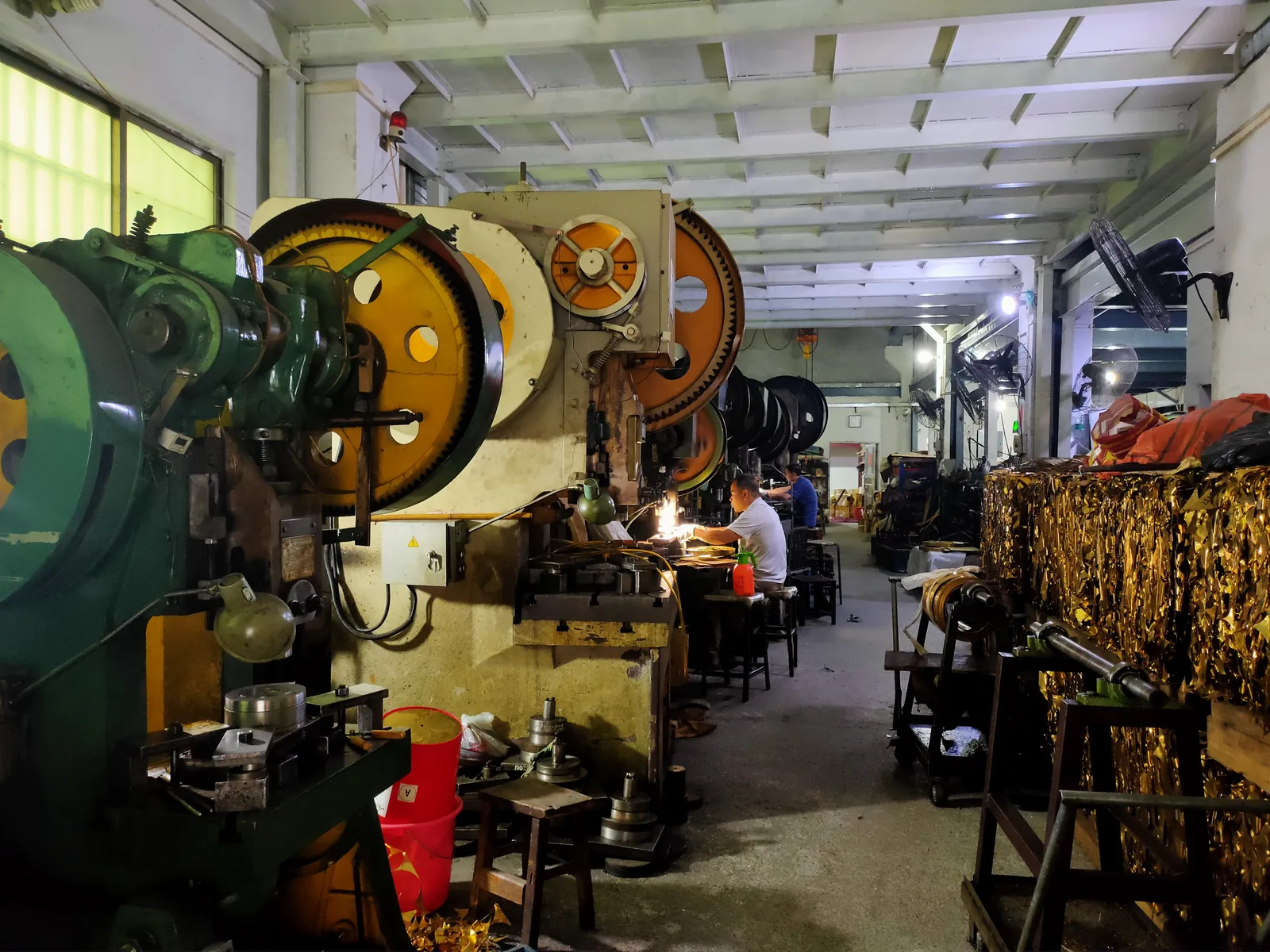
MOQ claims should be supported by evidence. Buyers should ask for proof that the factory can produce the part family, finish type, and order volume range being discussed. This is not about collecting marketing brochures. It is about confirming whether the supplier has the equipment, controls, and production habits to support your RFQ assumptions.
For metal hardware and lighting accessories, useful capability evidence includes:
- Process list matched to your part: stamping, laser cutting, CNC machining, die casting, bending, welding, polishing, plating, powder coating, assembly
- Photos or videos of relevant production equipment and fixtures, not unrelated workshop images
- Sample inspection reports with dimensional checkpoints and appearance criteria
- Finish test records such as salt spray, adhesion, color reference, or coating thickness data when applicable
- Packaging examples for export-sensitive or scratch-sensitive parts
- Past project examples in similar materials, thickness ranges, and cosmetic standards
- Tooling ownership and maintenance policy for custom parts
- Production lead time breakdown for sample, pilot, and mass production stages
If a supplier offers a very low MOQ, request evidence of how it manages setup efficiency. For example, can it combine similar material runs, use modular tooling, or schedule finishing in a way that protects consistency? A credible answer should be operational, not promotional.
| Evidence to Request | Why It Matters | Red Flag if Missing |
|---|---|---|
| Relevant equipment list | Confirms process fit and capacity range | Supplier may be trading out key steps |
| Inspection report sample | Shows control method and tolerance discipline | Quality claims may be generic |
| Finish validation data | Reduces appearance and corrosion risk | Finish consistency may be unstable |
| Similar part samples | Proves practical experience | Learning curve may fall on your project |
| Packaging example | Protects cosmetic parts in transit | Damage risk may be underestimated |
A practical buyer framework for MOQ comparison
A workable MOQ guide should help teams align sourcing, engineering, and commercial review before the RFQ goes out. Use the framework below to compare suppliers consistently.
| Review Area | Buyer Question | Acceptable Supplier Response |
|---|---|---|
| Order profile | Can you support sample, pilot, and repeat orders? | Yes, with defined quantity and cost structure |
| MOQ logic | What process step sets the MOQ? | Tooling, material lot, finish run, or packing explained clearly |
| Cost transparency | What changes if quantity drops below MOQ? | Unit price, setup fee, or lead time impact stated |
| Quality control | How do you control dimensions and finish appearance? | Inspection plan and finish standard available |
| Lead time | What is lead time at MOQ and at forecast volume? | Separate timelines with scheduling assumptions |
| Communication | Who handles engineering and project follow-up? | Named contact with technical coordination ability |
This framework helps prevent a common procurement problem: selecting a supplier based on a favorable opening quote, then discovering that the supplier cannot reliably support the actual launch pattern.
How to reduce sourcing risk before order confirmation
Before placing an order, buyers should convert MOQ discussion into written commercial and technical confirmation. This is where many sourcing projects either stabilize or drift into avoidable disputes.
Confirm the exact order quantity basis. Is MOQ per item, per finish, per color, per shipment, or per annual blanket order? In lighting accessories and decorative metal parts, this distinction matters because one part number in three finishes may behave like three separate production jobs.
Confirm finish acceptance criteria. If the part is cosmetic, define the appearance standard, viewing distance, allowable variation, and approved reference sample. A supplier that accepts a low MOQ but cannot lock finish expectations is not actually reducing risk.
Confirm tooling and sample terms. Buyers should know whether tooling cost is charged separately, partially amortized, or refundable after volume milestones. Also confirm whether first article samples come from production tooling or temporary methods. That affects whether the sample truly represents mass production quality.
Confirm lead time triggers. Ask when lead time starts: after PO, after drawing approval, after deposit, after sample approval, or after material receipt. This detail is often overlooked and creates planning conflict later.
Finally, confirm escalation and communication path. If quality issues, packaging damage, or schedule changes occur, buyers should know who owns response time and corrective action. Reliable suppliers do not just quote MOQ; they show how they manage execution around it.
- Define MOQ by item, finish, and shipment condition
- Lock drawing revision, material grade, and finish specification
- Approve sample standard before mass production
- Confirm inspection method and defect handling process
- Clarify packaging standard for scratch-sensitive parts
- Document lead time start point and production milestones
- Record price impact for quantities below standard MOQ
Conclusion: use an MOQ guide to compare fit, not just quantity
A useful MOQ guide does not push buyers toward the lowest number on a quote sheet. It helps procurement teams compare whether a supplier’s production model, quality controls, finish capability, and communication habits match the order pattern behind the RFQ. In metal hardware and lighting accessories processing, that difference directly affects launch reliability, total cost, and repeat-order confidence.
If you are comparing manufacturing partners, the next practical step is to review relevant service capability against your part type and expected volume, then prepare an RFQ package that defines MOQ assumptions clearly. If needed, discuss custom OEM/ODM requirements, finish expectations, and pilot-order strategy with the team before moving into formal quotation.
If your project involves finish, tolerance, or custom production questions, the next useful step is to review lighting hardware sourcing support and rfq before finalizing drawings, samples, or mass-production requirements.
 Floor Lamp Sets
 Wall Lamp Sets
 Table Lamp Sets
 Custom Hotel Parts
 Custom Made Parts
 Panels
 Tubes
Tubes Universal joints
 Machined Parts