

-
 Phone:+86 189 2494 9366
-
 E-mail:info@zsshengshi.com
-
 No.5, north of the first road, Guyi Changweiyong manufacturingdistrict, Guzhen, Zhongshan, Guangdong, P.R.C
Lead Time Guide: What to Compare Before Choosing a Hardware Supplier

Lead Time Guide: What to Compare Before Choosing a Hardware Supplier
Key Takeaways: A practical lead time guide should compare more than quoted days; buyers need to verify capacity, process control, finishing coordination, communication speed, and change-management discipline. In metal hardware and lighting accessories processing, the fastest quoted supplier is not always the lowest-risk option. Reliable supplier selection comes from checking what the factory can prove before PO release.
This lead time guide is written for buyers comparing metal hardware and lighting accessories suppliers where delivery performance affects launch timing, inventory cost, and line continuity. In this category, lead time is rarely just a sales promise. It is the result of tooling readiness, raw material planning, stamping or machining load, surface finish scheduling, inspection discipline, packaging preparation, and how quickly the supplier responds when something changes.
For procurement teams, the challenge is that many suppliers quote similar timelines while operating with very different levels of control. One factory may own key processes and maintain stable subcontractor relationships for plating or powder coating. Another may rely on overloaded outside partners, informal planning, or incomplete engineering review. On paper, both may promise 25 to 30 days. In practice, one delivers consistently and the other slips after approval, after sample sign-off, or after finish confirmation.
If you are sourcing brackets, housings, lamp hardware, mounting parts, fastener-related components, decorative metal parts, or custom lighting accessory assemblies, the right comparison method is not to ask only, “What is your lead time?” The better question is, “What supports that lead time, and what could break it?”
Why lead time comparison matters commercially and operationally
A weak supplier decision on lead time creates more than late shipments. It can force expensive air freight, delay customer launches, increase safety stock, disrupt installation schedules, and create engineering rework when substitute components are rushed in. For lighting and hardware programs, finish mismatch or dimensional drift can also trigger partial shipment holds, which means the order is technically produced but still unusable.
From a commercial perspective, buyers should treat lead time as a total-cost issue, not only a calendar issue. A supplier with a slightly longer but stable production cycle may be commercially better than a supplier with an aggressive quote and frequent rescheduling. Stability supports planning. Planning reduces expediting cost, internal follow-up time, and customer-facing risk.
This is especially important in OEM and ODM work, where drawings evolve, finishes need approval, and packaging may be customer-specific. The earlier a factory identifies risks around tooling, tolerance capability, or outsourced finishing, the more realistic the delivery commitment becomes.
Common supplier comparison mistakes buyers still make
In factory selection, many delays start with weak comparison habits during RFQ and technical review. Buyers often compare price and quoted lead time while leaving process details untested. That creates false equivalence between suppliers.
- Comparing standard lead times without separating sample lead time, tooling lead time, mass production lead time, and finishing lead time.
- Accepting a quote without confirming whether plating, anodizing, polishing, coating, or assembly is done in-house or outsourced.
- Assuming MOQ flexibility means scheduling flexibility.
- Failing to ask how engineering changes affect delivery after sample approval.
- Reviewing quality documents but not checking whether quality control is integrated into the production plan.
- Ignoring communication speed during quotation, then expecting fast issue resolution during production.
Another common mistake is choosing a supplier based on best-case timing rather than normal-case timing. A reliable supplier should distinguish between standard production cycle, peak-season cycle, and expedited cycle. If every quote looks urgent by default, the schedule may be based on hope rather than capacity.
What should buyers compare between hardware suppliers?
A practical comparison should test the factory’s ability to control the full path from material intake to final shipment. In metal hardware and lighting accessories processing, the key issue is not only manufacturing speed but schedule control across multiple steps. The table below gives a useful supplier comparison framework.
| Comparison Item | What to Ask | Reliable Signal | Risk Signal |
|---|---|---|---|
| Capacity planning | How is machine load scheduled by process? | Clear weekly or monthly planning method | Only sales-side promise, no planning detail |
| Process ownership | Which steps are in-house and which are outsourced? | Transparent process map | Vague answer on finishing or assembly |
| Tooling readiness | Is tooling new, existing, or modified? | Defined tooling timeline and maintenance plan | Tooling lead time excluded from quote |
| Finish coordination | How are color, texture, and plating lots controlled? | Approved sample and batch traceability | No lot control for appearance parts |
| Engineering review | What drawing risks were identified before quote? | DFM feedback before PO | No questions on tolerance or finish |
| Quality checkpoints | Where are inspections placed in the route? | Incoming, in-process, and final checks defined | Inspection only at final packing |
| Communication speed | Who owns updates and exception handling? | Named contact with response discipline | Slow replies during RFQ stage |
| MOQ and batch logic | What drives MOQ: material, tooling, finish, or setup? | MOQ tied to actual process economics | Arbitrary MOQ with no explanation |
This comparison approach helps buyers see whether lead time is supported by factory discipline. It also reveals where a supplier may depend on external processors, unstable schedules, or informal planning that can create late surprises.
What factory capability evidence should buyers request?

When a supplier says they can meet your timing, ask for evidence tied to the actual process route. In metal hardware and lighting accessories, capability proof should be practical and recent, not generic marketing material.
Useful evidence includes production flow charts for similar parts, sample inspection reports, finish approval records, packaging specifications, photos or videos of key equipment, and examples of previous OEM projects with similar complexity. If the part includes visible surfaces, ask how finish consistency is controlled across batches. If the part includes threaded features, bends, or tight tolerances, ask for dimensional control records or gauge methods. If assembly is involved, confirm whether the supplier has work instructions and fixture support.
For buyers comparing multiple factories, the most valuable proof is usually process-specific evidence such as:
- Recent first article or pre-production inspection format
- Material traceability method
- In-house versus subcontracted finish list
- Capacity snapshot for the relevant process family
- Corrective action example for a delivery or quality issue
- Standard production milestone report format
A dependable supplier should be able to explain not just what equipment they have, but how that equipment supports your timing, tolerances, and finish requirements. That is a stronger signal than a long machine list with no production context.
Supplier quote comparison: fast promise vs controlled delivery
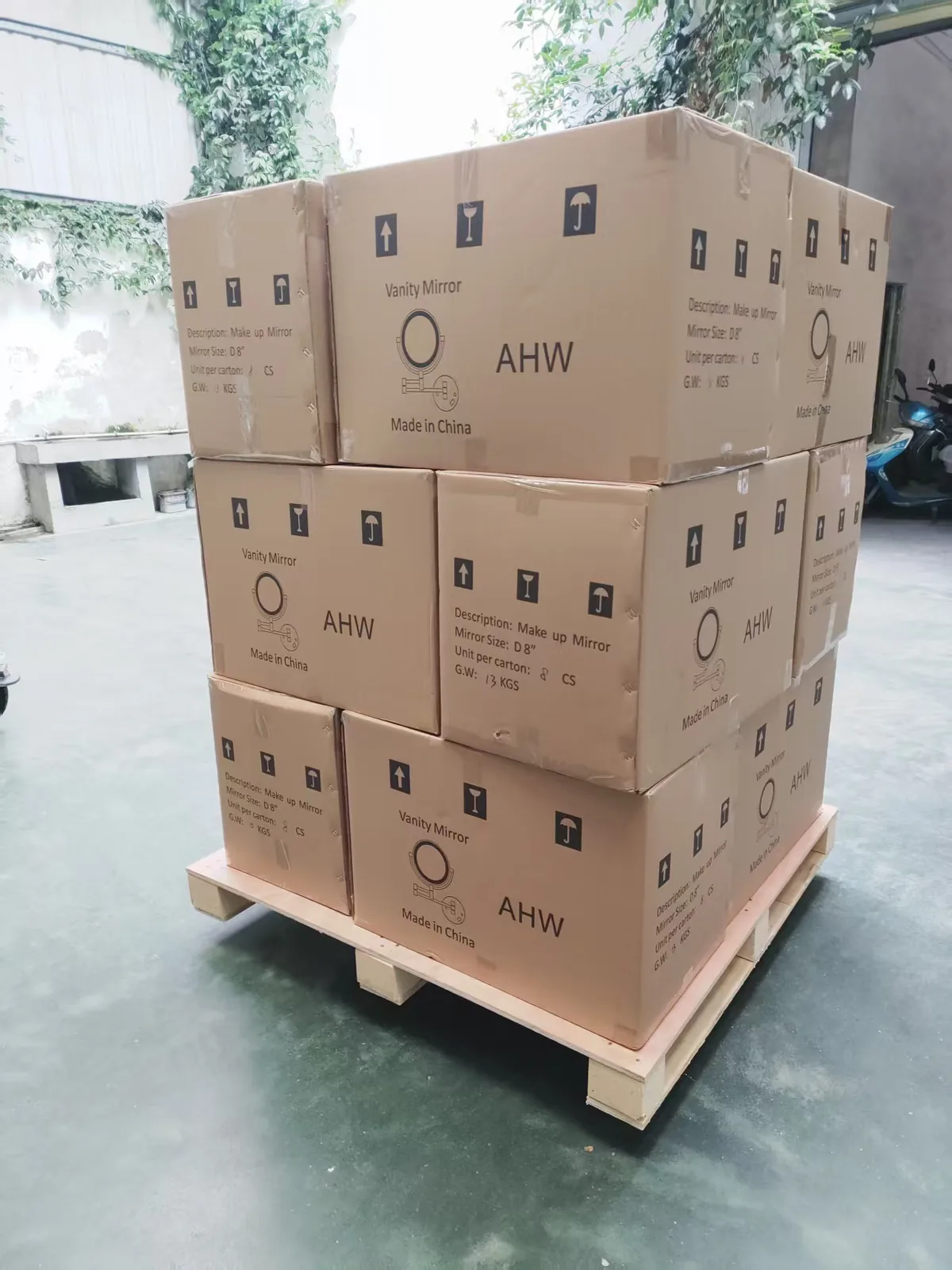
Below is a simple framework buyers can use when comparing suppliers that appear similar on price and quoted lead time.
| Supplier Type | Quoted Lead Time | Typical Strength | Typical Risk |
|---|---|---|---|
| In-house process factory | Moderate | Better schedule visibility and issue control | May cost more on small lots |
| Assembler with outsourced processing | Short on quote | Flexible sourcing network | Higher delay risk at finish stage |
| Low-MOQ job shop | Fast for samples | Good for prototype support | Mass production stability may be weaker |
| High-volume production factory | Longer startup | Better repeatability on steady programs | Less flexible for frequent changes |
The goal is not to prefer one factory type universally. The goal is to match supplier structure to your order profile. A prototype-heavy program with frequent revisions needs flexibility and fast engineering feedback. A stable repeat order program needs stronger production discipline and finish consistency.
Practical buyer checklist before supplier selection
Before awarding business, procurement and engineering teams should align on a short validation checklist. This helps prevent the common gap where commercial approval happens before technical and scheduling risks are fully visible.
| Checkpoint | Owner | What to Confirm |
|---|---|---|
| Drawing and revision control checked | Engineering | Supplier quoted latest revision only |
| Material specification confirmed | Procurement | Grade, thickness, and source agreed |
| Finish standard aligned | Engineering/Quality | Color, texture, salt spray, or plating spec defined |
| Sample approval route set | Project team | Approval timing will not block production start |
| Production milestones agreed | Supplier/Buyer | Dates for material, production, finish, inspection, shipment |
| Packaging method approved | Logistics/Quality | Protection meets finish and transport needs |
| Exception escalation contact assigned | Procurement | Named person for schedule or quality issues |
This checklist is simple, but it removes many avoidable delays. Most lead time failures are not caused by one major event. They come from small unconfirmed items that accumulate between quote acceptance and production release.
How to reduce sourcing risk before order confirmation
Before placing the first production order, buyers should convert assumptions into documented controls. Start by separating sample timing from mass production timing. A supplier may make a sample quickly using manual adjustment or spare capacity, but that does not prove repeatable production readiness.
Next, confirm the critical path. In many hardware projects, the real bottleneck is not fabrication. It is finish approval, outsourced plating queue, custom packaging, or waiting for final drawing sign-off. Ask the supplier to identify which step is most likely to drive delay and what backup plan exists.
It is also wise to confirm acceptable shipment strategy before issues arise. For example, can the supplier support partial shipment if one finish lot is held? Can uncoated subcomponents be stocked ahead of final finish release? Can blanket orders or forecast sharing reduce raw material exposure and improve scheduling priority? These discussions improve real delivery performance more than repeated requests for “best lead time.”
Finally, review communication behavior during the RFQ stage as a predictor of future execution. If a factory is slow to clarify drawings, avoids direct answers on process ownership, or changes the quote basis without explanation, that pattern usually continues after PO placement.
Conclusion: use this lead time guide to compare proof, not promises
The most useful lead time guide for hardware sourcing is one that helps buyers compare factory control, not just quoted days. In metal hardware and lighting accessories processing, dependable delivery comes from process visibility, realistic scheduling, finish consistency, disciplined communication, and clear pre-production confirmation.
If you are reviewing supplier options, the next practical step is to compare service capability against your part requirements, then prepare a focused RFQ package that tests timing assumptions early. For custom or OEM projects, it is also worth discussing process routing, finish control, and production-readiness checkpoints with the factory team before final supplier selection.
If your project involves finish, tolerance, or custom production questions, the next useful step is to review lighting hardware sourcing support and rfq before finalizing drawings, samples, or mass-production requirements.
 Floor Lamp Sets
 Wall Lamp Sets
 Table Lamp Sets
 Custom Hotel Parts
 Custom Made Parts
 Panels
 Tubes
Tubes Universal joints
 Machined Parts