

-
 Phone:+86 189 2494 9366
-
 E-mail:info@zsshengshi.com
-
 No.5, north of the first road, Guyi Changweiyong manufacturingdistrict, Guzhen, Zhongshan, Guangdong, P.R.C
How to Use a Spare Parts Catalog to Match Project Requirements

How to Use a Spare Parts Catalog to Match Project Requirements
Key Takeaways: A spare parts catalog is not just a reference list; it is a practical screening tool for checking project fit, production readiness, and supplier reliability. Buyers should use it to compare dimensions, materials, finishes, tolerances, MOQ, and lead time support before RFQ approval. The best sourcing decisions come from matching catalog data with actual factory capability evidence, not from part photos alone.
Introduction: Why Buyers Use a Spare Parts Catalog in Real Sourcing Work
In metal hardware and lighting accessories processing, a spare parts catalog often becomes the first filter between a workable project and a costly sourcing mistake. Procurement teams may receive a catalog early in supplier discussions, but many buyers only use it to browse part numbers or check whether a factory makes something similar. That is too limited.
For B2B buyers, the catalog should be used as a project-matching tool. It helps confirm whether a supplier’s standard or semi-custom parts align with your design intent, finish requirements, assembly method, compliance expectations, and order economics. This is especially important when sourcing stamped brackets, mounting plates, threaded hardware, lamp body accessories, fasteners, clips, decorative metal covers, or supporting components that must fit into a larger assembly without rework.
A well-structured catalog can shorten development time, reduce engineering back-and-forth, and improve quote accuracy. A weak catalog, or a buyer who reviews it superficially, can lead to mismatched finishes, hidden tooling costs, dimensional conflicts, and late-stage revision risk.
Why This Decision Matters Commercially and Operationally
When a buyer selects parts from a catalog without checking project fit deeply enough, the impact is not limited to unit price. It affects tooling decisions, assembly efficiency, quality stability, packaging design, replacement planning, and after-sales support.
For example, a lighting accessory may look interchangeable in a catalog photo, but if the thread specification, plating thickness, hole position tolerance, or surface treatment standard differs from your existing design, the part may fail during installation or create visible appearance variation in the final product. In hardware projects, even small deviations can increase scrap, delay line setup, or trigger customer complaints.
From a commercial side, catalog-based selection also influences:
- Whether you can use existing tooling or need a new mold, die, jig, or fixture
- Whether MOQ aligns with launch volume or spare inventory strategy
- Whether the supplier can support future revisions or only standard parts
- Whether finish consistency can be maintained across repeat orders
- Whether lead times fit your production and maintenance schedule
That is why procurement, engineering, and product management should review the same catalog from different angles. One team checks cost and lead time, another checks technical fit, and another checks lifecycle support.
Common Mistakes Buyers Make When Reviewing Catalog Parts
The most common sourcing mistake is assuming that a listed part is production-ready for your project just because it appears in a catalog. In practice, catalog inclusion only proves that the supplier has made something similar before. It does not prove that the exact part can be supplied under your required quality, finish, packaging, and delivery conditions.
Other weak comparison habits include:
- Comparing suppliers only on quoted price, without checking process capability
- Accepting catalog photos without dimensioned drawings or tolerance notes
- Ignoring finish specifications such as plating type, salt spray performance, color consistency, or coating adhesion
- Missing assembly-related details like thread compatibility, load-bearing needs, or edge condition
- Not asking whether listed parts are standard stock items, made-to-order items, or examples of past OEM work
- Overlooking MOQ and setup cost differences between standard and modified parts
- Assuming lead time for samples will match lead time for mass production
In buyer scenarios involving replacement parts, maintenance parts, or project extensions, another mistake is failing to confirm backward compatibility. A catalog part may be close in form, but if the material grade or finish batch differs from the installed base, field performance can become inconsistent.
What should buyers compare when using a spare parts catalog?
The right comparison method is to treat the catalog as a screening document, then build a side-by-side evaluation across technical fit, supply conditions, and factory support. Buyers should not compare only part appearance. They should compare the total project fit.
| Comparison Area | Supplier A Signal | Supplier B Signal | Buyer Interpretation |
|---|---|---|---|
| Part definition | Drawing and part code available | Photo only | A is easier to validate |
| Material spec | Grade listed clearly | Generic steel or alloy note | B has substitution risk |
| Finish data | Plating or coating standard noted | Color name only | A supports quality comparison |
| Tolerance control | Critical dimensions flagged | No tolerance notes | B may create assembly issues |
| MOQ | Tiered by process route | Single MOQ for all items | A likely understands production reality |
| Lead time | Sample and mass production separated | One generic lead time | A is more credible |
| Customization | Modification scope defined | Custom accepted case by case | A reduces quoting ambiguity |
| Quality proof | Inspection reports available | Verbal assurance only | B needs deeper verification |
For metal hardware and lighting accessories, buyers should pay special attention to hidden fit factors. These include burr control, weld marks, flatness, thread accuracy, decorative finish matching, and packaging protection for cosmetic surfaces. A catalog that includes these details usually reflects a supplier with better process discipline.
Use Cases: How Different Buyers Should Read the Catalog
Different roles should use the same catalog differently.
Procurement teams should look for quote clarity, MOQ logic, replenishment feasibility, and whether the supplier distinguishes stock parts from custom production. This affects inventory planning and negotiation leverage.
Engineers should check dimensional references, material grade, finish compatibility, mounting interfaces, and whether the part can be integrated without redesign. If the catalog lacks technical depth, engineering risk remains high.
Product managers should assess whether the catalog supports current and future variants. A supplier that offers adjacent part families may reduce vendor count and simplify line extensions.
Maintenance or aftermarket buyers should confirm interchangeability, service packaging, and revision traceability. Replacement parts fail commercially when old and new versions cannot be identified clearly.
In practical sourcing, the best supplier is not always the one with the largest catalog. It is usually the one whose catalog is easier to map to your application, and whose factory can prove repeatability behind the listed items.
What factory capability evidence should buyers request?
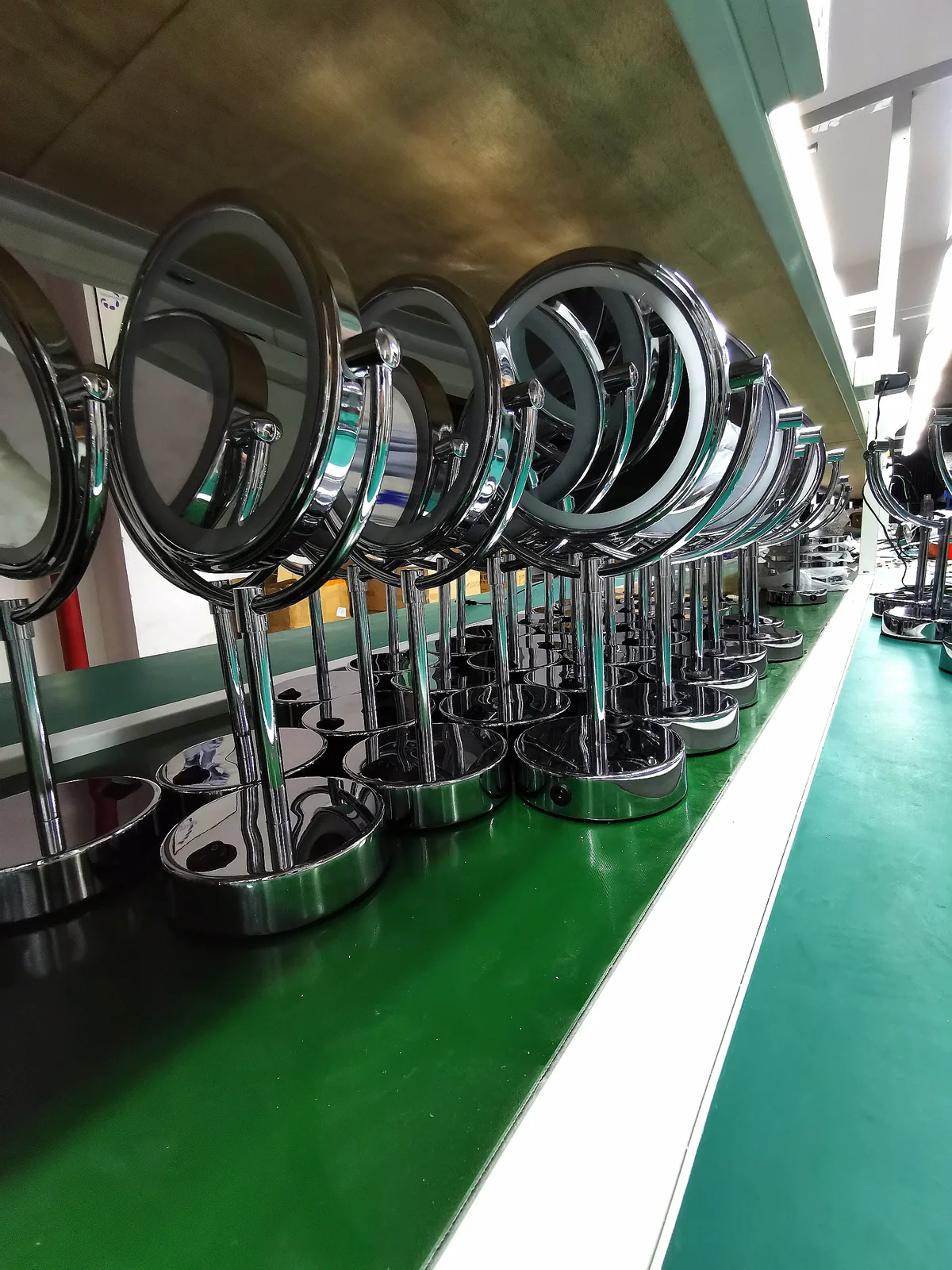
A catalog should start the conversation, not finish it. Before moving from part selection to order placement, buyers should request evidence that the supplier can manufacture the selected item under the actual project conditions.
Useful factory capability evidence includes:
- Dimensioned drawings with revision control
- Material certificates or grade declarations
- Finish specifications and test results, such as coating thickness or salt spray data when relevant
- Sample inspection reports for critical dimensions
- Photos or videos of stamping, CNC, bending, polishing, welding, plating, or assembly processes tied to similar parts
- Tooling ownership and maintenance policy
- Packaging method for cosmetic or threaded parts
- Process control records for repeat orders
- Nonconformance handling procedure and response time
If a supplier cannot distinguish between a catalog sample, a pilot lot, and a stable mass-production item, buyers should slow down. That gap often leads to inconsistent quality or lead time surprises later.
| Evidence Type | What It Proves | Why Buyers Need It |
|---|---|---|
| Controlled drawing | Part definition is stable | Prevents quote-to-production mismatch |
| Inspection report | Critical dimensions are measured | Reduces assembly failure risk |
| Finish test data | Surface treatment is verified | Important for corrosion and appearance |
| Process photos | Factory has relevant equipment | Screens out trading-only claims |
| Packaging sample | Protection method is defined | Avoids transit damage and scratches |
Practical Buyer Checklist for Catalog-to-Project Matching
Before approving a supplier shortlist, use this simple evaluation framework. It works well for standard parts, modified standard parts, and OEM parts adapted from a catalog base.
- Does the part number map clearly to a drawing or controlled specification?
- Are material grade, thickness, hardness, or alloy details stated clearly?
- Is the finish described by process standard, not only by appearance?
- Are critical dimensions and tolerances identified for assembly fit?
- Is the part a standard stocked item, made-to-order item, or prior custom example?
- What MOQ applies to sample, pilot order, and mass production?
- What lead time applies after drawing approval, sample approval, and PO release?
- Can the supplier support minor customization without full tooling redevelopment?
- What quality documents can be provided with shipment?
- How will parts be packed to protect threads, edges, and decorative surfaces?
- Who manages technical communication if engineering changes occur?
- Is there a clear process for nonconforming parts and replacement support?
If several answers remain vague, the catalog is not yet enough to support a purchasing decision.
How to Reduce Sourcing Risk Before Order Confirmation
Risk reduction starts by closing the gap between catalog information and production reality. Buyers should move in stages rather than jumping directly from catalog review to mass order.
A practical sequence is:
- Confirm the exact part or modified variant with drawing reference
- Review material and finish requirements against the intended use environment
- Request a sample or pilot lot with inspection data
- Check cosmetic consistency if the part is visible in the final product
- Verify packaging protection and carton labeling
- Align on MOQ, price break, and replenishment lead time
- Document revision control and approval responsibility before PO release
For lighting accessories and decorative hardware, finish consistency deserves extra attention. Color tone, gloss level, brushed direction, coating thickness, and edge appearance often vary more than buyers expect. If your project includes visible metal components, ask for retained samples or approved finish panels to control repeat-order variation.
Communication risk is another common issue. Reliable suppliers should be able to answer technical questions in a structured way, not through fragmented sales replies. Buyers should confirm who owns drawing review, who approves substitutions, and how engineering changes are documented. This matters as much as the quoted price.
Conclusion: Use the Catalog as a Decision Tool, Not Just a Product List
A spare parts catalog is most valuable when buyers use it to test project fit, compare supplier discipline, and identify where further proof is needed. In metal hardware and lighting accessories processing, the right catalog review can reveal whether a supplier is ready for standard supply, light customization, or full OEM/ODM collaboration.
If you are reviewing parts for a current project, the next practical step is to compare the relevant service capability behind the listed items, then discuss the exact material, finish, tolerance, and packaging requirements with the factory team. You can also review the broader manufacturing scope on the Home page or Services page to see whether the supplier’s process range matches your sourcing plan.
If your project involves finish, tolerance, or custom production questions, the next useful step is to review main company website and lighting hardware sourcing support before finalizing drawings, samples, or mass-production requirements.
 Floor Lamp Sets
 Wall Lamp Sets
 Table Lamp Sets
 Custom Hotel Parts
 Custom Made Parts
 Panels
 Tubes
Tubes Universal joints
 Machined Parts