

-
 Phone:+86 189 2494 9366
-
 E-mail:info@zsshengshi.com
-
 No.5, north of the first road, Guyi Changweiyong manufacturingdistrict, Guzhen, Zhongshan, Guangdong, P.R.C
Custom Lighting and Hardware Specs Buyers Should Verify Before Sourcing

Custom Lighting and Hardware Specs Buyers Should Verify Before Sourcing
Key Takeaways: In custom lighting and hardware projects, most sourcing problems start with incomplete fit, finish, and tolerance definitions rather than obvious production mistakes. Buyers should verify mating dimensions, material and coating specifications, inspection methods, and sample approval standards before mass production, not after assembly issues appear.
For buyers sourcing custom lighting and hardware, the risk is rarely limited to whether a part can be made. The real question is whether it will fit the mating components, survive the selected finish process, assemble consistently on the line, and remain stable across mass production lots. In lighting accessories and metal hardware, small specification gaps can create large downstream costs: bent threaded tubes that do not align with lamp bodies, decorative finishes that fail adhesion after packaging friction, holes that pass drawing inspection but still cause assembly interference, or stacked tolerances that shift the final appearance of the product.
This is why experienced buyers do not only compare price and lead time. They verify the technical definition behind the quote. A capable supplier should be able to review drawings, identify hidden manufacturing risks, recommend practical tolerances, define inspection checkpoints, and clarify what must be locked before tooling, sampling, and mass production.
Why This Issue Matters in Production
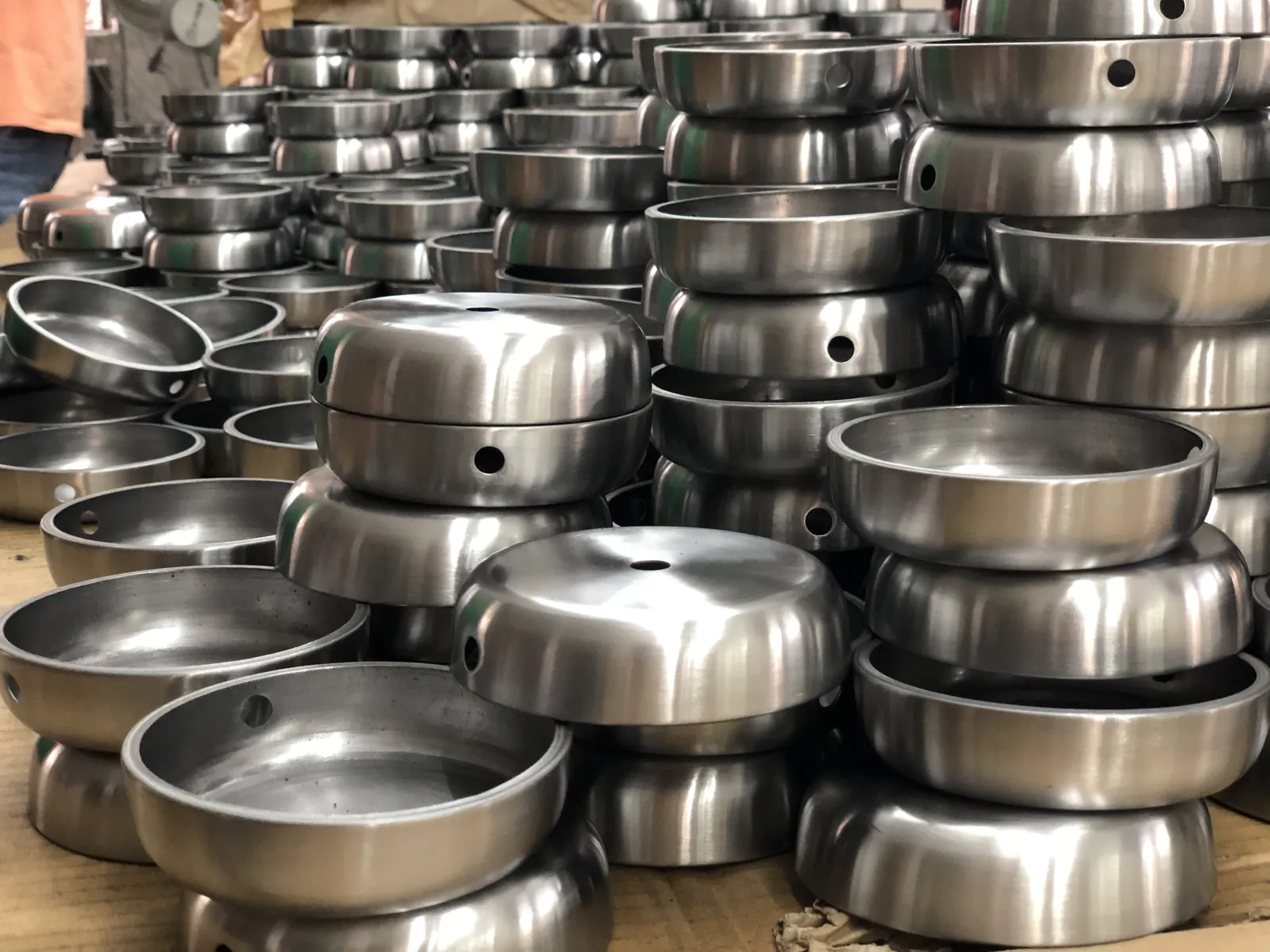
In metal hardware and lighting accessory production, one dimension almost never works alone. A decorative cap, threaded rod, stamped bracket, spun shade ring, die-cast arm, and plated fastener all interact with each other. If each part is made only to its own drawing without considering mating fit, the final assembly can still fail.
We commonly see three production-stage problems that were actually specification-stage problems:
- Nominal dimensions are defined, but functional fit dimensions are not.
- Surface finish is approved visually, but coating thickness and adhesion requirements are not defined.
- Samples are approved from hand-adjusted builds, while mass production must run with standard fixtures and normal process variation.
For example, a lamp arm bracket may look acceptable as an individual component, but after plating the hole size closes enough to create difficult pin insertion. A threaded tube may pass thread gauge inspection, yet still show visible lean after final assembly because perpendicularity between the thread axis and mounting face was not controlled. These are not rare exceptions. They are normal manufacturing outcomes when the buyer and supplier have not aligned on functional requirements.
Common Defects, Failure Points, or Hidden Risks
When sourcing lighting parts and decorative hardware, buyers should pay attention to the defects that are expensive because they appear late: during coating, assembly, packing, or customer installation. Those are the failures that damage delivery schedules and create argument over responsibility.
Typical hidden risks include:
- Thread mismatch: incorrect pitch, shallow thread engagement, plating buildup, or burrs at thread starts.
- Hole position drift: especially on stamped or welded brackets where datum control is weak.
- Finish inconsistency: color variation between lots, poor adhesion on polished surfaces, and edge thinning on electroplated parts.
- Assembly interference: coating thickness, weld spatter, or deformed parts reducing clearance.
- Cosmetic distortion: sink marks in die cast parts, polishing waves on visible faces, or heat tint near welds.
- Packaging damage: decorative parts rubbing in transit and arriving with scratches that were not present at final inspection.
A frequent inspection mistake is measuring only easy dimensions. Operators may check overall length, width, and hole diameter, but ignore flatness, concentricity, perpendicularity, or mating-face alignment. In lighting assemblies, these geometric characteristics often matter more than a simple outside dimension because they affect visual straightness and final fit.
Material substitution is another risk buyers should control. For decorative hardware, changing from brass to low-carbon steel with plating may reduce cost, but it also changes weight, corrosion behavior, polish response, and edge definition. Changing from 304 stainless to 201 stainless may not be visible in photos, but it can affect corrosion performance in humid indoor environments. If material grade is not clearly specified on the quotation and order, disputes later become difficult to resolve.
What Should Buyers Compare, Inspect, Measure, or Confirm?
Before approving a supplier for samples or production, buyers should compare not only process capability but also how the supplier defines and controls the critical characteristics. The table below summarizes the checkpoints that matter most for component fit, appearance, and repeatability.
| Checkpoint | What to Verify | Inspection Method | Typical Risk if Missed |
|---|---|---|---|
| Material grade | Exact alloy, temper, thickness, and substitution rules | Mill cert, PMI if needed, incoming check | Corrosion or forming failure |
| Mating dimensions | Hole location, slot width, thread engagement, clearance stack | Caliper, gauge, fixture, trial assembly | Assembly interference |
| Geometric control | Flatness, perpendicularity, concentricity, runout | Height gauge, CMM, custom fixture | Crooked final appearance |
| Surface finish | Color standard, gloss, texture, coating type | Master sample, visual standard, gloss meter | Lot-to-lot mismatch |
| Coating thickness | Micron target and min-max range | Thickness gauge, lab report | Poor corrosion or fit loss |
| Burr and edge condition | Deburring standard and safe edge requirement | Visual and touch inspection | Cut hazards or coating peel |
| Weld quality | Location, penetration, spatter control, polish area | Visual standard, section check if needed | Weak joints or cosmetic rework |
| Packaging protection | Part separation, bag type, tray support, carton drop risk | Packing trial and transit simulation | Scratch claims on arrival |
The most useful verification method is often a controlled trial assembly, not a dimensional report alone. If the supplier can build the actual mating set using production-intent components and standard operators, buyers get a much clearer view of fit risk before approving the sample.
Material and Finish Tradeoffs Buyers Should Review
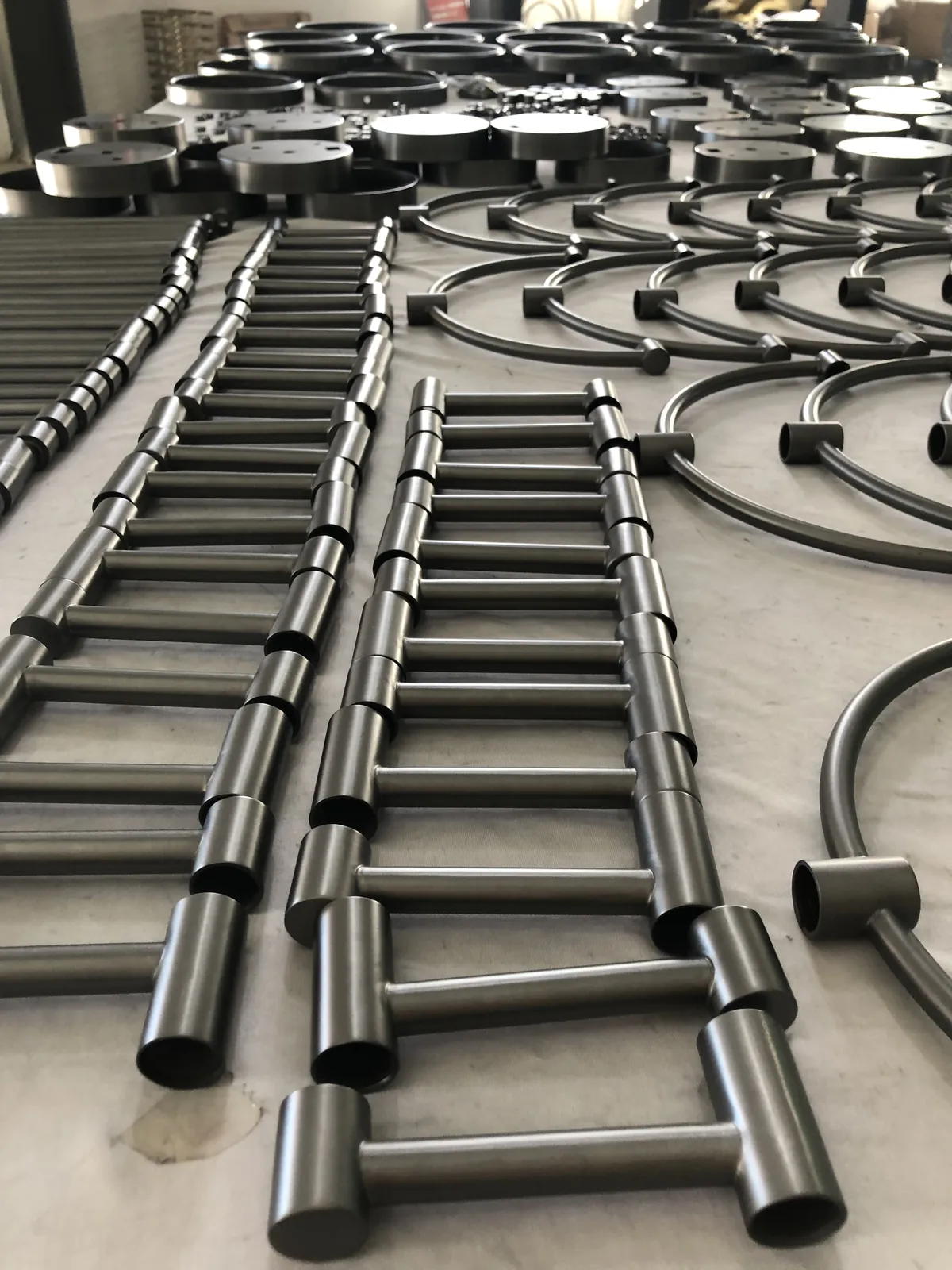
Not every material and finish combination behaves the same in production. Decorative hardware often looks simple in CAD, but process compatibility determines whether the part can be polished, plated, powder coated, or assembled without visible defects.
| Option | Strengths | Risks | Best Use |
|---|---|---|---|
| Brass | Good machinability and premium finish response | Higher cost and softness in some forms | Decorative visible parts |
| Mild steel | Low cost and strong structural value | Rust risk if coating is weak | Hidden brackets and frames |
| 304 stainless | Good corrosion resistance and stable appearance | Harder forming and higher tooling wear | Humid indoor applications |
| Zinc alloy die cast | Complex shapes and good decorative potential | Porosity and polishing limitations | Shaped covers and knobs |
| Powder coat | Durable and cost-effective coverage | Edge buildup and thread masking needed | Functional visible hardware |
| Electroplating | Bright decorative finish options | Thickness variation and adhesion sensitivity | Premium decorative parts |
The practical point for buyers is simple: do not approve material and finish separately. Approve them as a production combination. A polished zinc die casting and a polished brass part can both be called “satin gold” in a purchase description, but they will not polish, plate, or age in the same way.
Practical Pre-Production Verification Checklist
Before sample approval or PO release, buyers should run a short but disciplined verification process. This catches most repeatable failures early.
- Confirm the latest drawing revision, 3D file, and BOM are aligned.
- Mark critical-to-fit and critical-to-appearance dimensions on the drawing.
- Define tolerance values, not only nominal sizes.
- Specify thread standard, class, and gauge method.
- Confirm material grade, thickness, hardness, and allowed substitutions.
- Define finish code, color reference, gloss range, and coating thickness.
- Review whether finishing changes hole size, thread fit, or assembly clearance.
- Request a control plan or inspection sheet for key dimensions.
- Approve a master sample with clear cosmetic acceptance criteria.
- Require trial assembly using mating parts or approved gauges.
- Review packaging method for scratch-sensitive decorative surfaces.
- Lock what happens if the supplier changes process, sub-supplier, or raw material source.
If a supplier cannot convert these points into a documented sample package, the buyer should expect avoidable variation in production.
What a Reliable Supplier or Factory Should Be Able to Provide
A reliable factory in custom metal lighting accessories should do more than say “drawing accepted.” It should be able to provide evidence that the part can be made consistently and inspected correctly.
At minimum, buyers should expect the supplier to provide:
- Drawing review feedback with identified risk points before tooling or sampling.
- Process recommendation based on geometry, finish, and order volume.
- Material certificates or traceable raw material records.
- Dimensional inspection reports tied to drawing balloons or key features.
- Finish samples or color standards with defined acceptance language.
- Thread gauges, checking fixtures, or assembly fixtures where needed.
- Pilot-run validation, not only first handmade samples.
- Packaging proposal for decorative and scratch-sensitive components.
- Clear nonconformance handling and corrective action process.
The best suppliers also challenge the drawing when needed. If a tolerance is unrealistic for stamping, if polishing will round a critical edge, or if plating thickness will affect thread fit, the factory should raise that issue early. Buyers usually save more money working with a supplier that flags problems before sampling than with one that quietly quotes everything and struggles later.
When to Involve the Factory Early
Factory input is most valuable before details are frozen. If the part includes multi-process production such as stamping plus welding plus plating, or machining plus polishing plus assembly, early review can prevent expensive revisions.
Buyers should involve the factory early when:
- The design includes visible decorative surfaces with strict appearance standards.
- Several components must align visually in the final lamp or hardware assembly.
- Tight fit is required after coating or plating.
- The part combines cosmetic and structural functions.
- The supplier must source subcomponents and complete assembly.
- The order will scale from pilot quantity to mass production quickly.
Early involvement allows the factory to suggest better datum strategy, process order, fixture design, finish masking, tolerance relaxation where safe, and packaging protection before cost and lead time are locked. In practice, this is where many successful sourcing programs separate from problematic ones.
Conclusion
Sourcing custom lighting and hardware successfully is not only about finding a factory that can fabricate metal parts. It is about verifying that the supplier understands fit, finish, tolerance control, inspection discipline, and assembly reality. Buyers who confirm these details before sample approval and production launch usually avoid the most expensive failures: rework, cosmetic claims, delayed assembly, and inconsistent lots.
If you are reviewing a new project, the next practical step is to compare your drawings, finish requirements, and assembly expectations against actual factory capability. You can start by reviewing our Home page for company background, or explore our Services to discuss custom manufacturing requirements, inspection expectations, and production feasibility for your next sourcing program.
If your project involves finish, tolerance, or custom production questions, the next useful step is to review main company website and lighting hardware sourcing support before finalizing drawings, samples, or mass-production requirements.
 Floor Lamp Sets
 Wall Lamp Sets
 Table Lamp Sets
 Custom Hotel Parts
 Custom Made Parts
 Panels
 Tubes
Tubes Universal joints
 Machined Parts