

-
 Phone:+86 189 2494 9366
-
 E-mail:info@zsshengshi.com
-
 No.5, north of the first road, Guyi Changweiyong manufacturingdistrict, Guzhen, Zhongshan, Guangdong, P.R.C
Chandelier Parts Suppliers: Factory Verification Checklist for OEM Sourcing

Chandelier Parts Suppliers: Factory Verification Checklist for OEM Sourcing
Key Takeaways: When evaluating chandelier parts suppliers, price and sample appearance are not enough; buyers need to verify process capability, dimensional control, finish consistency, and assembly fit before release to mass production. A reliable factory should provide clear material data, inspection standards, finish specifications, and production control records that reduce OEM sourcing risk.
For procurement teams comparing chandelier parts suppliers, the real risk is rarely the quotation itself. Problems usually appear later: arm threads that do not match center bodies, plating color drift between batches, burrs at stamped edges that damage wiring, or decorative tubes that look acceptable as loose parts but fail during final assembly. In chandelier hardware, many components are visually simple, but production control is not. The buyer has to verify whether the supplier can hold fit, finish, and consistency across mixed processes such as stamping, spinning, tube cutting, threading, welding, polishing, plating, and assembly.
This is why factory verification matters before sample approval and before purchase order release. A capable supplier should not only make attractive samples; it should also demonstrate how it controls tolerances, protects cosmetic surfaces, inspects threaded interfaces, manages outsourced finishing, and prevents mismatch during multi-part assembly. For OEM lighting projects, especially those with decorative metal hardware, these details directly affect yield, rework cost, and delivery reliability.
Why this issue matters in production
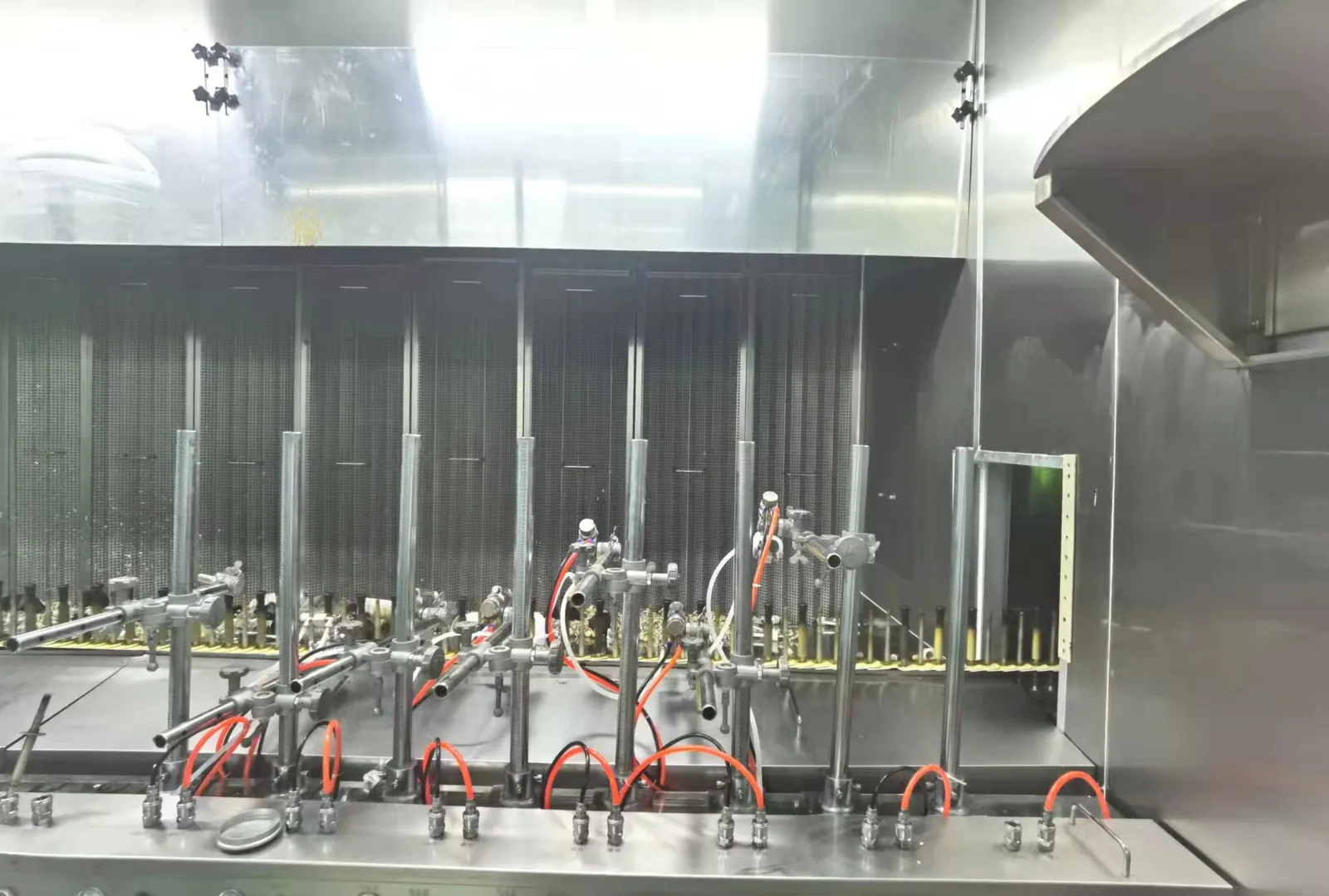
Chandelier parts often combine structural, decorative, and electrical functions in one assembly. A cup, canopy, arm, nipple, loop, chain link, tube, or center column may look like a standard hardware item, but each part interacts with adjacent parts through thread engagement, hole position, wall thickness, coating build-up, and cosmetic orientation. If one supplier controls only single-part appearance and not system fit, assembly problems move downstream to your line or your customer.
In practice, the most expensive failures are not always obvious defects. A brass-plated steel component may pass visual inspection but rust later at sharp edges because polishing exposed base metal. A spun canopy may sit unevenly because flange flatness was not controlled after trimming. A threaded stem may seize after plating because thread allowance was not adjusted for coating thickness. These are common factory-level issues, not design theory.
For sourcing managers, this means supplier evaluation should focus on repeatability, not just capability. The question is not whether the factory can make one approved sample. The question is whether it can make 5,000 sets with stable dimensions, finish color match, correct packaging protection, and low assembly variation.
Common defects, failure points, or hidden risks
In chandelier hardware manufacturing, recurring defects usually come from process transitions: blanking to forming, welding to polishing, polishing to plating, plating to threading, and part production to final assembly. Buyers should ask where the factory sees the highest defect rate and how it controls that point. If the answer is vague, that is a warning sign.
- Thread mismatch: common on lamp nipples, couplings, finials, and arm connectors when thread gauges are not used consistently or when plating closes the thread.
- Weld read-through after plating: polishing may look acceptable before plating, but weld zones become visible after electroplating if base leveling is poor.
- Color variation: bright brass, brushed brass, nickel, black, and antique finishes can drift lot to lot if outsourced finishing lacks standard panels and batch records.
- Burrs and sharp edges: especially at punched holes, tube cuts, and stamped decorative parts; these can damage wire insulation or create handling complaints.
- Wall thickness inconsistency: thin spun or deep-drawn cups can deform during polishing or transport, causing poor fit at installation.
- Hole position deviation: arm angles and mounting hole locations affect symmetry; small errors become visible on multi-arm chandeliers.
- Assembly interference: decorative sleeves, crystal holders, and locknuts may all be within single-part tolerance but still interfere when stacked.
One common inspection mistake is checking only loose dimensions without verifying mating parts together. Another is approving finish color under one light source only. A factory experienced in lighting accessories should inspect both dimensional compliance and assembly result, because chandelier hardware is judged by how the full product looks and goes together.
What should buyers compare when evaluating chandelier parts suppliers?
The best comparison method is to review suppliers against the same technical checkpoints. This reduces the chance of choosing a low-price source that later creates line stoppage, rework, or customer complaints. Below is a practical comparison framework used before sample confirmation or factory approval.
| Checkpoint | What to Verify | Typical Risk | Evidence a Reliable Factory Should Show |
|---|---|---|---|
| Material control | Grade, thickness, hardness | Weak forming or rust risk | Material certs, incoming inspection records |
| Thread quality | Gauge fit, plating allowance | Seizing or loose fit | Go/no-go gauges, mating test records |
| Surface finish | Color, gloss, texture | Batch mismatch | Approved master sample, finish panel, lot traceability |
| Dimensional stability | Critical OD, ID, hole location | Poor assembly alignment | Control plan, in-process inspection sheets |
| Weld and polish quality | Seam smoothness, distortion | Visible marks after plating | Before/after samples, operator standards |
| Assembly verification | Stack-up fit, orientation | Line rework | Trial assembly photos or fixture checks |
| Packaging protection | Separation, scratch prevention | Transit damage | Pack-out standard, drop or transit experience |
If two suppliers quote similar pricing, this type of comparison usually reveals who is controlling the process and who is only reacting to defects after they happen.
What a reliable supplier or factory should be able to provide
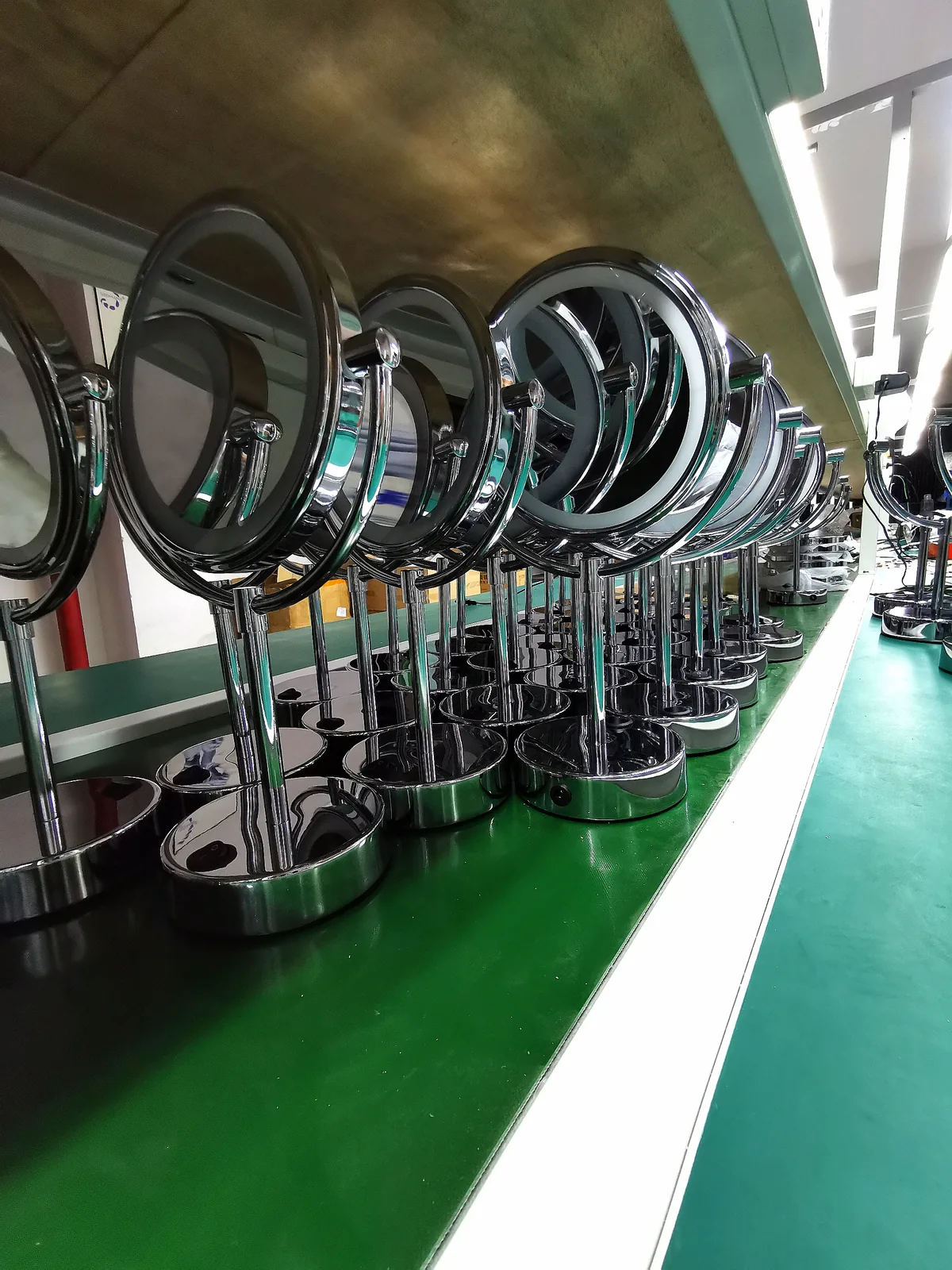
A dependable chandelier hardware factory should be able to provide more than drawings and samples. It should provide process evidence. For OEM sourcing, buyers should expect the supplier to support technical review with documents, test methods, and production controls that match the risk level of the part.
- Material specification confirmation for brass, steel, stainless steel, aluminum, or zinc alloy parts.
- Finish specification details, including plating type, powder coat system, brushed direction, or antique effect standard.
- Critical dimension list with tolerance definition, especially for threaded interfaces, tube diameters, hole spacing, and decorative fit areas.
- Go/no-go gauges, thread gauges, and simple fixtures for repetitive inspection.
- First article inspection report for new tooling or revised parts.
- Pre-production sample approval records tied to a signed golden sample.
- In-process and final inspection standards for cosmetic and dimensional defects.
- Assembly trial capability for multi-part chandelier sets, not only single components.
- Packaging method that protects plated and polished parts from rubbing, denting, and moisture exposure.
If the factory outsources plating, painting, or die-casting, that is not automatically a problem. The key issue is whether it can control these external processes through approved subcontractors, incoming verification, and lot traceability. Many supply failures happen when a trading-style supplier cannot manage finishing consistency across multiple subcontractors.
Practical factory verification checklist before sample approval or mass production
Use the checklist below during supplier qualification, video audit, site visit, or pre-order review. It is designed for chandelier metal hardware and lighting accessory projects where appearance and fit are both critical.
| Stage | Buyer Checkpoint | Acceptance Focus | Common Missed Issue |
|---|---|---|---|
| RFQ | Confirm material, finish, annual volume, critical dimensions | Quote matches real spec | Supplier prices to an incomplete drawing |
| Sampling | Approve with mating parts and finish standard | Appearance plus fit | Loose sample approved without assembly test |
| Pilot run | Review first batch consistency and yield | Repeatability | Good prototype, unstable batch output |
| Mass production | Check in-process control and final inspection plan | Defect prevention | Factory inspects only final packed goods |
| Pre-shipment | Audit finish, count, labels, packaging, random assembly | Shipment readiness | Cosmetic damage inside cartons |
A practical rule: if a feature affects assembly, electrical routing, or visible symmetry, it should be treated as a critical characteristic and checked before mass production, not after customer complaints.
When to involve the factory early
Buyers should involve the factory early when the chandelier design includes custom decorative geometry, mixed materials, heavy plating requirements, thin-wall spun parts, welded structures that must remain cosmetic, or multiple threaded interfaces in one assembly. Early review helps avoid designs that look correct in CAD but are unstable in production.
For example, a designer may specify a sharp decorative corner on a stamped brass cover. The factory may know that this corner will thin during forming and burn through during polishing. Or a product team may specify a tight tube-to-cap fit while also requiring thick powder coating; the factory should flag that coating build-up will change the insertion condition. These are the kinds of manufacturing signals experienced suppliers raise before tooling starts.
Early supplier input is also important when finish approval is critical. Antique brass, brushed champagne, satin black, and mixed-metal looks are often approved visually, but visual approval alone is risky. The factory should align on base material, polishing direction, coating thickness, and master color sample before pilot production. Otherwise, the same finish name can produce noticeably different results.
How to make supplier approval more reliable
A stronger approval process uses three levels of confirmation: document review, physical sample review, and process review. Document review confirms the supplier understood the specification. Physical sample review confirms appearance and fit. Process review confirms the factory can repeat the result at volume. Skipping the third step is where many OEM sourcing programs fail.
For chandelier hardware, buyers should define a small set of critical-to-quality items in writing. Typical examples include thread engagement, arm angle symmetry, finish color range, no burrs at wire path, coating adhesion, and scratch-free packaging. Once these are documented, the supplier can build inspection around them instead of relying on operator judgment alone.
This approach helps procurement and engineering teams evaluate chandelier parts suppliers on the factors that actually affect delivery, assembly efficiency, and customer-facing quality.
Conclusion
The best chandelier parts suppliers are not only competitive on price; they are disciplined on specification review, process control, finish consistency, and assembly verification. For OEM sourcing, buyers should verify how the factory manages materials, tolerances, plating or coating risk, threaded fit, cosmetic inspection, and packaging protection before approving samples or placing volume orders.
If you are comparing manufacturing partners for chandelier hardware, the next practical step is to review the factory’s production capabilities, confirm the critical specifications for your project, and discuss how sample approval will translate into mass production control. You can explore our Home page for company background, review our Services for custom metal hardware and lighting accessory processing support, or contact the team to discuss a sourcing project in more detail.
If your project involves finish, tolerance, or custom production questions, the next useful step is to review main company website and lighting hardware sourcing support before finalizing drawings, samples, or mass-production requirements.
 Floor Lamp Sets
 Wall Lamp Sets
 Table Lamp Sets
 Custom Hotel Parts
 Custom Made Parts
 Panels
 Tubes
Tubes Universal joints
 Machined Parts