

-
 Phone:+86 189 2494 9366
-
 E-mail:info@zsshengshi.com
-
 No.5, north of the first road, Guyi Changweiyong manufacturingdistrict, Guzhen, Zhongshan, Guangdong, P.R.C
LED Lighting Components Suppliers: Factory QC Checks Before You Source

LED Lighting Components Suppliers: Factory QC Checks Before You Source
Key Takeaways: When evaluating led lighting components suppliers, buyers should verify more than price and sample appearance. The most reliable factories can show process controls for material, finish, dimensions, fit, and traceable inspection before mass production starts. A structured QC review before sourcing reduces assembly problems, cosmetic claims, and delayed launches.
For procurement teams and engineers, the difficult part of sourcing LED lighting hardware is not finding a supplier list. It is identifying which led lighting components suppliers can consistently deliver parts that fit, assemble, finish well, and stay stable across production batches. In metal hardware and lighting accessory projects, many failures do not come from dramatic defects. They come from small deviations: a hole position drifting by 0.2 mm, powder coating building too thick on a mating surface, a stamped bracket springing back after forming, or a plated decorative ring showing color variation under showroom lighting.
Those issues often pass casual sample review but create problems during pilot build or field installation. That is why supplier evaluation should include factory QC checks before you approve samples, release tooling, or place the first mass order. A supplier that understands lighting assemblies should be able to discuss tolerances, coating thickness, fixture interface dimensions, packaging protection, and inspection records in practical terms rather than generic quality claims.
Why This Issue Matters in Production
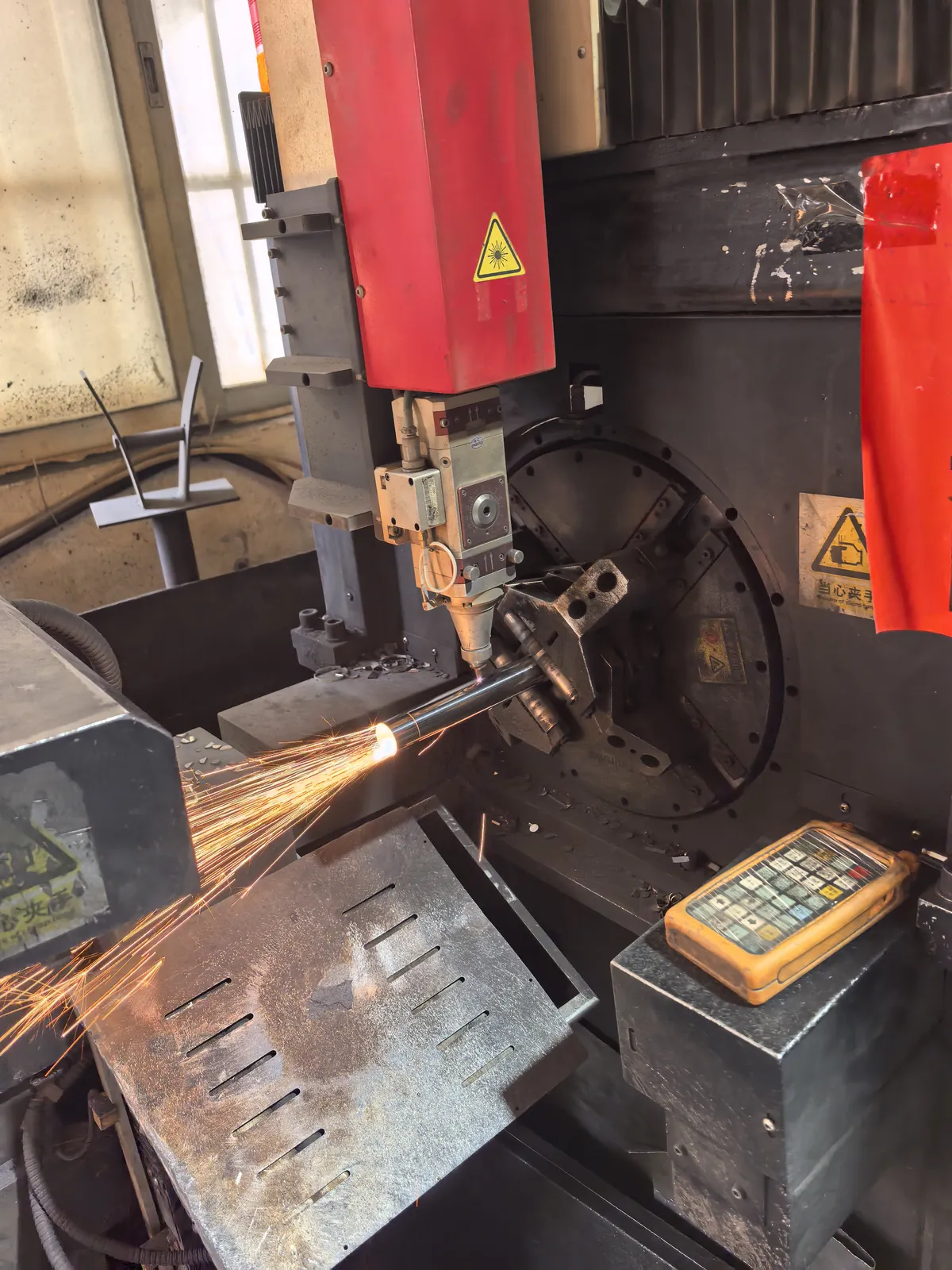
LED lighting products combine cosmetic requirements with mechanical fit requirements. A part can look acceptable on its own and still fail in assembly. Common examples include aluminum housings that warp slightly after machining, steel mounting plates that distort after welding, die-cast parts with porosity near threaded holes, and decorative trims that scratch because the packaging was designed for shipping efficiency rather than surface protection.
In production, these problems become expensive for three reasons:
- They are often discovered late, during assembly or customer installation.
- They create mixed responsibility between the hardware supplier, LED module supplier, and final assembler.
- They are difficult to sort quickly if the incoming inspection standard was not defined in advance.
For B2B buyers, the main sourcing question is simple: can the supplier control repeatability, not just make one acceptable sample? A capable factory should be able to explain its control plan from raw material receipt to final packing, including what dimensions are critical to function and what cosmetic limits are accepted by lot.
Common Defects, Failure Points, and Hidden Risks
In metal hardware and lighting accessories processing, the most common failures are usually predictable. Buyers should ask suppliers where defects typically occur in their own process. An experienced factory will answer directly.
Typical risk areas include:
- Dimensional drift: Stamping dies wear, bending angles vary by batch, and machined features can shift if fixtures are not maintained.
- Fit-up problems: Lens holders, heat sink interfaces, mounting tabs, and trim rings may not align if datum references are inconsistent between drawings and production fixtures.
- Surface finish mismatch: Anodizing shade variation, powder coat orange peel, plating burn marks, and brushed grain inconsistency are common on visible parts.
- Thread quality issues: Cross-threading, shallow tapping, paint or coating buildup in threads, and weak thread engagement in die-cast or thin-wall parts can cause assembly failures.
- Material substitution risk: Lower-grade aluminum, thinner sheet thickness, or incorrect stainless grade may pass visual inspection but reduce strength, corrosion resistance, or thermal performance.
- Packaging damage: Good parts can arrive scratched, dented, or rubbed if dividers, film, or stack height are not validated.
One common inspection mistake is checking only outer appearance and a few overall dimensions. In lighting assemblies, the more important checkpoints are often hidden: flatness at LED board contact surfaces, positional tolerance of mounting holes, perpendicularity of threaded bosses, burr level near wire routing edges, and coating thickness on grounding or mating areas.
What should buyers compare when evaluating led lighting components suppliers?
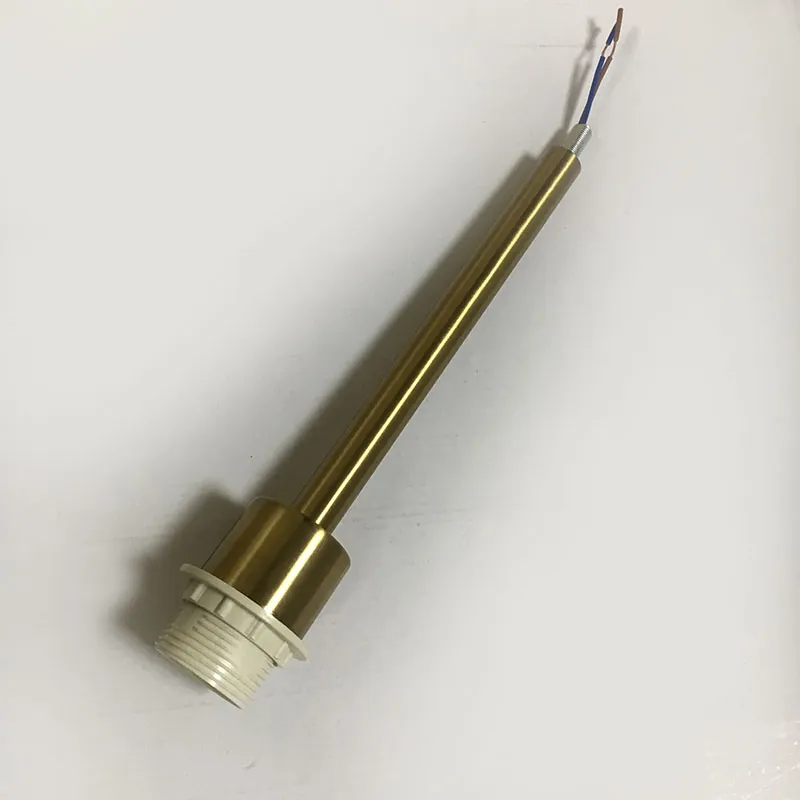
A useful comparison should go beyond unit price, lead time, and sample photos. Buyers should compare how each supplier controls the characteristics that affect assembly, appearance, and long-term consistency. The table below is a practical starting point for supplier evaluation.
| Checkpoint | What to Verify | Typical Risk | Evidence Supplier Should Provide |
|---|---|---|---|
| Material control | Grade, thickness, hardness, certs | Substitution or unstable forming | Mill certs and incoming inspection |
| Dimensional control | Critical-to-fit dimensions and datums | Assembly interference | FAI report and gauge method |
| Surface finish | Color, gloss, thickness, adhesion | Visible mismatch or peeling | Approved master sample and test data |
| Thread and hardware fit | Go/no-go, torque, engagement | Strip-out or misassembly | Thread inspection record |
| Thermal interface surfaces | Flatness, roughness, coating limits | Poor heat transfer | Flatness check and process note |
| Packaging protection | Part separation and drop safety | Transit scratches | Pack-out spec and shipment photos |
This comparison works best when tied to your actual assembly drawing. If a supplier cannot identify which dimensions are critical and which are only reference dimensions, that is a warning sign. In practice, factories with stronger engineering discipline ask better questions before quoting and sampling.
QC Checks Buyers Should Confirm Before Sample Approval
Before approving samples, buyers should ask for a defined inspection package, not just photos and a statement that parts are “OK.” At sample stage, the goal is to confirm manufacturability and repeatability, not only appearance.
| QC Area | Inspection Criteria | Suggested Method | Why It Matters |
|---|---|---|---|
| First article | Critical dimensions to drawing | FAI with marked balloon drawing | Confirms process can hit design intent |
| Finish thickness | Coating or plating within spec | Thickness gauge | Avoids fit loss and corrosion issues |
| Adhesion and hardness | No peeling or soft surface | Cross-hatch or pencil test | Prevents coating failure in use |
| Flatness and warp | Mating face within limit | Surface plate or fixture gauge | Protects thermal and assembly performance |
| Thread quality | Correct pitch and engagement | Go/no-go gauge | Reduces line stoppage during assembly |
| Visual standard | Accepted scratches, dents, color range | Limit sample board | Prevents later disputes on appearance |
A frequent buyer mistake is approving a hand-finished sample that does not represent the real production route. For example, a prototype may be manually polished or selectively reworked, while mass production uses standard tumbling, brushing, or automated coating. Always ask whether the sample was made with production tooling, production finish, and production packaging. If not, approval should be conditional.
What a Reliable Supplier or Factory Should Be Able to Provide
A reliable factory does not need to be the biggest supplier, but it should be able to provide clear evidence that it controls the process. In LED lighting hardware projects, buyers should expect the following:
- Material certificates for aluminum, steel, stainless steel, or zinc alloy used in the quoted part.
- Process flow showing key operations such as stamping, CNC machining, die casting, welding, polishing, anodizing, plating, powder coating, and final inspection.
- First article inspection reports tied to drawing revision and sample date.
- Defined cosmetic standard for visible surfaces, including viewing distance and lighting condition.
- Inspection tools appropriate to the part, such as calipers, height gauges, thread gauges, coating thickness meters, and custom checking fixtures.
- Traceability by lot or batch for production and finishing.
- Packaging specification that protects visible surfaces and maintains part orientation.
If the supplier outsources finishing, plating, anodizing, or die casting, that is not automatically a problem. The real issue is whether the supplier manages those subcontractors with incoming checks, finish standards, and lot traceability. Buyers should ask who owns the final quality decision and how rejected subcontracted parts are segregated.
Practical Supplier Verification Checklist
Use this checklist before moving from quotation to sample approval and then to mass production:
- Confirm drawing revision, material grade, finish code, and critical dimensions in writing.
- Mark critical-to-fit and critical-to-appearance features on the drawing.
- Ask whether the quoted process matches the sample process.
- Review tolerance capability for holes, bends, threads, flatness, and visible gaps.
- Verify coating or plating thickness range and any masking requirements.
- Check whether finish on mating surfaces will affect grounding, thermal contact, or screw fit.
- Request FAI data with actual measured values, not only pass/fail marks.
- Approve a cosmetic limit sample for visible surfaces.
- Review packing method with part-to-part separation for decorative items.
- Confirm the supplier’s outgoing inspection plan and acceptable quality limit for shipment.
This level of verification is especially important for custom bezels, brackets, housings, heat sink-related metal parts, trim rings, mounting plates, and connector hardware. These parts seem simple, but small process variation can affect final fixture performance and installation time.
When to Involve the Factory Early
The best time to involve the factory is before final drawing release, especially when the project includes tight visual requirements, stacked tolerances, or multiple mating parts from different suppliers. Early supplier input can prevent avoidable redesigns.
Factory involvement is particularly useful when:
- The part combines cosmetic and structural functions.
- The design includes thin walls, deep draws, narrow bend flanges, or threaded features near edges.
- The finish thickness may change fit or visible edge quality.
- The part interfaces with LED boards, diffusers, drivers, or plastic housings from other vendors.
- The assembly requires controlled flatness for heat transfer or gasket sealing.
An experienced supplier can recommend practical changes such as adding bend relief, adjusting hole-to-edge distance, defining non-coated contact zones, widening tolerance on non-critical features, or converting a difficult cosmetic geometry into a more stable process route. These adjustments are usually cheaper before tooling than after pilot production starts.
Conclusion
When comparing led lighting components suppliers, the safest decision usually comes from the supplier that can explain process risk clearly and back up quality claims with inspection evidence. Price remains important, but in lighting hardware, repeatable fit, stable finish, and controlled packaging often decide whether a project launches smoothly or turns into a sorting problem.
If you are reviewing a new lighting hardware project, the next step is to compare factory capability against your drawing, finish, and assembly requirements. You can review our Home page for manufacturing scope, explore our Services for custom metal hardware and lighting accessory processing, or discuss your sourcing project with our team before sample approval.
If your project involves finish, tolerance, or custom production questions, the next useful step is to review main company website and lighting hardware sourcing support before finalizing drawings, samples, or mass-production requirements.
 Floor Lamp Sets
 Wall Lamp Sets
 Table Lamp Sets
 Custom Hotel Parts
 Custom Made Parts
 Panels
 Tubes
Tubes Universal joints
 Machined Parts