

-
 Phone:+86 189 2494 9366
-
 E-mail:info@zsshengshi.com
-
 No.5, north of the first road, Guyi Changweiyong manufacturingdistrict, Guzhen, Zhongshan, Guangdong, P.R.C
Lamp Base Parts Suppliers: Factory Verification Checklist for B2B Buyers

Lamp Base Parts Suppliers: Factory Verification Checklist for B2B Buyers
Key Takeaways: When evaluating lamp base parts suppliers, buyers should verify more than price and sample appearance. The real sourcing risks are hidden in material control, thread fit, plating consistency, weld quality, and process discipline before mass production. A reliable factory should be able to prove capability with drawings, inspection records, finish specifications, and clear pre-production controls.
For procurement teams and engineers, qualifying lamp base parts suppliers is rarely a simple RFQ exercise. A lamp base may look like a straightforward metal component, but in production it is usually a multi-process assembly involving stamping, deep drawing, spinning, CNC turning, threading, welding, polishing, plating, powder coating, and final assembly fit checks. Small deviations in any of those steps can create visible defects, unstable assembly, grounding issues, poor finish adhesion, or costly line stoppages at your plant.
This is why supplier evaluation should focus on factory verification, not only quotation speed. Buyers need to know whether the supplier can hold critical dimensions, manage cosmetic standards, control outsourced finishing, and inspect the features that actually affect assembly and end-use performance. A good-looking sample is not enough if the factory cannot repeat it over 5,000 or 50,000 pieces.
Why this issue matters in production
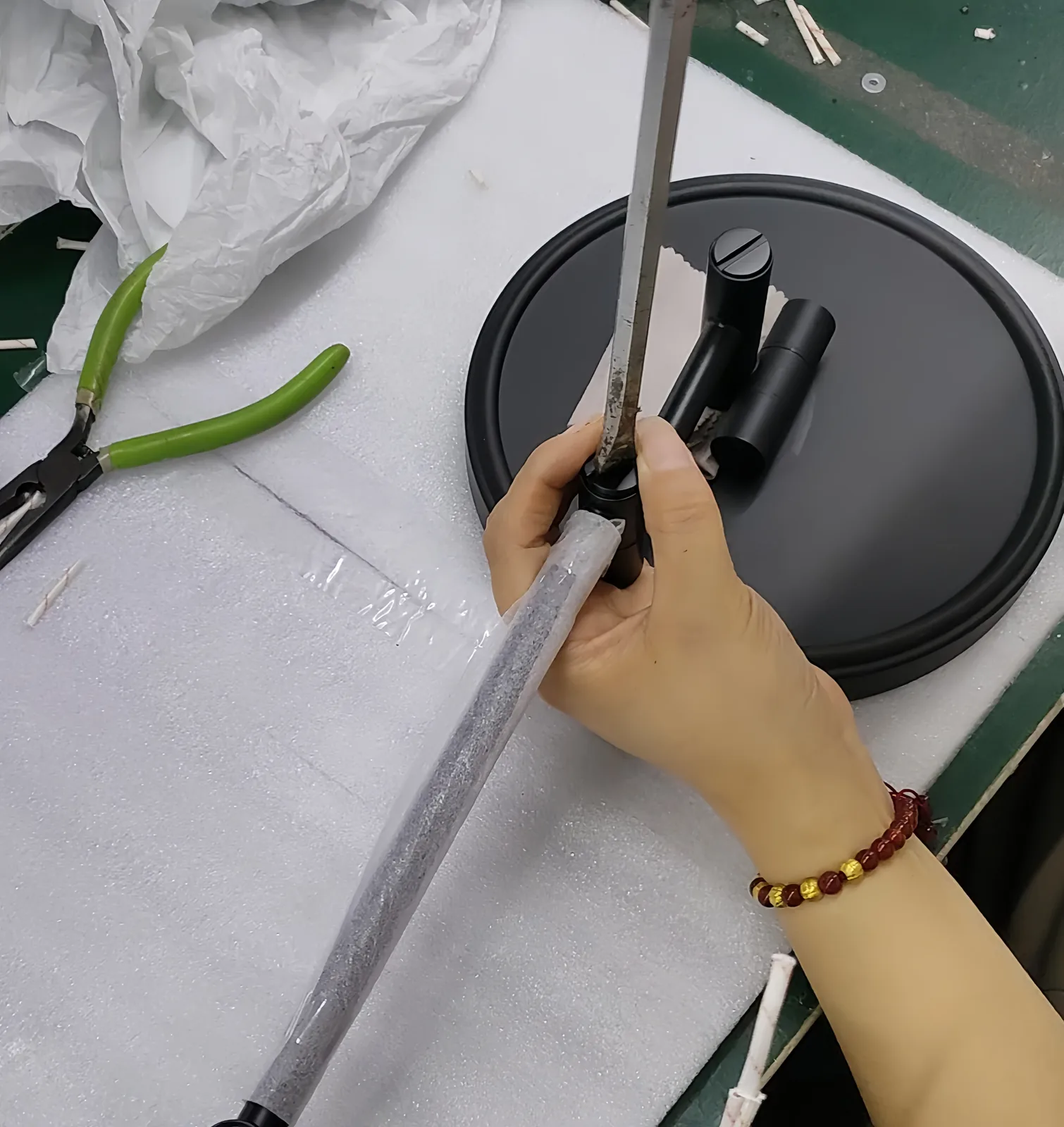
Lamp base parts are often treated as low-risk hardware until they reach assembly. That is where hidden variation shows up. Threaded stems may bind with mating tubes. Stamped covers may sit unevenly because flatness was not controlled after polishing. Plated parts may fail salt spray or show color mismatch between lots because the supplier changed the plating subcontractor. Welded joints may pass visual inspection but crack later because heat input distorted thin-wall tubing.
In lighting accessories, appearance and fit usually matter at the same time. Buyers are not only purchasing a metal part; they are purchasing dimensional compatibility, coating consistency, and assembly reliability. If the factory does not understand that relationship, the result is often rework, sorting, or delayed launch.
From a cost perspective, the expensive problems are usually not the obvious ones. A burr on a hidden edge is easy to remove. A hole position shift that misaligns a lamp holder bracket across 20% of a lot is far more disruptive. So is inconsistent plating thickness that causes poor conductivity on one model and overbuilt cost on another. Supplier verification should therefore be tied to the actual function of each part, not just a generic appearance standard.
Common defects, failure points, or hidden risks
Experienced buyers usually see the same failure patterns across lamp base hardware projects. Most are preventable if the factory has the right controls before sample approval and before mass production release.
- Thread mismatch between stem pipes, nuts, and mating inserts due to poor gauge control or mixed standards.
- Wobble or tilt after assembly caused by concentricity error, tube straightness issues, or uneven welding fixtures.
- Visible surface waves after polishing because the base material had draw marks, sink, or stamping distortion.
- Plating peel, pitting, or color variation due to poor pre-treatment, inconsistent bath control, or uncontrolled subcontract finishing.
- Powder coating edge build-up that reduces fit on mating diameters or covers grounding points.
- Burrs at slots, holes, or cut tube ends that damage wires during assembly.
- Hole position drift that affects bracket mounting, switch installation, or cord exit alignment.
- Thin-wall deformation during crimping, spinning, or welding, especially on decorative covers.
- Mixed material lots, such as low-grade steel substituted for brass or stainless, leading to finish or corrosion problems.
- Poor carton design that causes part-to-part rubbing and cosmetic damage after a good final inspection.
One common inspection mistake is over-relying on visual checks for cosmetic parts while under-checking fit dimensions. Another is measuring dimensions before plating or coating but not after finish build-up. For lamp base parts, final dimensions after surface treatment are often the ones that matter in real assembly.
What should buyers compare when evaluating lamp base parts suppliers?
A practical supplier comparison should cover process capability, inspection discipline, finish control, and documentation quality. Buyers should ask not only what the supplier can make, but how they prevent variation lot after lot.
| Checkpoint | What to Verify | Typical Risk | Evidence to Request |
|---|---|---|---|
| Materials | Grade, thickness, hardness, supplier traceability | Cracking, corrosion, finish failure | Material certs, incoming inspection records |
| Thread control | Standard, pitch, gauge method, mating tests | Assembly jam or looseness | Go/no-go gauges, fit reports |
| Dimensional capability | Critical tolerances and fixture repeatability | Misalignment, wobble | FAI report, control plan |
| Surface finish | Plating type, coating thickness, color standard | Peel, pitting, shade variation | Finish spec, thickness test, sample board |
| Welding or joining | Fixture design, distortion control, pull strength | Cracks, tilt, weak joints | Work instructions, test records |
| Packaging | Part separation and finish protection | Transit scratches | Pack-out spec, drop test approach |
This comparison is especially useful when multiple suppliers claim similar capability. In practice, the supplier with the lower unit price may still be the higher total-cost option if they rely on manual rework, weak fixturing, or uncontrolled outsourced plating.
Material and finish trade-offs buyers should not ignore
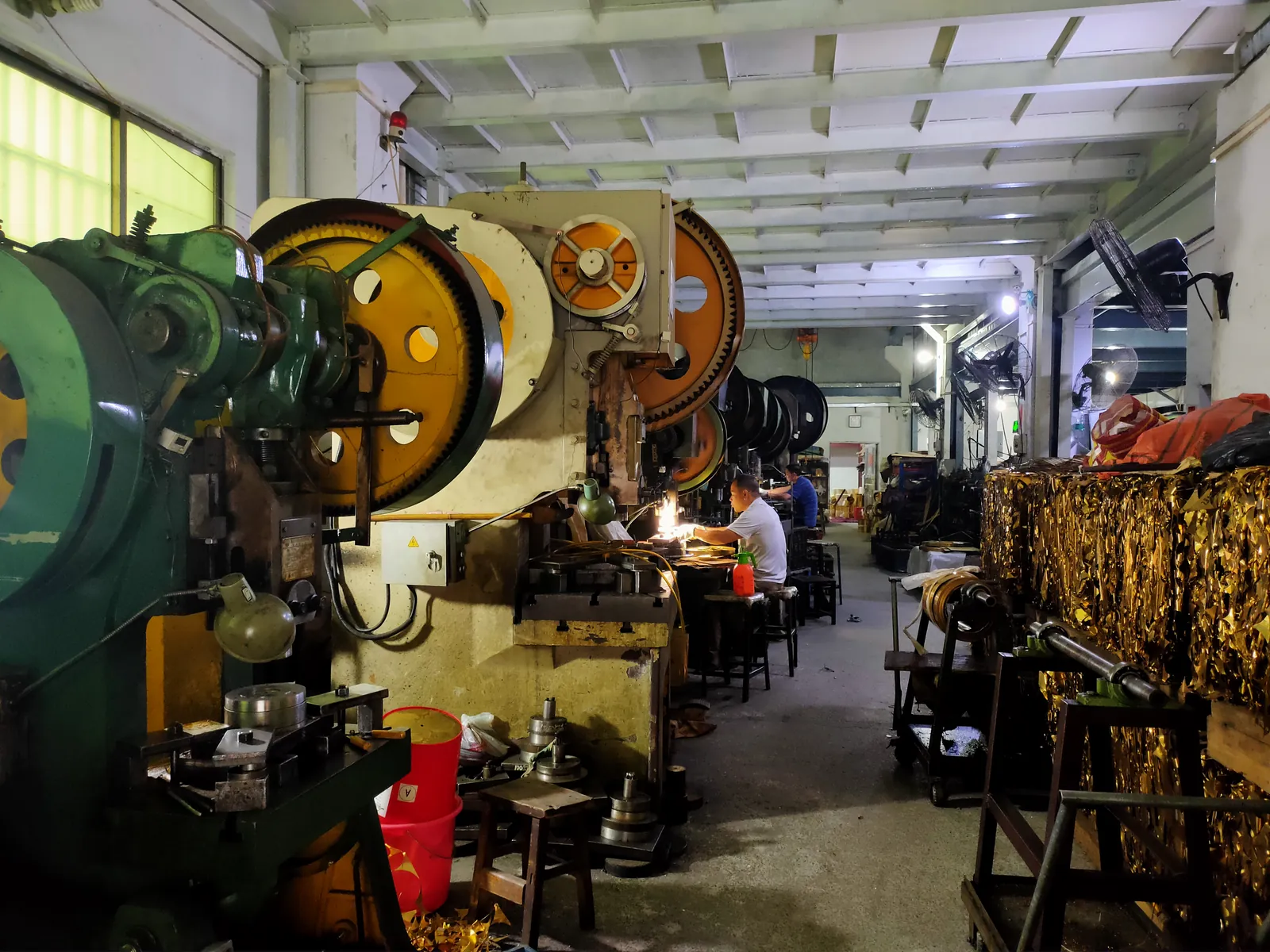
For lamp base parts, the material decision affects both manufacturing stability and finish outcome. Buyers should align material choice with the required appearance, strength, corrosion resistance, and cost target.
| Material | Best Use | Main Advantage | Main Risk |
|---|---|---|---|
| Mild steel | Powder-coated or plated structural parts | Low cost, easy forming | Rust risk if pre-treatment is weak |
| Brass | Decorative turned parts, threaded fittings | Good machinability, premium finish | Higher cost, softness in handling |
| Stainless steel | Corrosion-critical visible hardware | Corrosion resistance | Harder forming and polishing |
| Aluminum | Lightweight decorative covers | Low weight, easy shaping | Dent risk, finish sensitivity |
Finish selection also needs verification. For example, bright nickel-chrome can hide some base metal variation but amplifies polishing defects. Powder coating can improve corrosion resistance and color flexibility, but coating thickness may interfere with threaded or press-fit areas. Antique or brushed finishes require tighter sample retention because visual acceptance can drift over time if there is no approved reference panel.
What a reliable supplier or factory should be able to provide
A dependable factory should be able to show more than product photos and a final price sheet. For B2B projects, buyers should expect process transparency and usable technical documentation.
- Reviewed drawings with critical characteristics clearly marked.
- Material certificates or at least incoming material traceability by lot.
- First article inspection reports with actual measured values, not only pass/fail marks.
- Thread gauges, custom fixtures, or mating samples for assembly verification.
- Surface finish specifications, including plating or coating thickness targets.
- Defined cosmetic standard with approved limit samples or reference photos.
- In-process inspection records for dimensions that tend to drift.
- Subsupplier control for plating, anodizing, powder coating, or polishing if outsourced.
- Packaging standard that protects cosmetic surfaces during shipment.
- Corrective action process when defects are found.
If a supplier cannot explain which dimensions are critical, how they verify thread fit, or how they manage finish variation between batches, the risk is not just technical. It is operational. That usually means more back-and-forth during PP samples, unstable lead times, and more quality claims after shipment.
Practical factory verification checklist for B2B buyers
Use the checklist below before approving a new supplier, approving a sample, or releasing mass production. It keeps the conversation focused on production reality rather than sales claims.
| Stage | Buyer Verification Point | How to Check | Acceptance Signal |
|---|---|---|---|
| RFQ | Supplier understands material and finish spec | Review quote notes | No missing assumptions |
| Sampling | Measured dimensions match drawing after finish | FAI plus mating test | Stable fit without rework |
| Pilot run | Repeatability across a lot | Sample from different times | Low variation trend |
| Mass production | Process controls remain active | Audit records | Same method as approved lot |
| Pre-shipment | Cosmetic and packaging protection are consistent | AQL and pack-out review | No rubbing or mixed lots |
A useful rule is to separate critical-to-fit dimensions from cosmetic dimensions and from non-critical dimensions. If everything is treated as equally important, the supplier will inspect too much in the wrong places and still miss the dimensions that drive assembly success.
When to involve the factory early
The best time to involve a factory is before tooling release and before finish approval, not after a polished sample already looks acceptable. Early supplier input helps identify whether a radius is too tight for deep drawing, whether a wall is too thin for tapping, whether a visible surface should be spun instead of stamped, or whether a decorative finish will magnify substrate defects.
Factory involvement is especially important when:
- The part combines decorative and structural functions.
- Multiple parts stack together and tolerance accumulation can create tilt.
- Threads, electrical grounding points, and coatings interact in the same assembly.
- The product uses custom colors or antique finishes with subjective visual standards.
- Packaging must protect mirror, brushed, or plated surfaces over long transit routes.
In these cases, a capable supplier should recommend process adjustments, tolerance priorities, masking areas for coating, or fixture improvements before production problems become expensive.
Conclusion
Choosing between lamp base parts suppliers should come down to verified manufacturing control, not just sample appearance or quoted price. Buyers who confirm material traceability, thread fit, finish standards, in-process inspection, and packaging protection usually prevent the most common quality and delivery failures before they reach mass production.
If you are comparing suppliers for a new lamp base hardware project, the next practical step is to review your drawings, finish requirements, and assembly-critical dimensions with a factory team that can discuss process capability in detail. You can also review our Home and Services information to check manufacturing scope, or contact the team to discuss a specific sourcing and verification requirement.
If your project involves finish, tolerance, or custom production questions, the next useful step is to review main company website and lighting hardware sourcing support before finalizing drawings, samples, or mass-production requirements.
 Floor Lamp Sets
 Wall Lamp Sets
 Table Lamp Sets
 Custom Hotel Parts
 Custom Made Parts
 Panels
 Tubes
Tubes Universal joints
 Machined Parts