

-
 Phone:+86 189 2494 9366
-
 E-mail:info@zsshengshi.com
-
 No.5, north of the first road, Guyi Changweiyong manufacturingdistrict, Guzhen, Zhongshan, Guangdong, P.R.C
Light Fixture Components Suppliers: Factory Verification Checklist Before Ordering

Light Fixture Components Suppliers: Factory Verification Checklist Before Ordering
Key Takeaways: Choosing light fixture components suppliers should not stop at price and sample appearance. Buyers should verify process capability, material control, finish consistency, dimensional fit, and inspection discipline before approving tooling, samples, or mass production. A structured factory checklist reduces assembly failures, coating claims, and delivery surprises.
For procurement teams comparing light fixture components suppliers, the real risk usually appears after the quotation stage. A bracket may look simple, a canopy may seem like a standard spun or stamped part, and a threaded tube may match the drawing on paper. But once parts move into coating, assembly, wiring, packing, and field installation, small factory weaknesses become expensive problems.
In lighting hardware, buyers are not only purchasing metal parts. They are purchasing dimensional stability, finish adhesion, thread compatibility, packaging protection, and repeatability from batch to batch. That is why factory verification before ordering matters more than a polished sales presentation or a low unit price.
Below is a practical verification framework based on common issues we see in metal hardware and lighting accessories processing: stamped plates, deep-drawn cups, spun shades, tubes, threaded parts, die-cast elements, decorative covers, mounting hardware, and assembled subcomponents.
Why this issue matters in production
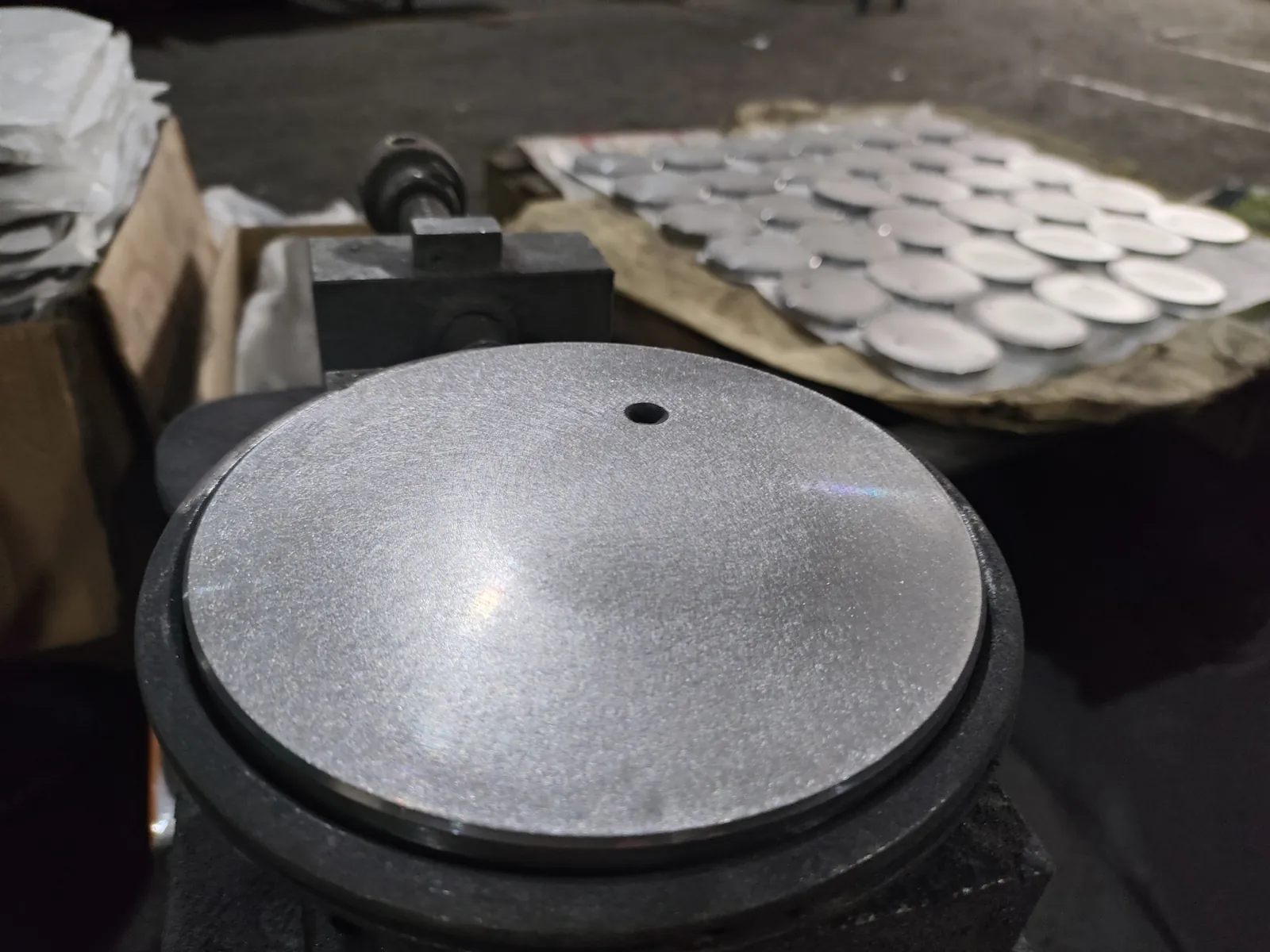
Lighting components are highly sensitive to cumulative variation. One supplier may hold a hole position within tolerance, but if another supplier’s mating tube is slightly out of round and the coating adds extra thickness, the final assembly can become difficult or impossible. In production, failures are often not dramatic single defects. They are stack-up problems.
Typical examples include:
- Mounting holes that pass incoming inspection but shift enough to create fixture installation problems on site.
- Powder coating on threads that causes galling, poor electrical grounding, or rework during assembly.
- Polished stainless parts with acceptable appearance under workshop light but visible waviness under retail lighting.
- Die-cast decorative parts with porosity that only becomes obvious after plating.
- Stamped canopies with edge burrs that damage wires or scratch finished parts during packing.
- Mixed material lots that create color variation after anodizing or plating.
For buyers, the cost is not limited to scrap. It includes delayed launches, sorting labor, customer complaints, line stoppage, and urgent air shipments to replace nonconforming lots. A supplier that understands these production realities will talk about process controls, gauges, and finish limits early—not only lead time and MOQ.
Common defects, failure points, or hidden risks
When evaluating suppliers, it helps to focus on the defects that are common in lighting hardware rather than generic factory claims. The following issues are worth checking before sample approval and again before mass production.
1. Material substitution or uncontrolled material sourcing
A part quoted as SPCC, stainless 304, brass, or aluminum 6063 may be replaced with a lower-cost alternative if material traceability is weak. The visible part may still look acceptable, but corrosion resistance, weldability, polish quality, and coating adhesion can change significantly.
2. Tolerance capability that exists on paper only
Some factories accept tight tolerances without reviewing process capability. A flatness callout on a large stamped canopy, concentricity on a spun part, or perpendicularity on a welded bracket may be difficult to maintain consistently without fixtures, secondary machining, or controlled forming parameters.
3. Finish risks hidden by sample selection
A hand-picked sample can hide normal production variation. Brushed grain direction, powder color shift, plating thickness, orange peel, polishing waves, and weld shadowing should be checked across multiple pieces, not one display sample.
4. Thread and assembly mismatch
In lighting accessories, thread fit is a frequent source of complaints. Painted or plated threads, undersized rolling dies, poor tapping quality, and inconsistent pitch verification can all lead to difficult assembly. This is especially common with lamp nipples, couplings, finials, and threaded rods.
5. Inspection that checks appearance but misses function
Many suppliers inspect visible scratches and dimensions but do not test actual mating conditions. A bracket should be checked with the real mating part. A cover should be trial-fitted after coating. A wire pass-through should be checked for burrs and radius, not just diameter.
What should buyers compare before choosing a supplier?
The best comparison is not supplier A versus supplier B in general terms. It is supplier capability versus your actual part family, finish requirement, and assembly risk. A factory strong in simple laser-cut brackets may not be the right partner for decorative plated canopies or multi-process assembled lighting kits.
| Checkpoint | What to verify | Common risk | Evidence to request |
|---|---|---|---|
| Material control | Grade, thickness, source, traceability | Substitution and finish variation | Mill certs or incoming records |
| Forming process | Stamping, spinning, casting, machining route | Shape instability or cracking | Process flow and sample history |
| Tolerance capability | Critical dimensions and gauges | Assembly misfit | FAI report and gauge photos |
| Surface finish | Color, gloss, thickness, adhesion | Scrap and cosmetic claims | Finish specs and test records |
| Thread quality | Pitch, class, coating effect | Cross-threading and jam | Go/no-go gauge results |
| Assembly validation | Trial fit with mating parts | Line rework | Assembly video or pilot run data |
| Packaging control | Protection for coated and polished parts | Transit scratches | Pack-out standard and drop test logic |
This table is useful during RFQ review, sample approval, and factory audit. If a supplier cannot provide clear answers on these checkpoints, the risk usually shows up later in production.
What should a reliable supplier or factory be able to provide?
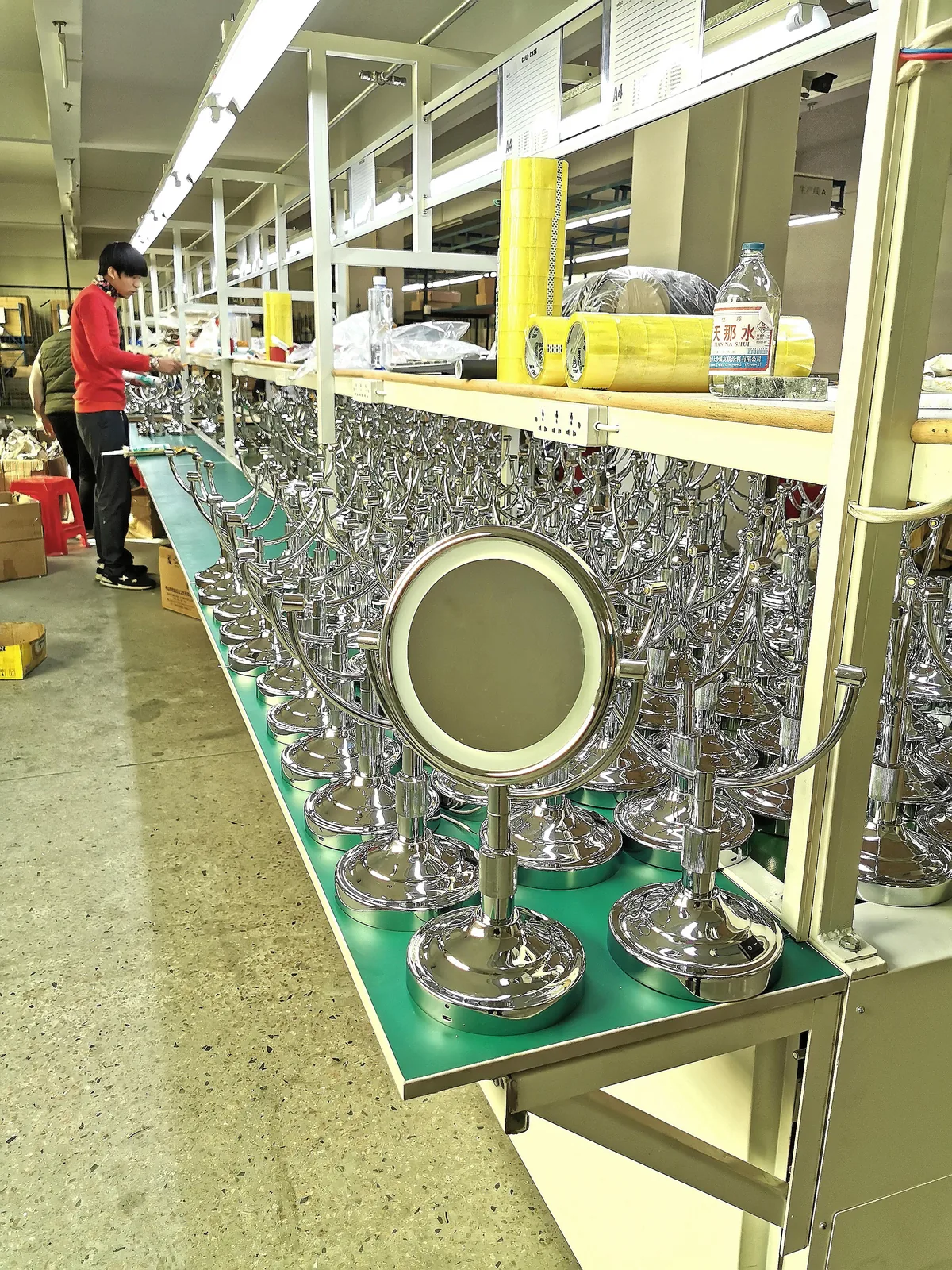
A reliable lighting hardware supplier should be able to provide more than a quotation and a sample. The minimum expectation is evidence that the factory can control the part after the first trial.
- Drawing review feedback before tooling or sampling, including dimensions that are difficult to hold in the proposed process.
- Material specification confirmation, including alternative grades only when approved.
- A defined process route, especially if the part includes forming, welding, polishing, plating, coating, and assembly.
- First article inspection records with actual measured values, not only pass/fail marks.
- Critical dimension control method such as custom gauges, thread gauges, fixtures, or checking jigs.
- Finish standards for color, texture, coating thickness, adhesion, and cosmetic acceptance zones.
- Pilot assembly evidence when the part interfaces with tubes, sockets, glass, fasteners, or wiring accessories.
- Packaging instructions that reflect the surface sensitivity of the part.
A strong supplier will also raise issues proactively. For example, they may warn that a cosmetic Class A surface should not place a weld seam in a visible area, or that an internal thread should be masked before powder coating. These are good signs. Silence is not efficiency; often it means the engineering review did not happen.
Factory verification checklist before sample approval or mass production
Use the checklist below before approving samples, issuing a PO, or releasing mass production. It is designed for metal lighting parts and accessory assemblies.
- Confirm the drawing version: Make sure the supplier is quoting and producing to the latest revision, including finish notes, thread callouts, and critical-to-fit dimensions.
- Mark critical dimensions: Identify hole locations, mating diameters, thread features, flatness, and visible cosmetic surfaces. Do not assume the supplier will guess what matters most.
- Review process-match feasibility: Check whether the specified tolerance matches stamping, spinning, casting, or machining capability. Tightening a tolerance after tooling often increases cost and delay.
- Verify finish on production-like samples: Ask for samples from the intended process route, not hand-polished prototypes if mass production will be automated or semi-automated.
- Check coating and plating thickness: Excess thickness can affect fit; insufficient thickness affects corrosion performance and appearance consistency.
- Inspect threads after finish: Gauge them after plating or coating, not before. This is where many assembly problems start.
- Request assembly trial evidence: If the part mates with another part, ask for fit-up photos, video, or pilot assembly records.
- Review cosmetic acceptance criteria: Define visible zones, allowable scratch length, color range, polishing direction, and edge condition.
- Check burr and sharp-edge control: Especially for wire paths, hand-contact areas, and nested packed parts.
- Confirm packaging method: Interleaf paper, bagging, foam separation, and carton arrangement should match finish sensitivity and shipping distance.
- Ask for incoming, in-process, and final inspection points: A supplier with only final inspection is usually reacting to defects too late.
- Validate change control: Material source changes, subcontract finish changes, and tool repairs should not happen without approval.
How to inspect the most important risk areas?
Not every dimension deserves the same control level. Buyers should focus on the features that affect assembly, safety, and visible quality first. The table below gives a practical inspection approach.
| Feature | Inspection method | What commonly goes wrong | Buyer note |
|---|---|---|---|
| Hole position | Fixture or CMM | Drift after forming or welding | Check relative to mating part |
| Flatness | Surface plate and feeler gauge | Warp after stamping or coating bake | Important for wall and ceiling fit |
| Thread fit | Go/no-go gauge | Paint build-up or poor tapping | Inspect after finish and before packing |
| Coating thickness | Thickness gauge | Thin edges or excessive build | Link to fit and corrosion risk |
| Cosmetic surface | Visual standard under controlled light | Waves, scratches, color shift | Use approved limit sample |
| Burr and edge radius | Touch check and magnified visual | Wire damage and handling injury | Critical on pass-through features |
One practical recommendation: if the part is assembly-critical, ask the supplier to define a control plan for only the top five risk features. This is usually more effective than requesting a long report on every minor dimension.
When to involve the factory early
Buyers should involve the factory before finalizing the specification when any of the following apply:
- The part has a decorative finish with tight visual requirements.
- The drawing includes multiple processes such as stamping plus welding plus plating.
- The part must mate with glass, plastic, electrical parts, or imported standard hardware.
- The design uses thin-wall material that may deform during forming or coating bake.
- The thread or fit tolerance is tight and finish buildup may affect assembly.
- The project requires kit packing or pre-assembly.
Early supplier input can prevent expensive changes later. For example, moving a weld seam to a hidden area, increasing a bend relief, specifying a realistic brushed direction, or masking a thread before coating can significantly improve yield and assembly reliability. These are small decisions at the design stage but large cost drivers in production.
Conclusion
The best light fixture components suppliers are not simply the ones with the lowest quote or the fastest sample. They are the ones that can show how they control material, process variation, finish quality, and assembly fit before your order scales up. A good factory verification routine helps buyers avoid the most common failures in lighting hardware: thread problems, coating defects, dimensional mismatch, and packaging damage.
If you are reviewing a new project or comparing manufacturing partners, the next practical step is to review the required part family and process route in detail. You can start from the Home page to understand overall capability, review Services for process coverage and quality support, or contact the team to discuss drawings, samples, and factory verification requirements for your sourcing project.
If your project involves finish, tolerance, or custom production questions, the next useful step is to review main company website and lighting hardware sourcing support before finalizing drawings, samples, or mass-production requirements.
 Floor Lamp Sets
 Wall Lamp Sets
 Table Lamp Sets
 Custom Hotel Parts
 Custom Made Parts
 Panels
 Tubes
Tubes Universal joints
 Machined Parts