

-
 Phone:+86 189 2494 9366
-
 E-mail:info@zsshengshi.com
-
 No.5, north of the first road, Guyi Changweiyong manufacturingdistrict, Guzhen, Zhongshan, Guangdong, P.R.C
How to Verify Production Capacity Before Approving a Supplier

Key Takeaways: Verifying production capacity is not about asking a supplier for a monthly output number and taking it at face value. Buyers should confirm machine resources, staffing stability, process bottlenecks, subcontracting risk, quality control discipline, and actual delivery performance before approving a factory. The most reliable suppliers can prove capacity with records, process data, sample consistency, and clear communication on what they can realistically deliver.
Introduction: why buyers struggle to verify production capacity
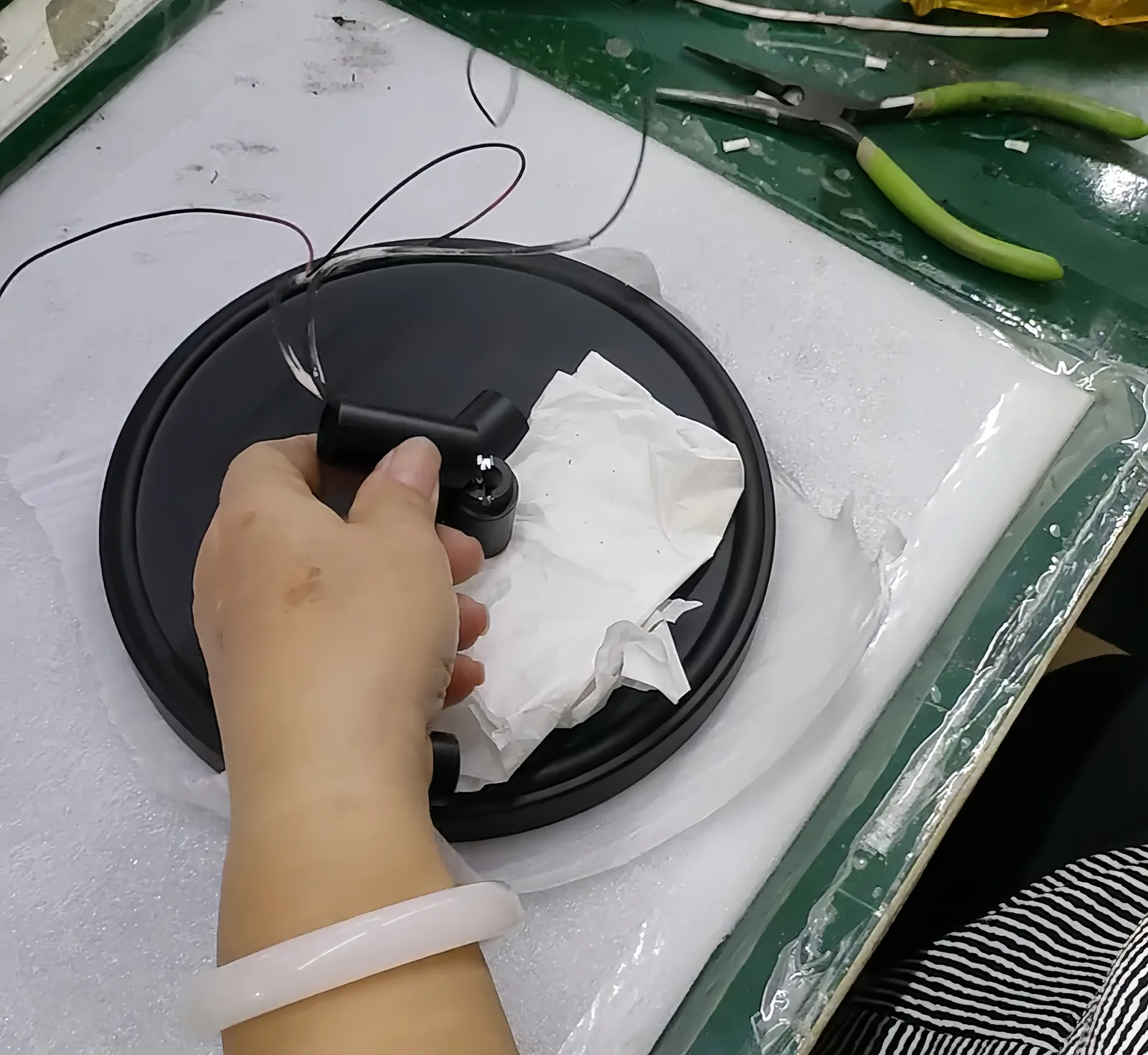
In metal hardware and lighting accessories processing, supplier approval often moves too quickly from quotation to sampling and then to purchase order. That is where many sourcing problems begin. A factory may provide competitive pricing, acceptable samples, and confident lead times, but those signals alone do not prove real production capacity. For procurement teams, the real question is whether the supplier can repeat quality at the required volume, within the promised schedule, and without losing control of finish consistency, communication, or cost.
This matters especially when parts involve multiple processes such as stamping, CNC machining, tube processing, die casting, welding, polishing, plating, powder coating, anodizing, assembly, and packaging. In these environments, capacity is not one number. It is the combined ability of the factory to manage each process step without creating hidden bottlenecks. A supplier that performs well on prototypes may still fail during pilot or mass production if one finishing line, one outside plating vendor, or one overloaded assembly team becomes the weak link.
For buyers comparing manufacturing partners, the goal is not to find the biggest factory. It is to identify the supplier whose capacity is credible, matched to the product, and controlled well enough to support long-term sourcing confidence.
Why this decision matters commercially and operationally
Approving a supplier without verifying capacity creates avoidable commercial risk. Delayed shipments can interrupt launches, increase safety stock, force split sourcing, and damage customer commitments. In lighting accessories and decorative hardware, late delivery is often only part of the problem. When capacity is stretched, factories may rush polishing, mix batches, outsource without approval, or reduce inspection discipline. That leads to visible finish variation, dimensional drift, assembly mismatch, and rework costs that are much harder to recover than a small piece-price difference.
From a sourcing perspective, capacity verification supports five critical decisions:
- Whether the quoted lead time is realistic.
- Whether the supplier can absorb forecast changes.
- Whether MOQ aligns with actual production economics.
- Whether quality can remain stable at scale.
- Whether the supplier is suitable for OEM or ODM development, not just repeat production.
In practical terms, a supplier with moderate pricing and proven process control is usually a safer approval choice than a lower-cost supplier whose capacity story depends on assumptions, subcontracting, or verbal promises.
Common mistakes buyers make when comparing supplier capacity

Many supplier comparisons are weaker than they look because the buyer is comparing quotes, not manufacturing systems. The most common mistake is accepting a monthly output claim without asking what product mix, process route, shift pattern, and yield rate that number assumes. A stated capacity of 500,000 pieces per month means very little if the parts are simpler than yours, if finishing is outsourced, or if the line is already committed to other customers.
Another weak habit is judging capacity based only on factory size. A large workshop does not automatically mean effective throughput. For metal hardware and lighting accessories, actual output depends more on process balance, tooling readiness, operator skill, preventive maintenance, fixture availability, and finishing queue time than on floor area alone.
Buyers also overlook communication risk. A supplier may have enough machines, but if planning, engineering, purchasing, and production teams do not communicate clearly, delays still occur. This is especially common in projects with custom finishes, mixed-material assemblies, and packaging requirements that require coordination across departments.
Other frequent sourcing mistakes include:
- Approving based on sample quality without checking mass-production records.
- Ignoring bottleneck processes such as plating, polishing, or welding.
- Failing to confirm whether key operations are in-house or subcontracted.
- Assuming MOQ reflects efficiency rather than supplier scheduling constraints.
- Not asking how the factory handles rush orders, engineering changes, or defective batch containment.
What should buyers compare between suppliers?
A reliable supplier comparison should look beyond unit price and standard lead time. Buyers should compare process fit, bottleneck control, workforce readiness, quality system discipline, and evidence of on-time execution. The table below gives a practical side-by-side framework for supplier approval.
| Evaluation Area | Supplier A Signal | Supplier B Signal | What Buyers Should Confirm |
|---|---|---|---|
| Core process match | Mostly in-house | Mixed outsourcing | Which operations are internal and which are subcontracted |
| Lead time credibility | Backed by schedule | Quoted verbally | Planning method, load rate, and current order status |
| Finish consistency | Sample records available | No batch data | Color, gloss, plating thickness, and batch traceability |
| Tooling readiness | Maintenance plan | Reactive repairs | Fixture life, spare tooling, and changeover time |
| Quality control | In-process checks | Final inspection only | Control plan, defect response, and inspection frequency |
| Engineering support | DFM feedback | Quote only | Whether they can improve manufacturability before launch |
| Communication discipline | Clear escalation path | Single contact only | Who owns engineering, quality, planning, and shipment updates |
This type of comparison helps buyers separate claimed capacity from usable capacity. A supplier that controls more of the process chain and can show actual operating discipline is usually more dependable than one that simply offers a larger output number.
What factory capability evidence should buyers request?
If a supplier claims strong capacity, the next step is simple: ask for proof. Reliable factories are usually willing to share capability evidence in a structured way, especially for serious OEM or long-term sourcing opportunities. The quality of this evidence often tells you as much as the content itself. Well-prepared records indicate process maturity. Vague answers usually indicate planning weakness or overstatement.
Buyers should request evidence in the following categories:
- Machine list with quantities, tonnage, size range, and key process capability.
- Current utilization or loading by major process.
- Production flow chart for the target part family.
- Sample production schedule or standard lead-time breakdown.
- Past shipment performance for similar products.
- Inspection plan, quality records, and defect handling procedure.
- In-house versus outsourced process map, especially for plating, coating, and special finishing.
- Photos or audit evidence of tooling storage, maintenance, and work-in-process control.
| Evidence Requested | Strong Signal | Weak Signal | Buyer Interpretation |
|---|---|---|---|
| Machine and process list | Detailed and current | Generic brochure | Shows whether the factory really fits your part route |
| Capacity by process | Step-by-step breakdown | Single monthly number | Reveals bottlenecks and realistic throughput |
| On-time delivery data | Recent and product-relevant | No records | Confirms execution, not just promise |
| Finish quality records | Batch traceability | Visual claim only | Important for color and surface consistency |
| Subcontractor control | Approved vendor system | Unclear outsourcing | Directly affects lead time and quality risk |
For metal hardware and lighting accessories, one of the most useful tests is to ask the supplier to map the exact route for your part: raw material, forming, machining, welding, surface treatment, assembly, inspection, and packing. If they cannot explain where capacity is consumed and where delays typically happen, they likely do not control the process well enough for dependable scale-up.
A practical buyer checklist before supplier approval
Use the checklist below before approving a factory for trial or mass production. It is designed to support sourcing confidence, not just technical review.
- Has the supplier shown capacity by process step, not only by total monthly output?
- Are critical operations in-house, or is there unmanaged subcontracting risk?
- Can the factory support the required finish standard repeatedly across batches?
- Has the supplier provided lead-time logic tied to actual planning and load?
- Do sample results match the likely mass-production route and tooling?
- Are MOQ, setup cost, and batch size commercially reasonable for your demand?
- Is there a named contact structure for engineering, quality, and order follow-up?
- Has the supplier explained how defects, delays, and engineering changes are handled?
- Can they provide records from similar products, not unrelated categories?
- Have you confirmed packaging, labeling, and shipment readiness requirements?
If several of these points remain unclear, the supplier may still be useful for sampling or backup sourcing, but not yet ready for core program approval.
How to reduce sourcing risk before order confirmation
Even after a supplier passes the initial review, buyers should reduce risk before committing to a full order. The best approach is to move in stages. Start with a controlled pilot that uses actual production tooling, real surface treatment, and final packaging conditions. This helps verify not only part quality but also process stability and order management discipline.
Before order confirmation, buyers should lock down the following points in writing:
- Approved drawing revision, material grade, and finish specification.
- Critical dimensions, cosmetic standards, and acceptance criteria.
- Lead time by milestone, including tooling, sample, pilot, and mass production.
- Inspection method, reporting format, and nonconformance escalation path.
- MOQ, replenishment terms, and flexibility for forecast changes.
- Rules for subcontracting any key process.
- Packaging standard to protect finish and prevent transit damage.
For higher-risk parts, it is also wise to ask for first-article confirmation, pilot-run photos, in-process inspection records, and shipment release approval before dispatch. These controls are not about creating bureaucracy. They are practical ways to confirm that the supplier’s claimed capacity can be translated into repeatable output without surprises.
If the product involves decorative finishing, do not approve based only on one perfect sample. Confirm how the supplier controls color variation, rack marks, polishing direction, plating thickness, and mixed-batch consistency. In many hardware and lighting projects, finish variation is the issue that exposes weak capacity control first.
Conclusion: approve production capacity based on proof, not confidence alone
Verifying production capacity before approving a supplier is one of the most practical ways to improve sourcing confidence. Buyers should compare process fit, bottlenecks, quality discipline, communication structure, and actual delivery proof rather than relying on factory size or optimistic promises. A capable supplier should be able to show how your product will move through production, where risks exist, and how those risks are controlled.
If you are evaluating a manufacturing partner for metal hardware or lighting accessories, the next useful step is to review the supplier’s actual processing scope and discuss your product route in detail. You can learn more through our About Us and Services information, or use Contact to start a practical sourcing conversation around OEM or custom production requirements.
If your project involves finish, tolerance, or custom production questions, the next useful step is to review factory capability overview and lighting hardware sourcing support before finalizing drawings, samples, or mass-production requirements.
 Floor Lamp Sets
 Wall Lamp Sets
 Table Lamp Sets
 Custom Hotel Parts
 Custom Made Parts
 Panels
 Tubes
Tubes Universal joints
 Machined Parts