

-
 Phone:+86 189 2494 9366
-
 E-mail:info@zsshengshi.com
-
 No.5, north of the first road, Guyi Changweiyong manufacturingdistrict, Guzhen, Zhongshan, Guangdong, P.R.C
Project Example: Matching Metal Hardware Specs to End-Use Applications

Project Example: Matching Metal Hardware Specs to End-Use Applications
Key Takeaways: This project example shows why metal hardware sourcing should start from end-use conditions, not only drawings or unit price. Buyers get better outcomes when they compare suppliers on process fit, finish control, tolerance capability, and proof of production readiness before order release.
Introduction: Why end-use fit is the real sourcing starting point
In metal hardware and lighting accessories processing, many sourcing problems begin with a simple mistake: buyers compare quotations before confirming whether the proposed material, finish, fabrication method, and tolerance plan actually match the real application. This project example focuses on that gap. It is not enough for a supplier to say a part can be made. The more important question is whether the part can be made repeatedly, at commercial scale, with the right appearance, assembly performance, and lead time for the final product.
For procurement teams and product managers, the challenge is practical. A decorative lighting bracket, a mounting plate, a threaded tube, a stamped cover, or a support arm may all look similar on a drawing. But once installed, each part faces different loads, surface exposure, corrosion risk, packaging stress, and assembly requirements. A supplier that is suitable for one hardware item may be the wrong fit for another if its process window, tooling approach, or finish control is weak.
The right sourcing decision comes from matching specifications to use case, then matching that use case to the factory’s proven capability. That is where better commercial decisions are made.
Why this decision matters commercially and operationally
When hardware specifications are not aligned with end-use applications, the cost impact goes far beyond a rejected batch. Buyers often face hidden commercial losses such as delayed product launch, rework at the assembly site, replacement claims, packaging damage, finish mismatch across lots, and extra communication cycles between engineering, sourcing, and quality teams.
In lighting accessories processing, this becomes especially important because many components are visible after installation. A small finish variation that might be acceptable on an internal industrial bracket can become a serious issue on decorative lamp hardware. Likewise, a tolerance stack-up on a threaded or bent part may not show up during incoming inspection, but it can create assembly slowdown on the customer’s production line.
From a factory-selection perspective, the decision affects:
- Unit cost stability across repeat orders
- Lead time predictability during peak production periods
- Quality consistency between pilot run and mass production
- MOQ flexibility for new product introduction or mixed-SKU programs
- Communication speed when engineering changes occur
A lower quoted price can quickly become more expensive if the supplier lacks the tooling discipline, plating control, welding quality, or inspection method required by the application.
Common sourcing mistakes when matching hardware to applications
Buyers comparing manufacturing partners often receive similar-looking quotations and assume the offers are technically equivalent. In practice, they may not be. Below are common weak comparison habits that create risk later.
- Comparing only material grade and unit price, without checking forming method, finish route, or secondary operations
- Approving a sample that looks acceptable, without confirming process capability for full production volume
- Using one general tolerance note for all features, even when certain holes, threads, bends, or cosmetic surfaces need tighter control
- Failing to define end-use environment such as indoor dry use, humid conditions, transport vibration, or mild corrosion exposure
- Assuming all finish suppliers can match color, gloss, adhesion, and lot consistency at the same level
- Ignoring packaging method until late stage, even though surface marks and deformation often happen after production
- Choosing a factory with broad equipment lists but limited evidence for similar parts
These mistakes usually come from incomplete supplier evaluation rather than bad intent. The solution is to compare suppliers against the actual project fit, not against a generic capability statement.
What should buyers compare between suppliers for the same hardware project?
A useful comparison framework should connect the part’s end-use demands with the supplier’s production controls. The table below shows a side-by-side approach that procurement and engineering teams can use during quotation review.
| Comparison Item | Supplier A Signal | Supplier B Signal | Buyer Interpretation |
|---|---|---|---|
| Process route | Clear stamping-bending-plating flow | General fabrication only | A is more controlled for repeatability |
| Similar project history | Shows lamp bracket references | No close application examples | A has lower execution risk |
| Tolerance control | Critical dimensions highlighted | Standard tolerance assumed | A understands assembly function better |
| Finish capability | Salt spray and color records available | Finish outsourced without data | A offers stronger finish consistency proof |
| MOQ flexibility | Pilot run accepted | High MOQ from first order | A suits new product introduction better |
| Engineering response | DFM comments before quote | Price only | A is more proactive and lower risk |
| Lead time realism | Tooling and mass run separated | Single vague promise | A gives better planning visibility |
This type of comparison helps buyers avoid a common issue: selecting a supplier that is acceptable on paper but weak in process discipline. For hardware used in visible lighting assemblies, mounting systems, or repeated installation environments, process discipline matters as much as nominal specification compliance.
A practical project example: one drawing, three different application outcomes
Consider a metal mounting bracket with punched holes, two bends, and a plated cosmetic finish. On the drawing, the part seems straightforward. But the correct factory setup changes depending on where and how that bracket will be used.
- Scenario 1: Indoor decorative lighting fixture. Cosmetic finish, edge smoothness, color consistency, and packaging protection become top priorities. Buyers should focus on plating quality, scratch prevention, and lot-to-lot appearance control.
- Scenario 2: Commercial installation bracket. Dimensional repeatability and installation speed matter more. Hole position, bend angle consistency, and flatness should be prioritized over premium appearance standards.
- Scenario 3: Damp or semi-corrosive environment. Material selection and finish performance become critical. Buyers should confirm coating type, thickness standard, adhesion, and corrosion test evidence instead of relying on a generic finish name.
The sourcing lesson is clear: the same nominal part may require different supplier strengths depending on the end-use application. That is why procurement teams should ask not only “Can you make this part?” but also “What in your process is designed for this use case?”
What factory capability evidence should buyers request?
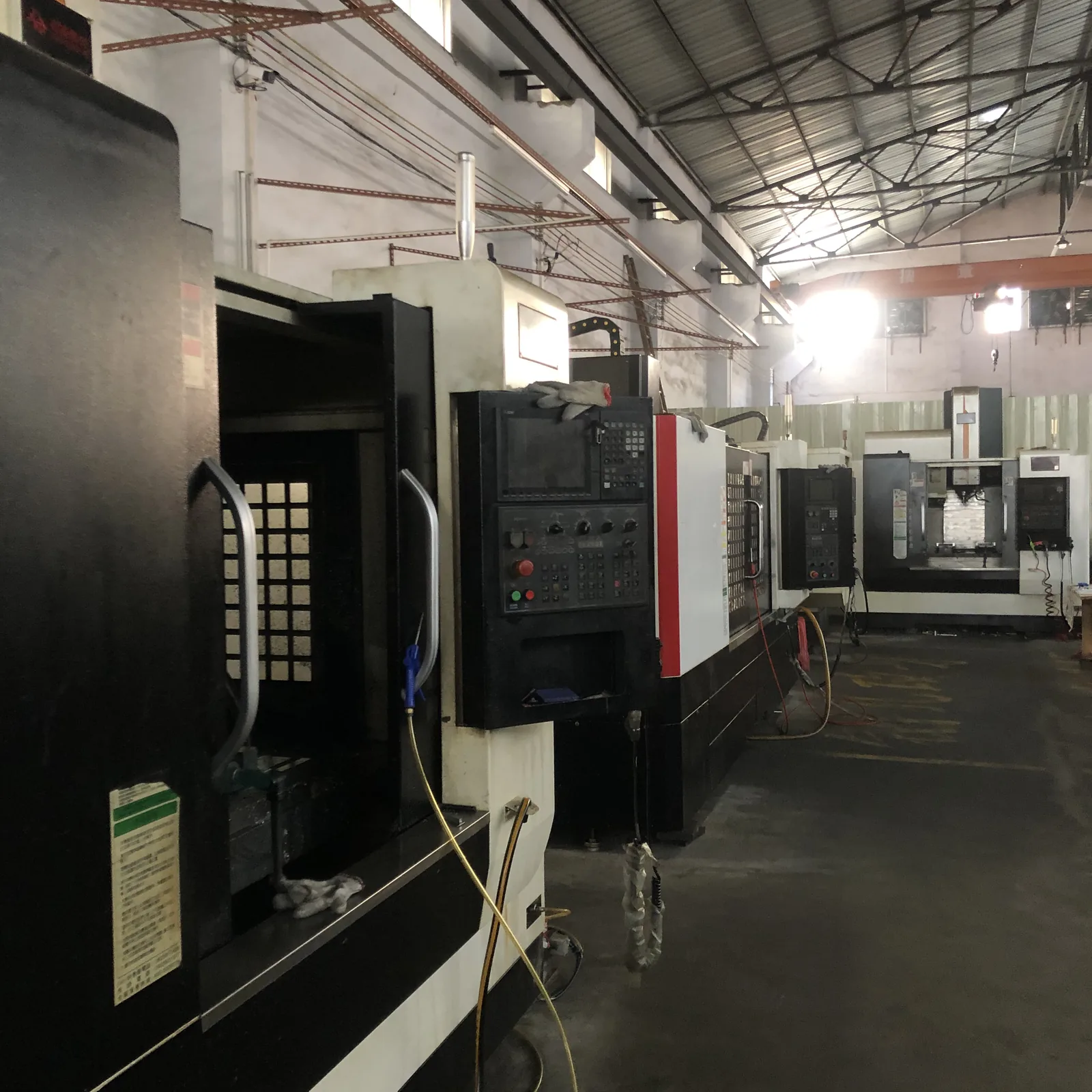
Reliable suppliers should be able to prove capability with evidence, not only with verbal assurance. For metal hardware and lighting accessories, buyers should request documentation and samples that show the supplier can control the specific risk points of the project.
- Similar part case records, ideally with comparable material, thickness, finish, and assembly function
- Process flow chart showing in-house and outsourced operations
- Critical dimension inspection plan and sample measurement report
- Finish test records such as adhesion, thickness, or corrosion performance where relevant
- Tooling ownership and maintenance approach for repeat production items
- Packaging method proposal for cosmetic or easily deformed parts
- Mass production photos or line setup evidence, not only hand-made samples
- Change-control method for revised drawings, ECNs, or approved deviations
If a supplier cannot clearly separate prototype capability from production capability, buyers should treat that as a warning sign. A good-looking sample made with extra manual attention does not guarantee stable output at scale.
Buyer evaluation checklist before supplier nomination
The checklist below can be used in RFQ review meetings or supplier nomination discussions. It keeps the decision centered on project fit instead of price alone.
| Checkpoint | Status | What to Confirm |
|---|---|---|
| Application environment defined | Yes/No | Indoor, humid, decorative, load-bearing, or exposed |
| Critical dimensions marked | Yes/No | Assembly-driving features clearly identified |
| Finish standard aligned | Yes/No | Color, gloss, thickness, corrosion expectation |
| Capability evidence received | Yes/No | Reports, samples, similar project records |
| Lead time broken down | Yes/No | Tooling, sampling, production, finishing, packing |
| MOQ and batch logic clear | Yes/No | Pilot order versus mass order conditions |
| Communication owner assigned | Yes/No | Engineering and commercial contacts identified |
| Packaging approved | Yes/No | Protection against scratches and deformation |
How to reduce sourcing risk before order confirmation
Before issuing a purchase order, buyers should close the gap between quotation assumptions and production reality. This stage is where many avoidable disputes can still be prevented.
First, confirm that the quoted process route matches the approved sample route. If the sample was polished manually but production will use a different finishing sequence, appearance risk should be expected. Second, align on which dimensions are functional, which surfaces are cosmetic, and what defect standard will be applied during inspection. Third, make sure lead time includes external processing if plating, coating, or special treatment is subcontracted.
It is also important to verify communication discipline. Buyers should know who owns drawing review, who issues sample reports, who manages schedule updates, and how non-conformities will be escalated. In cross-border sourcing, communication gaps often create more delay than the manufacturing issue itself.
For custom or OEM/ODM programs, request a pre-production alignment pack that includes:
- Approved drawing revision
- Material specification
- Finish requirement and acceptance limit
- Key dimensions and inspection method
- Packing method and carton quantity
- Pilot quantity and mass production release criteria
This level of confirmation may feel detailed, but it is usually faster and cheaper than resolving claims after shipment.
Conclusion: use each project example to test supplier fit, not just price fit

The main lesson from this project example is that successful hardware sourcing depends on matching specifications to real application conditions, then verifying that the supplier has the right process controls for that exact use case. Buyers should compare more than price sheets. They should compare production logic, finish consistency, tolerance control, MOQ flexibility, and the supplier’s ability to prove readiness with evidence.
If you are reviewing a new hardware item or re-evaluating an existing source, a useful next step is to review the relevant service capability, compare how your part fits available manufacturing processes, and discuss any OEM/ODM or custom requirements with the team. You can also start from the Home page to understand the broader production scope before moving into a more detailed sourcing conversation through Services or Contact.
If your project involves finish, tolerance, or custom production questions, the next useful step is to review main company website and lighting hardware sourcing support before finalizing drawings, samples, or mass-production requirements.
 Floor Lamp Sets
 Wall Lamp Sets
 Table Lamp Sets
 Custom Hotel Parts
 Custom Made Parts
 Panels
 Tubes
Tubes Universal joints
 Machined Parts