

-
 Phone:+86 189 2494 9366
-
 E-mail:info@zsshengshi.com
-
 No.5, north of the first road, Guyi Changweiyong manufacturingdistrict, Guzhen, Zhongshan, Guangdong, P.R.C
Swivel Joint Certification for B2B Buyers: Verify Test Reports Before Ordering

Key Takeaways: A swivel joint test report is useful only when it matches the supplied part, test conditions, and intended application. Verify report authenticity, drawing revision, performance limits, and production traceability before approving samples; a factory certificate alone does not prove mechanical durability or finished-luminaire compliance.
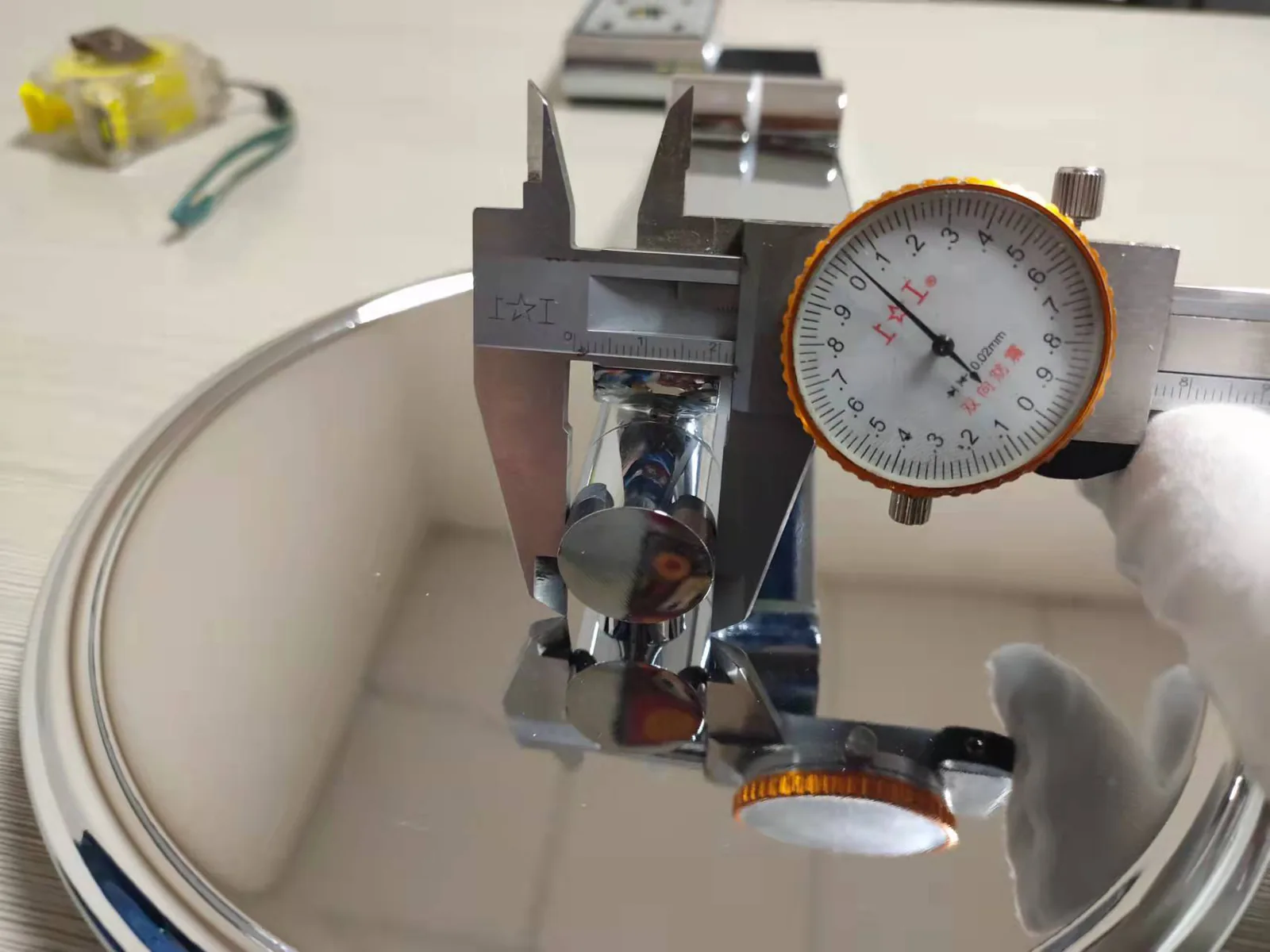
For swivel joint certification for B2B buyers, the main challenge is not collecting more certificates. It is determining whether the evidence covers the joint you will actually receive. A report for a similar-looking component may involve a different friction washer, plating system, thread engagement, or assembly preload—all of which can change performance.
This article focuses on metal swivel joints used in lighting accessories and adjustable hardware, not pressure-containing fluid swivels. For these components, procurement and engineering teams should connect compliance documents with dimensional inspection, load testing, movement testing, and production controls.
Why Certification Evidence Matters in Production
An inspected lamp joint may droop as movement reduces friction, or rotate stiffly, loading mounting threads or twisting the assembly. Assembly performance depends on mass, pivot distance, orientation, temperature, and adjustment frequency; similarly weighted heads/shades produce different bending moments.
ISO 9001 certifies supplier quality management, not holding torque. Applicable CE marking addresses EU conformity, not universal third-party component approval. Joint documentation supports—not establishes—complete-luminaire compliance.
What Should Buyers Verify in a Swivel Joint Test Report?
Verify sample identity, scope, methods, limits, and results—not merely a cover page or unexplained “PASS.”
| Checkpoint | Evidence to request | Buyer verification |
|---|---|---|
| Sample identity | Part number, drawing revision, photographs, and material description. | Match the tested construction to the ordered configuration. |
| Report authenticity | Complete report with issuing laboratory and report number. | Confirm through the laboratory’s official verification channel. |
| Test method | Standard edition or documented customer-specific procedure. | Check fixtures, loading direction, speed, and conditioning. |
| Acceptance limits | Specified limits and measured results with units. | Ensure limits reflect the intended assembly and service conditions. |
| Sample coverage | Sample quantity, selection method, and production source. | Distinguish prototype evidence from production-lot evidence. |
| Traceability | Batch references and component or finish identification. | Confirm the factory can connect results to shipped goods. |
Confirm the method’s ISO/IEC 17025 accreditation coverage, not blanket laboratory coverage. Construction changes, rather than report age, determine relevance.
Hidden Risks That a Certificate Can Miss
Finishing: Plating, powder coating, or lacquer alters clearance/friction; pivot-seat/shoulder buildup creates uneven movement. Test finished assemblies; specify coated, masked, or subsequently machined contacts.
Preload: Define production settings, not hand-adjusted samples. Friction-washer compression, spring elements, material substitutions, and inconsistent fastener tightening affect drooping/operating torque.
Threads: Verify pitch, tolerance class, usable engagement, and shoulder seating—not nominal size alone. Finish buildup binds; incomplete engagement appears tight but poorly supported. Check finished functional fit, not blanks.
Materials/corrosion: Brass, steel, stainless steel, and zinc-alloy require different verification/finishing controls; specify grades, not generic declarations. Salt-spray results reflect stated accelerated conditions, not outdoor lifespan. Define acceptable corrosion, blistering, and post-exposure movement.
Wiring: Burrs, sharp edges, restricted passages, and uncontrolled rotation damage insulation. Evaluate actual cable size, bend path, stops, and assembly method; retain applicable finished-product electrical safety evaluation.
Connect Mechanical Results to the Intended Assembly
Replace “strong swivel”/“smooth rotation” with separately defined breakaway, running, and loaded slip-resistance measurements. A 0.8 kg head, center of gravity 120 mm horizontally from its pivot, produces approximately 0.94 N·m—not an acceptance limit. Consider orientation, handling, wear, temperature, and design margin.
Agree angular travel, cycles, speed, load, and inspection intervals. Record initial/final torque, backlash, wear, loosening, and holding-position changes. “10,000 cycles passed” needs load/failure criteria. Rigid-block fixtures may bypass vulnerable mounting shoulders/thin housings; test representative assemblies where practical, documenting mounting torque/orientation.
Practical Checklist Before Sample Approval
- Freeze configuration: drawing revision, grades, finish, washers, fasteners, rotation stops.
- Map documentation: exact variant and sales market.
- Inspect finished dimensions: threads, seating faces, pivot clearance, wire passage, angular travel.
- Measure holding/breakaway/running torque: defined fixture, calibrated equipment.
- Condition: assess movement/holding after agreed cycling, temperature exposure, or corrosion testing.
- Approve controls: inspection frequency, sampling, traceability, out-of-limit action.
- Control changes: require notification/risk-based revalidation before material, finish, tooling, or assembly-component changes.
Retain an approved reference sample, but handling/adjustment changes friction. Use written limits, methods, and measurement records—not feel alone.
What a Reliable Factory Should Provide
Request controlled drawings, material/finish specifications, applicable declarations, and complete reports. Applicable regulated-substance evidence must fit materials/supply chains; one chemical test cannot cover every variant. RoHS/REACH documentation must identify scope and assessed requirements.
Review preload setting, functional dimensional gauging, torque checks, and nonconforming-lot containment. Request critical-characteristic pilot-run variation, not selected passes; sampling is not durability qualification.
Without relevant independent reports, require disclosure/agreed testing. In-house tests support development/routine control; customer, regulatory, or risk-management needs may require independent testing.
When to Involve the Factory Early
Before design freeze, involve factories for long arms, wiring, heat, or precision-surface finishes. Share mass, center-of-gravity position, adjustment range, service conditions, and mating drawings. Review larger friction interfaces, improved thread engagement, positive stops, alternative washers, shared variant evidence, and changes requiring validation.
Frequently Asked Questions
What documents should buyers request when verifying a swivel joint’s certification evidence?
Buyers should request complete test reports, any claimed certificates, relevant declarations of conformity, and documents identifying the tested joint. Ask for the manufacturer’s name, model reference, drawing revision, materials, test methods, results, and issuing organization. Where RoHS or REACH evidence is required, check its scope and material coverage. Request supporting records that connect the tested sample to the variant and production source you intend to order.
How can buyers verify that a test report or certificate is genuine?
Buyers can verify authenticity by checking the document directly with its issuing laboratory or certification body through independently sourced contact details. Confirm the report identifier, applicant, sample description, issue date, and completeness. If laboratory accreditation is claimed, verify its ISO/IEC 17025 accreditation status and relevant testing scope. Treat QR codes and logos as verification aids, not proof, and investigate inconsistent pages or altered results.
How do I know a test report actually covers the exact joint I am ordering?
A report covers your order only when its tested sample identification and scope match your exact joint variant. Compare model codes, drawings, materials, dimensions, mounting interfaces, and load conditions against the order specification. Use types of rotating joints and how to match specs to application to clarify those comparisons. If variants differ, request documented justification for coverage or additional testing before accepting the report.
Does an ISO 9001 certificate mean the swivel joint itself is certified?
No, an ISO 9001 certificate concerns an organization’s quality management system, not certification of an individual swivel joint. Check that the certificate’s scope and listed sites cover the relevant manufacturing activities, but assess product evidence separately. A joint may still require application-specific testing, material compliance documentation, or other conformity evidence. Likewise, CE marking on a finished lighting product does not automatically establish separate certification for every component.
Is a certificate enough to approve a swivel joint sample?
No, buyers should pair certificate review with dimensional and functional checks before approving a swivel joint sample. Confirm that the sample matches the drawing and evaluate movement, holding behavior, mounting fit, and application loads. Use the swivel joint pipe tolerance and leak testing checklist to structure relevant checks; leak testing applies only where sealing is required. Record acceptance criteria and results alongside the reviewed evidence.
How long does swivel joint certification or approval usually take?
The timeline depends on the required evidence, the joint’s application, and whether existing reports cover the proposed variant. Key factors include sample readiness, laboratory availability, test scope, document verification, and any failures requiring corrective work or retesting. Buyer approval also depends on agreed acceptance criteria and internal review. Ask for a project-specific schedule after these requirements are defined, rather than treating a general estimate as a commitment.
Order Against Verified Evidence, Not Certificate Labels
Effective swivel joint certification for B2B buyers means connecting authentic reports to the correct construction, realistic loading, and repeatable production controls. That connection reduces the risk of approving a good sample and receiving inconsistent assemblies.
Review the relevant swivel joint product category or discuss your custom lighting-hardware requirements with the manufacturing team. Sharing drawings and application loads helps establish the right inspection and testing scope before samples or production orders are released.
Approve the evidence, not the label.
Share your drawings, application loads, and the certificates or test reports you need checked with Yusheng. The factory can compare the documented sample and test scope with your exact swivel joint variant, confirm which evidence applies, and identify gaps requiring clarification or additional testing before you proceed with samples or production.
 Floor Lamp Sets
 Wall Lamp Sets
 Table Lamp Sets
 Custom Hotel Parts
 Custom Made Parts
 Panels
 Tubes
 Universal joints
 Machined Parts