

-
 Phone:+86 189 2494 9366
-
 E-mail:info@zsshengshi.com
-
 No.5, north of the first road, Guyi Changweiyong manufacturingdistrict, Guzhen, Zhongshan, Guangdong, P.R.C
Brass Swivel Joint for Lighting: Torque and Cycle-Life Inspection Checklist

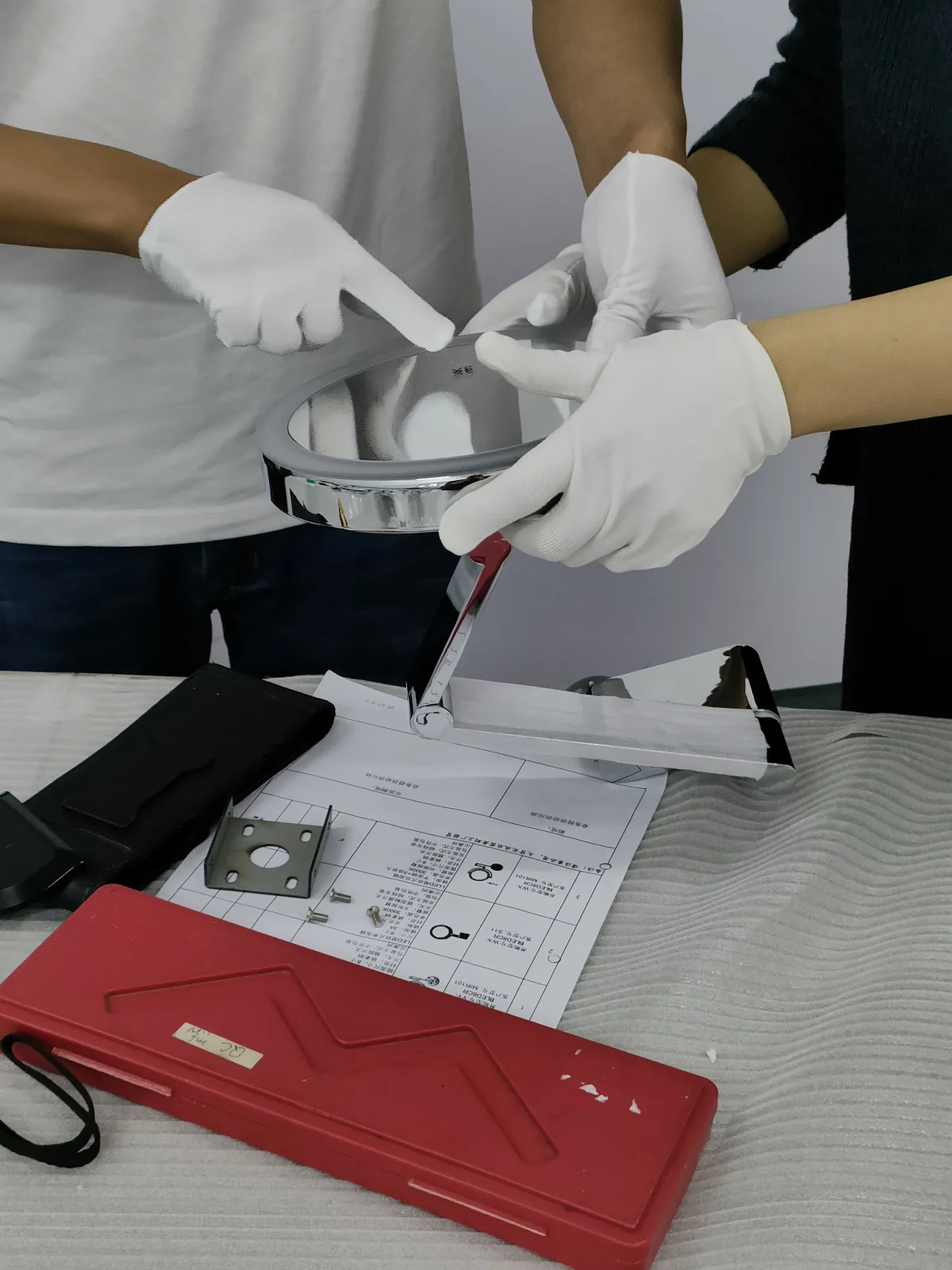
Key Takeaways: A lighting swivel needs an agreed torque window, not simply a “smooth feel” at sample approval. Test finished assemblies under representative loads, temperatures, and adjustment cycles, then verify holding performance, backlash, and wire condition. Reliable suppliers should connect these results to controlled dimensions, assembly settings, and lot traceability.
A brass swivel joint for lighting can look excellent on the inspection bench yet allow a lamp head to drift after installation. The opposite problem is equally costly: excessive adjustment resistance makes the fixture difficult to position and can transfer damaging loads into threaded connections or thin mounting brackets.
For sourcing teams, the challenge is separating cosmetic approval from functional approval. Bright plating, clean threads, and free movement do not demonstrate that a joint will hold its position through repeated use. A useful inspection specification links the lamp geometry, swivel mechanism, finish, and assembly method to measurable torque and durability requirements.
Key specifications to confirm before ordering
Use the project drawing as the ordering reference. The reference product for this range is a brass Hooke’s joint for lamp pipe with an M10 thread. Before ordering, confirm the required thread specification, mating pipe or tube fit, swivel range, and lamp-head load geometry against the drawing.
Confirm how the lamp head’s weight and distance from the swivel affect the required holding torque. Identify the intended adjustment positions and assembly method so the agreed inspection requirements reflect the installed lamp, rather than an unloaded joint tested separately on the bench.
Finish options on this product line include polished brass, nickel plating, and antique bronze; confirm the final finish against the project drawing and approved sample. OEM customization can cover thread specification, joint length, finish, and packaging. Record these requirements in the approved drawing and ordering documents before production.
Why torque variation becomes a production problem
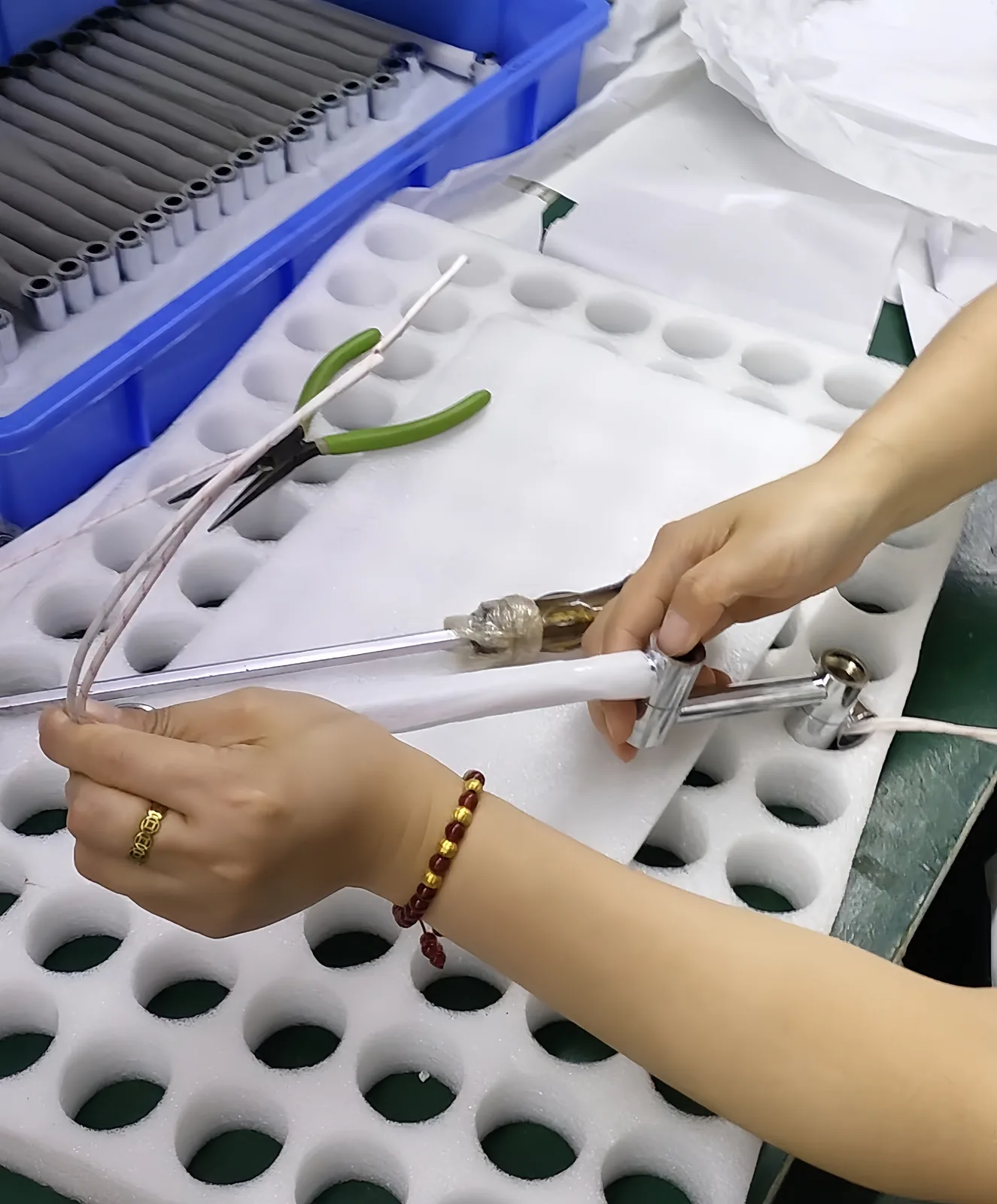
Friction swivels hold through preload and friction surfaces; manually locked swivels move freely until screw or knob tightening. Testing both designs identically misleads.
For friction designs, breakaway torque starts movement; running torque sustains it. Separately, holding must resist service loads without unacceptable drift. Test locking designs’ holding at specified user-applied locking torque.
Gravity moment approximates M = m × g × d, where d is perpendicular pivot-axis-to-load-center-of-gravity distance. A 0.6 kg head with 0.12 m perpendicular offset produces approximately 0.71 N·m—illustrative, not a torque specification. Include cable forces, orientation, foreseeable handling, and engineering margin.
Production varies bore clearance, washer thickness, contact geometry, fastener preload, and friction condition. Small dimensional shifts alter spring compression, making joints loose or stiff. Approve complete stack-ups, not individual machined parts.
Common defects that a visual inspection misses
Pre-finish torque can change: plating reduces clearance or alters contact surfaces; polishing rounds edges, changes bearing contact, or leaves recess residue. Test final finishes using production assembly sequences.
Burrs or uneven mating faces support preload, then flatten during adjustment: initially passing joints loosen after short run-in. Soft washers, unsuitable friction elements, or inconsistent lubrication cause similar changes.
Quick hand inspection misses stick-slip: high breakaway followed by low running resistance causes jerky adjustment and perceived instability despite acceptable average torque.
Specify brass grade: machinability, lead-content requirements, and stress-corrosion susceptibility depend on alloy and exposure. For credible cracking risks, consider cleaning chemistry and residual assembly stress. Define plating thickness and functional-surface masking or controlled buildup.
What should buyers measure before approving a brass lighting swivel?
Buyers should measure breakaway torque, running torque, loaded holding performance, angular play, and torque retention after cycling. They should also verify critical dimensions, finish condition, and wire protection on final-finished assemblies using an agreed test method.
| Checkpoint | Inspection method | Acceptance requirement |
|---|---|---|
| Breakaway torque | Measure from rest after a defined dwell. | Minimum and maximum in both directions. |
| Running torque | Record through travel at controlled speed. | Agreed window without unacceptable spikes. |
| Loaded holding | Apply specified moment, orientation, and dwell. | Angular drift below the agreed limit. |
| Angular play | Reverse a defined small probing load. | Play within the drawing or test limit. |
| Critical fit | Check bores, faces, washers, and threads. | Finished dimensions meet controlled tolerances. |
| Cycle endurance | Repeat defined travel under representative conditions. | Final torque and holding limits remain satisfied. |
| Finish and wear | Inspect before and after endurance testing. | No prohibited flaking, galling, or wear debris. |
| Wire protection | Cycle with the specified cable routing. | No pinching or unacceptable insulation damage. |
Use a calibrated torque transducer with suitable range and resolution. Align the fixture with the pivot axis and avoid adding bending loads. A force gauge and lever can be used if the effective perpendicular arm is controlled, but hand-pulling at an estimated distance is not a repeatable method. Record angle and torque together where possible; a single peak value can hide local binding.
Recorded this way, the measurements become the measurable core of the buyer’s swivel joint approval process, rather than a sample-room judgment call.
A practical torque and cycle-life verification checklist
There is no universal cycle count or torque range for every lighting swivel. Set the endurance target from expected adjustment frequency, service life, and product risk. A frequently repositioned task light needs a different duty profile from a fixture adjusted mainly during installation.
- Freeze the test configuration: Record drawing revision, material, finish, friction components, lubricant, and assembly setting.
- Define one cycle: State start angle, end angle, return travel, speed, dwell, and whether locking and unlocking are included.
- Establish the baseline: Measure as-assembled performance and, if specified, performance after a controlled run-in.
- Represent the application: Include the lamp’s load moment, cable routing, and relevant joint temperature.
- Check intermediate results: Record torque, play, drift, noise, and visible damage at predetermined intervals.
- Control interventions: Do not retighten, relubricate, or replace parts unless the protocol explicitly permits it.
- Verify the endpoint: Repeat functional measurements and inspect internal wear and wiring condition.
- Document failures: Preserve failed samples and link each result to its production lot.
Excessive cycling speed changes wear through friction heating rather than accelerating normal use. Intended cables preserve drag and reveal abrasion. Address applicable luminaire safety separately: mechanical endurance cannot establish electrical safety. Set absolute endpoint and useful baseline-change limits; percentage retention masks inadequate initial holding. Cover production variation; distinguish routine torque inspections from periodic endurance audits.
For mating pipes and threaded connections, use our tolerance and leak testing checklist for swivel joint pipework.
What a reliable supplier should be able to provide
Request controlled drawings, material identification, finish specifications, assembly instructions, and a written torque test method. Reports should identify sample quantity, fixture setup, calibration status, cycle conditions, and individual results—not merely “passed.”
Ask how friction preload is controlled: thread friction prevents assembly screw torque from guaranteeing swivel torque. Depending on the mechanism, controlled spring compression, stack-height checks, direct functional torque measurement, or combined controls may be needed.
Request critical-characteristic control plans, lot traceability, and change-notification rules. Washer material, lubricant, polishing, plating, or subcontract assembly changes can affect performance without visible shape changes. Approved samples provide references; defensible incoming inspection requires numerical limits and repeatable methods.
Our separate guide on how to choose a swivel joint supplier covers the commercial side of this evaluation, including torque consistency and cycle testing.
When to involve the factory early
Before fixing the swivel envelope, involve the manufacturer for large offset loads, restricted adjustment clearance, internal wiring, or elevated temperatures: these can determine pivot diameter, friction area, washers, travel stops, and accessible locking force.
Provide lamp-head mass, center-of-gravity position, mounting orientation, travel range, cable specification, finish requirement, and adjustment frequency. Request tolerance-accumulation review and identification of fit versus appearance surfaces before sample tooling, reducing the risk of compensating for unsuitable design through excessive tightening.
Approve repeatable performance, not just a good sample
A dependable brass swivel joint for lighting must move predictably, hold its intended load, and perform acceptably after repeated adjustment. Approval combines final-finished samples, measurable limits, representative endurance testing, and documented production controls.
Frequently asked questions
What thread sizes are available for brass swivel joints for lighting?
The reference product uses an M10 thread. Other thread specifications are confirmed per project. Submit the mating-part drawing and identify the required thread form, engagement, and fit before approving the order.
Can brass swivel joints be customized for OEM lamp projects?
Yes. OEM customization can cover thread specification, joint length, finish, and packaging. Confirm each requirement against the project drawing, then agree on samples and inspection criteria before releasing the order for production.
What surface finishes can I choose for a brass swivel joint?
This product line includes polished brass, nickel plating, and antique bronze. Confirm the selected finish against the project drawing and approved sample, including appearance requirements and any applicable coating inspection criteria.
How do I check the quality of a brass swivel joint on arrival?
Check threads with the specified thread gauge, verify smooth rotation and holding under the agreed lamp-head load geometry, and inspect the finish. For coated parts, check finish adhesion using the agreed inspection method.
Brass vs zinc alloy swivel joints: which is better for lighting?
Brass generally offers better wear behaviour, corrosion resistance, and plating quality. Zinc alloy can suit lighter, cost-driven parts. Select the material against the project’s load geometry, adjustment duty, finish requirements, and inspection criteria.
What information does a factory need to quote a custom brass swivel joint?
Provide the project drawing, thread specification, mating pipe or tube dimensions, joint length, swivel range, and lamp-head load geometry. Include finish, torque and durability requirements, order quantity, packaging details, and any sample approval requirements.
If your project involves finish, tolerance, or custom production questions, the next useful step is to review lighting hardware sourcing support before finalizing drawings, samples, or mass-production requirements.
 Floor Lamp Sets
 Wall Lamp Sets
 Table Lamp Sets
 Custom Hotel Parts
 Custom Made Parts
 Panels
 Tubes
 Universal joints
 Machined Parts