

-
 Phone:+86 189 2494 9366
-
 E-mail:info@zsshengshi.com
-
 No.5, north of the first road, Guyi Changweiyong manufacturingdistrict, Guzhen, Zhongshan, Guangdong, P.R.C
Factory Visit Checklist: QC Points That Prove Supplier Capability

Key Takeaways: A strong factory visit checklist should verify more than whether a workshop looks busy. Buyers should confirm process control, inspection discipline, finish consistency, communication ownership, and the evidence behind claimed capacity before approving a supplier for metal hardware or lighting accessory production.
For procurement teams sourcing metal hardware and lighting accessories, a factory visit checklist is not a formality. It is one of the fastest ways to separate a supplier that can actually control production from one that only presents well in quotation stage. In this sector, small gaps in stamping accuracy, threading quality, plating adhesion, welding stability, or color consistency can create field failures, assembly delays, and rework costs that are much larger than the original unit-price difference.
A useful visit should answer practical buying questions: Can this factory maintain finish consistency across batches? Are in-process controls real or only end-of-line sorting? Who owns corrective action when defects appear? Can engineering changes be absorbed without disrupting lead time? And does the supplier have the documentation and discipline needed for repeat OEM or ODM programs?
When buyers visit with the right priorities, they gain sourcing confidence based on proof, not promises.
Why this decision matters commercially and operationally
In metal hardware and lighting accessories processing, supplier capability affects more than product quality. It directly affects landed cost, launch timing, claim exposure, and internal workload. A factory with weak process control may still offer an attractive quote, but the hidden costs often appear later through delayed sampling, unstable finishes, excessive communication loops, or repeated concessions on cosmetic standards.
This is especially relevant for parts such as brackets, lamp holders, metal housings, threaded connectors, mounting plates, decorative covers, and custom-fabricated accessory sets. These items often combine dimensional requirements with visible-surface expectations. If a supplier cannot control burrs, hole position, coating thickness, weld marks, or packing protection, the buyer absorbs risk in assembly, retail presentation, and after-sales service.
A factory visit helps buyers validate whether the supplier can support:
- repeatable production quality, not just one good sample batch
- stable lead times during normal and peak loading periods
- clear ownership between sales, engineering, production, and QC
- reasonable MOQ flexibility for trial orders or phased launches
- consistent finishing results across different materials and product families
Common mistakes buyers make during supplier visits
Many factory visits fail because the buyer focuses on impressions instead of evidence. A clean showroom, modern reception area, or polished presentation deck does not prove production readiness. What matters is whether the supplier can show control at the process level.
Common weak comparison habits include:
- judging capability by machine count without checking utilization, maintenance, and operator skill
- accepting verbal quality claims without reviewing inspection records or defect history
- reviewing only final QC while ignoring incoming and in-process controls
- failing to compare subcontracted processes such as plating, anodizing, powder coating, or polishing
- not asking who approves tooling changes, first article samples, and deviation handling
- treating MOQ as a commercial issue only, instead of linking it to setup loss, finish batch size, and packaging constraints
Another common mistake is visiting too late. If the buyer waits until after price negotiation or sample approval, the visit becomes a confirmation exercise instead of a decision tool. The better approach is to use the visit before nomination or before committing larger-volume orders.
What should buyers compare during a factory visit?
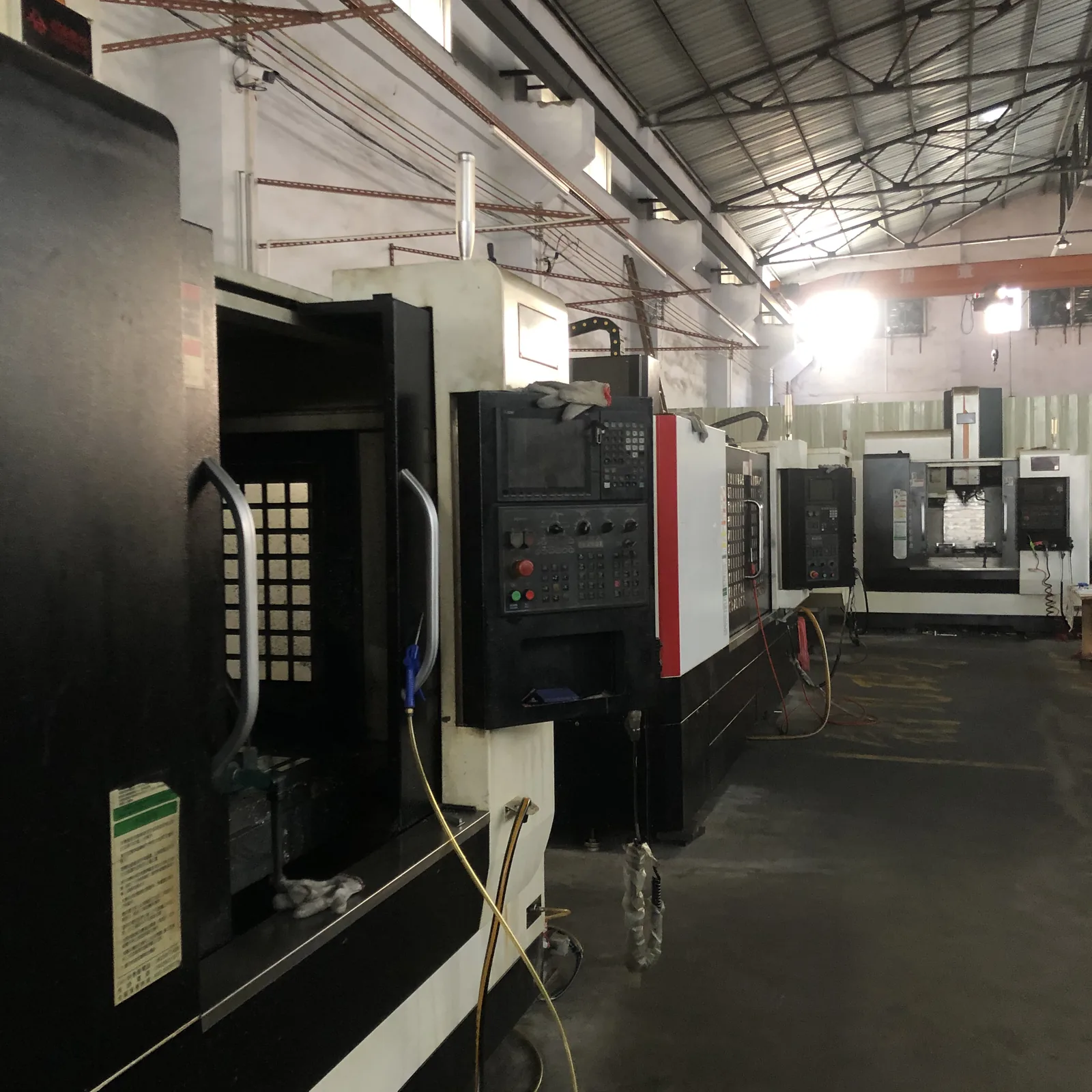
The strongest comparisons are side-by-side and specific. Buyers should compare not only quoted price and lead time, but also process ownership, QC depth, finish capability, engineering responsiveness, and traceability. The table below shows the practical areas that matter when evaluating suppliers for metal hardware and lighting accessory programs.
| Comparison Point | Strong Supplier Signal | Weak Supplier Signal | Buyer Impact |
|---|---|---|---|
| Incoming QC | Material checks with records | No lot verification | Higher variation and hidden defects |
| In-process control | Patrol inspection by station | Only final sorting | More scrap and missed defects |
| Finish capability | Sample panels and batch standards | Visual judgment only | Color mismatch and claim risk |
| Tooling management | Maintenance logs and revision control | Tool status unclear | Dimensional drift over time |
| Engineering support | DFM feedback with drawings | Sales relays all technical issues | Slow changes and miscommunication |
| Capacity planning | Visible load planning by line | Lead time quoted loosely | Unreliable delivery commitments |
| Traceability | Lot labels and status control | Mixed WIP and unclear status | Difficult root-cause analysis |
| Corrective action | Structured NCR and closure records | Verbal fixes only | Recurring quality problems |
This type of comparison gives buyers a more reliable basis for supplier selection than quote sheets alone. It also helps internal stakeholders align on why one factory deserves approval over another.
What factory capability evidence should buyers request?
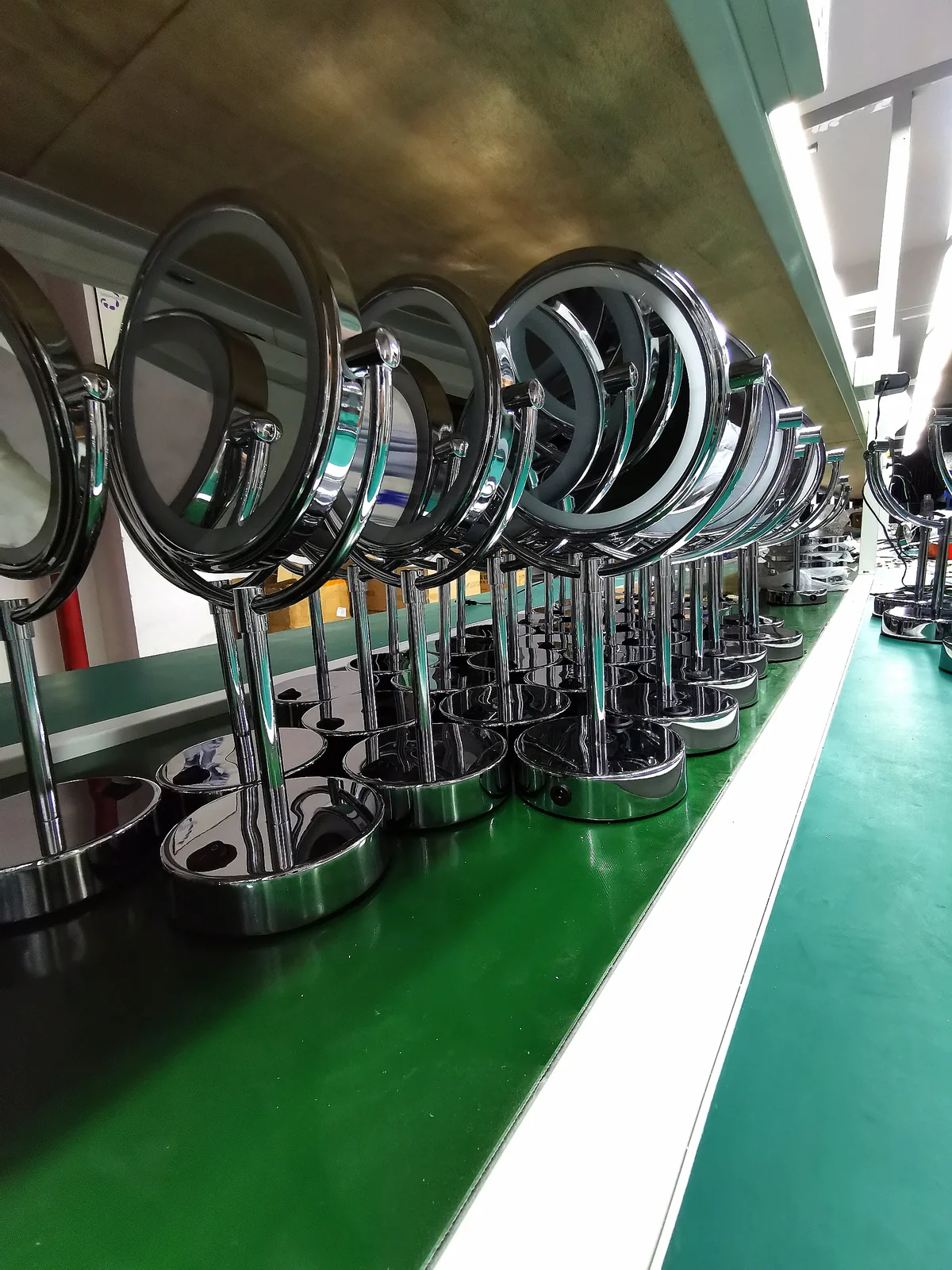
Reliable suppliers should be able to show evidence, not just make claims. During the visit, ask for documents and records that connect directly to your product risk. For metal hardware and lighting accessories, the most useful capability proof usually includes:
- inspection standards for dimensions, appearance, finish, and functional fit
- first article or sample approval records tied to drawing revisions
- material certificates for relevant grades, thickness, or finish specifications
- plating, coating, salt spray, adhesion, or color test records where applicable
- calibration records for key gauges, thread gauges, coating thickness meters, and measuring tools
- corrective action reports for recent defects and the actions taken to prevent recurrence
- production flow charts showing which processes are in-house and which are outsourced
- packaging validation examples for parts vulnerable to scratching, denting, or finish rub-off
If the supplier outsources critical finishing processes, buyers should ask who controls those vendors, how incoming outsourced lots are inspected, and whether the same finish source is used consistently. Many finish problems come not from the metal fabrication itself but from uncontrolled subcontracting.
For OEM and ODM work, it is also important to request evidence of engineering change handling. Ask to see how drawing updates, BOM revisions, and sample changes are communicated to production and QC. A supplier that cannot control revision status will eventually ship mixed versions.
Practical factory visit checklist for QC and capability validation
The checklist below is designed for buyers evaluating real production capability, not just compliance paperwork. It can be used during first visits, annual reviews, or before scaling an existing supplier.
| Area | What to Check | Proof to Look For |
|---|---|---|
| Material control | Lot separation, labeling, storage condition | Receiving logs and certificates |
| Production flow | Actual route versus quoted route | Process chart and live WIP |
| Work instructions | Station-specific standards and visuals | Controlled documents at line |
| In-process QC | Checkpoint frequency and reaction plan | Inspection forms with timestamps |
| Measurement system | Gauge suitability and calibration status | Calibration labels and records |
| Surface finish | Color, gloss, adhesion, defect criteria | Approved limit samples or panels |
| Tooling condition | Wear control and maintenance plan | Tool history and PM logs |
| Packaging | Protection for cosmetic surfaces | Drop-in examples and pack specs |
| Communication ownership | Named contacts for quality and engineering | Org chart and escalation path |
| Delivery readiness | Load planning and bottleneck visibility | Production schedule board |
A practical tip: score each area as approved, conditional, or high risk. This makes the visit easier to use in supplier comparison meetings after you return.
How to reduce sourcing risk before order confirmation
Even after a positive factory visit, buyers should close the remaining risk before releasing a production PO. This is where many teams move too quickly from visit to order.
Before confirmation, make sure the supplier and buyer agree on the following points:
- final drawing revision, tolerances, and critical-to-quality dimensions
- approved finish standard, including visual acceptance criteria and test requirements
- golden sample or boundary sample retention on both sides
- inspection plan, AQL or equivalent acceptance method, and reporting format
- packaging method, carton marking, and protection for plated or painted surfaces
- lead time definition, including tooling, sample approval, mass production, and peak season assumptions
- MOQ and price break logic linked to process setup, finish batch size, or material procurement
- response timing and escalation path for defects, delays, or engineering changes
For new suppliers, a pilot order is often a better test than a large first commitment. It shows whether the factory can translate its visit-day presentation into actual shipment performance. If the pilot includes multiple SKUs, cosmetic requirements, and realistic packaging, buyers get a much better view of ongoing capability.
It is also wise to confirm whether the supplier’s quoted lead time depends on outsourced finishing, shared tooling, or seasonal labor. These dependencies are common causes of delay in metal hardware and lighting accessory programs.
Conclusion: use a factory visit checklist to buy with evidence
A disciplined factory visit checklist gives buyers something more valuable than a good impression: decision-grade evidence. When procurement teams compare inspection control, finish management, engineering ownership, traceability, and delivery readiness, they can choose suppliers with greater confidence and fewer surprises after order placement.
If you are reviewing potential manufacturing partners for metal hardware or lighting accessories, the next practical step is to compare real production capabilities against your product requirements. You can review our About Us and Services information to understand how we support OEM and ODM projects, process control, and quality-focused manufacturing discussions.
If your project involves finish, tolerance, or custom production questions, the next useful step is to review factory capability overview and lighting hardware sourcing support before finalizing drawings, samples, or mass-production requirements.
 Floor Lamp Sets
 Wall Lamp Sets
 Table Lamp Sets
 Custom Hotel Parts
 Custom Made Parts
 Panels
 Tubes
Tubes Universal joints
 Machined Parts