

-
 Phone:+86 189 2494 9366
-
 E-mail:info@zsshengshi.com
-
 No.5, north of the first road, Guyi Changweiyong manufacturingdistrict, Guzhen, Zhongshan, Guangdong, P.R.C
How to Specify Lighting Accessories for Hotels by Area and Project Type

How to Specify Lighting Accessories for Hotels by Area and Project Type
Key Takeaways: Specifying lighting accessories for hotels is not only a design decision; it directly affects installation speed, finish consistency, maintenance cost, and project delivery risk. Buyers should define requirements by hotel area and project type, then compare suppliers on finish control, customization support, compliance evidence, MOQ flexibility, and communication reliability before placing orders.
For procurement teams and project managers, sourcing lighting accessories for hotels is rarely as simple as choosing a decorative style or matching a drawing. Hotel projects combine aesthetic expectations, heavy-use environments, phased installations, and strict opening schedules. That means the accessory specification around each fixture, bracket, canopy, arm, mounting plate, trim ring, shade holder, or metal housing can have a direct impact on both the guest experience and the project margin.
The practical challenge is that hotel lighting requirements change by area. A guest room reading light, a lobby feature fixture, a corridor wall sconce, and a bathroom vanity assembly may all use different metal parts, finishes, tolerances, and packaging standards. Buyers comparing factories need more than a catalog. They need to know which supplier can hold finish consistency across batches, manage custom metal fabrication, support OEM or ODM modifications, and communicate clearly when drawings change mid-project.
This article focuses on how to specify by use case, how to compare factory options, and what to confirm before order release so hotel projects move from sample approval to mass production with fewer surprises.
Why this decision matters commercially and operationally
In hotel projects, lighting accessories are often treated as secondary components until delays or quality claims appear. From a factory-side view, that is where cost leakage starts. A poorly specified mounting plate can slow installation. A decorative metal shade ring with unstable plating can trigger room-to-room color variation. Weak packaging for mixed-model projects can create site sorting problems and replacement requests.
Commercially, the buyer is balancing at least four variables at once:
- Unit cost versus rework risk
- Customization depth versus lead time
- Finish quality versus MOQ pressure
- Fast quoting versus engineering accuracy
For new-build hotels, the priority is usually schedule control, standardization, and installation efficiency across many rooms. For renovation projects, the pressure shifts toward retrofit compatibility, smaller batch flexibility, and finish matching with existing interiors. For branded chains, consistency across locations matters more than one-off piece price. These differences should shape the specification package and supplier shortlist from the start.
Common mistakes buyers make when specifying hotel lighting accessories
Many sourcing problems come from weak comparison habits rather than from the product itself. Buyers often request quotations using only appearance references or fixture photos, then compare prices from factories with very different process capabilities. This creates false savings.
The most common mistakes include:
- Combining decorative and structural parts in one RFQ without separate technical requirements
- Approving a finish swatch without confirming the base material and coating process
- Ignoring installation hardware until late-stage engineering review
- Comparing suppliers only on sample appearance, not batch repeatability
- Assuming low MOQ means production flexibility for mixed hotel area requirements
- Not defining whether the project is new build, renovation, branded rollout, or custom boutique
A wall lamp arm for a guest room may need stable angle control, hidden wiring space, and repeatable brushed finish. A lobby decorative canopy may prioritize cosmetic weld polishing and large-diameter forming capability. If both parts are sourced under the same vague “hotel lighting hardware” description, quotation quality and production planning will both suffer.
How should buyers specify lighting accessories for hotels by area?
A practical way to improve sourcing accuracy is to break the project into hotel use zones, then assign functional and manufacturing priorities for each zone. This helps engineering, procurement, and the supplier align on what matters most.
| Hotel Area | Typical Accessories | Key Specification Focus | Main Sourcing Risk |
|---|---|---|---|
| Guest rooms | Arms, bases, trim rings, canopies | Finish repeatability, easy installation, compact tolerances | Batch color mismatch across room sets |
| Lobby and reception | Large canopies, decorative housings, custom brackets | Cosmetic quality, weld finishing, custom fabrication | Visible defects on statement fixtures |
| Corridors | Mounting plates, wall brackets, guards | Durability, fast installation, standardization | Site delays from poor fit-up |
| Bathrooms | Vanity hardware, covers, support plates | Corrosion resistance, sealing interface, finish stability | Premature rust or coating failure |
| Restaurants and bars | Decorative shades, stems, suspension parts | Aesthetic detail, special finish, mixed-model coordination | Complex SKU management errors |
| Outdoor covered areas | Protective housings, brackets, caps | Weather resistance, material selection, coating process | Corrosion claims and maintenance cost |
This area-based approach gives buyers a cleaner RFQ structure. It also helps suppliers quote correctly because they can separate simple repeat parts from higher-risk custom decorative components.
What changes by project type?
Project type is just as important as hotel area. The same accessory can be commercially acceptable in one project and risky in another depending on rollout scale, approval process, and delivery schedule.
| Project Type | Buyer Priority | Best Supplier Fit | Watch-Out |
|---|---|---|---|
| New hotel build | Volume stability and schedule control | Factory with batch capacity and project coordination | Late engineering changes after tooling start |
| Renovation | Retrofit fit and small-batch flexibility | Supplier with custom adaptation support | Existing site dimensions not matching drawings |
| Brand rollout | Cross-project consistency | Factory with documented process control | Finish drift between production lots |
| Boutique hotel | Design customization and visual detail | Supplier strong in OEM or ODM collaboration | Underestimating hand-finish lead time |
If your project is a renovation, for example, ask the supplier how they handle dimension variation from site measurements. If your project is a branded rollout, ask how they lock finish recipes and manage repeat orders over time. These questions reveal much more than a quotation sheet.
What should buyers compare between suppliers?
When evaluating factories for metal hardware and lighting accessory production, buyers should compare process fit, not just product photos. A supplier that performs well on standard tubular arms may not be the best choice for deep-drawn canopies, multi-step polishing, or mixed-finish assemblies.
| Comparison Point | Strong Supplier Signal | Weak Supplier Signal | Buyer Impact |
|---|---|---|---|
| Finish control | Sample-to-batch standards documented | Only visual promise | Affects room-to-room consistency |
| Engineering support | Reviews drawings and tolerance stack-up | Quotes without technical review | Affects fit and installation speed |
| MOQ flexibility | Can split by finish or area | Rigid volume rules | Affects renovation and pilot orders |
| Communication | Clear revision tracking and response speed | Informal updates only | Affects change management |
| Lead time reliability | Capacity plan by process stage | Single total lead time only | Affects project opening dates |
| Quality control | Incoming, in-process, final checks defined | Final inspection only | Affects defect containment |
A procurement team should also compare whether the supplier understands the difference between decorative acceptance and functional acceptance. Hotel buyers often need both. A part can pass dimension inspection and still fail visually when installed across 200 rooms under warm lighting conditions.
What factory capability evidence should buyers request?
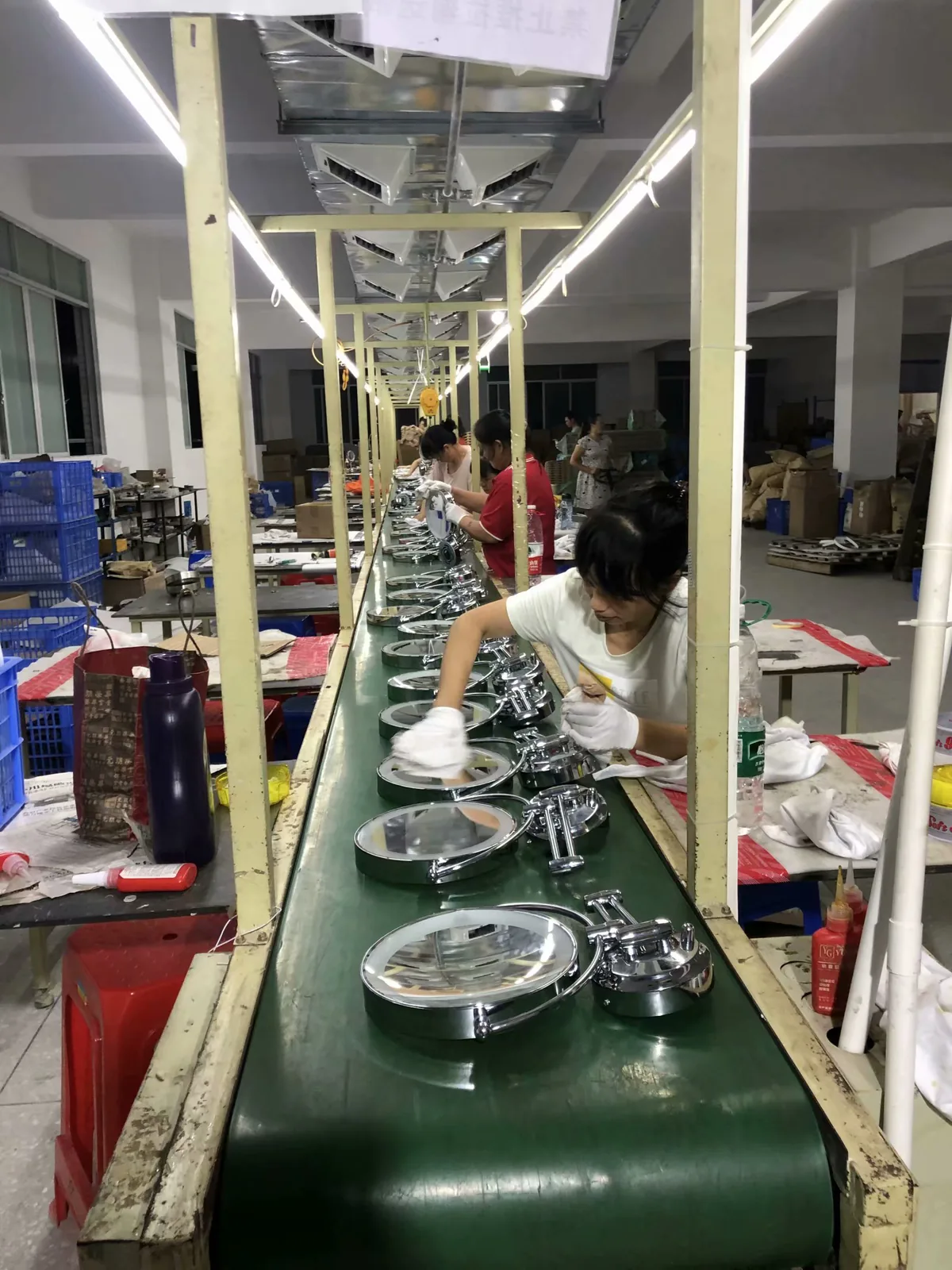
Reliable suppliers should be able to prove capability with evidence, not only claims. This is especially important for custom or semi-custom hotel programs where metal processing quality and finish repeatability drive long-term satisfaction.
Ask for evidence in these categories:
- Process list by part type: stamping, spinning, bending, welding, polishing, plating, powder coating, assembly
- Recent project samples similar in size, finish, and complexity
- Inspection records for dimensions, coating thickness, adhesion, salt spray, or visual standards where relevant
- Packaging method for mixed SKUs, room-set packing, or site-sequenced delivery
- Drawing control and revision handling procedure
- Pilot run or pre-production sample approval workflow
If the supplier offers OEM or ODM support, request a clear explanation of what they can modify: dimensions, mounting method, finish, branding details, packaging, or assembly structure. Some factories say they support customization, but in practice they can only change surface color or logo marking. That is not the same as real development support.
For hotel projects with multiple zones, it is also useful to request evidence of project segmentation capability. Can the factory manage one decorative finish for lobby pieces, another for guest rooms, and a corrosion-resistant version for bathroom or covered outdoor areas under one program? This capability reduces coordination effort for the buyer.
Practical buyer checklist before approving a supplier
Before order confirmation, buyers should use a short cross-functional checklist covering procurement, engineering, quality, and project delivery. This prevents the common gap where commercial terms are approved before technical details are stable.
| Checkpoint | Owner | What to Confirm |
|---|---|---|
| Approved drawing matches quotation | Engineering | No hidden spec gap |
| Finish standard is signed off | Quality | Color, gloss, texture, base material |
| MOQ and split shipment rules are clear | Procurement | No late commercial dispute |
| Pilot sample or first article approved | Project team | Production intent is verified |
| Packaging format suits site handling | Logistics | Less damage and sorting time |
| Lead time includes finish and assembly stages | Procurement | More realistic schedule planning |
| Change control contact is assigned | Supplier + buyer | Faster issue closure |
How to reduce sourcing risk before order confirmation
The safest sourcing approach for hotel accessory programs is to reduce ambiguity before volume production starts. In practical terms, that means locking the specification package, validating the supplier’s process fit, and creating a clear approval path for finish and structure.
A few actions make a measurable difference:
- Group accessories by hotel area and finish family instead of sending one mixed RFQ list
- Request a pre-production sample built with real mass-production process, not hand-made mockup only
- Confirm whether decorative finishes are outsourced and how color consistency is controlled
- Align packaging labels with room, area, or installation sequence if the project is large
- Set acceptance criteria for both dimensions and visible cosmetic surfaces
- Clarify whether spare parts and replenishment orders can match the original batch finish
This is where experienced suppliers stand out. They do not simply accept drawings and wait for problems. They flag weak weld access, coating risks, unstable mounting details, or unrealistic tolerances before tooling and production begin. That type of early feedback protects the buyer from expensive field issues later.
Conclusion: specify for project fit, not just appearance
Successful sourcing of lighting accessories for hotels depends on matching the accessory specification to the actual hotel area, project type, and factory capability. Buyers who compare suppliers only on unit price or sample appearance often miss the issues that affect installation, finish consistency, and delivery reliability at project scale.
A better approach is to define use-case requirements clearly, request capability evidence, compare suppliers side by side, and confirm technical and commercial details before order release. If you are reviewing a hotel lighting program, the next practical step is to review the relevant service capability, compare custom metal processing options, or discuss OEM/ODM requirements with the team through the Home or Services pages.
If your project involves finish, tolerance, or custom production questions, the next useful step is to review main company website and lighting hardware sourcing support before finalizing drawings, samples, or mass-production requirements.
 Floor Lamp Sets
 Wall Lamp Sets
 Table Lamp Sets
 Custom Hotel Parts
 Custom Made Parts
 Panels
 Tubes
Tubes Universal joints
 Machined Parts