

-
 Phone:+86 189 2494 9366
-
 E-mail:info@zsshengshi.com
-
 No.5, north of the first road, Guyi Changweiyong manufacturingdistrict, Guzhen, Zhongshan, Guangdong, P.R.C
Contract Manufacturing Supplier Comparison: QC, Tolerances, and Lead Time Checklist

Contract Manufacturing Supplier Comparison: QC, Tolerances, and Lead Time Checklist
Key Takeaways: In metal hardware and lighting accessories, contract manufacturing decisions should be based on process control, tolerance capability, finish consistency, and realistic lead time performance—not only unit price. Buyers should compare suppliers using evidence such as inspection records, process capability, sample history, and communication discipline before approving production.
Introduction: why supplier comparison is harder than it looks
For procurement teams buying stamped parts, brackets, housings, threaded components, lamp hardware, or decorative lighting accessories, selecting a contract manufacturing partner is rarely a simple price exercise. Two suppliers may quote the same drawing and material spec, yet deliver very different results in dimensional stability, plating consistency, packaging protection, and lead time reliability.
This gap matters because metal hardware and lighting accessory projects often combine visible cosmetic requirements with functional tolerances. A part can technically match the drawing but still create assembly issues, coating mismatch, thread fit problems, or rework at the customer side. That is why a good supplier comparison process must go beyond quotation speed and nominal capacity.
The practical question is not only whether a factory can make the part. It is whether the factory can make it repeatedly, communicate deviations early, and protect your schedule when volumes change.
Why this decision matters commercially and operationally
In metal hardware sourcing, weak supplier selection usually shows up after purchase order release, not before. The first warning signs are often small: delayed sample feedback, unclear tolerance comments, inconsistent finish panels, or a revised lead time after tooling starts. If these issues are not controlled early, they become larger commercial problems.
For buyers, the cost impact is broader than piece price. Poor supplier fit can lead to line stoppage, incoming inspection overload, higher safety stock, emergency air shipments, customer complaints, and engineering time spent on avoidable corrections. In lighting accessories especially, cosmetic defects and finish variation can damage the final product appearance even when the underlying metal fabrication is acceptable.
A disciplined comparison process improves more than quality. It helps buyers make better MOQ decisions, negotiate realistic launch timing, align packaging requirements, and avoid selecting a supplier whose process window is too narrow for the product.
Common mistakes buyers make when comparing factories
Many sourcing problems start with weak comparison habits. The supplier may not be the only issue; sometimes the buying process does not test the right capabilities.
- Comparing only quoted unit price without checking what inspection, tooling maintenance, and packaging are included.
- Assuming a supplier that handles simple metal parts can also control visible cosmetic finishes for lighting components.
- Accepting broad statements such as “tolerance no problem” without measurement reports or process evidence.
- Using sample approval as proof of mass production readiness, even when the sample was hand-finished or made under special conditions.
- Failing to confirm subcontracted processes such as plating, anodizing, powder coating, polishing, or laser marking.
- Not clarifying lead time by stage: tooling, first article, pilot run, mass production, and replenishment.
- Approving an MOQ that looks commercially attractive but does not match the supplier’s stable production batch size.
- Ignoring communication risk, especially when engineering changes or finish exceptions need fast confirmation.
A reliable comparison should separate quoting convenience from actual production control. Buyers should ask what process is standard and what is exceptional. If the quoted result depends on manual sorting, special operator attention, or outside finishing with unstable scheduling, the risk level is higher than the quote suggests.
What should buyers compare between contract manufacturing suppliers?
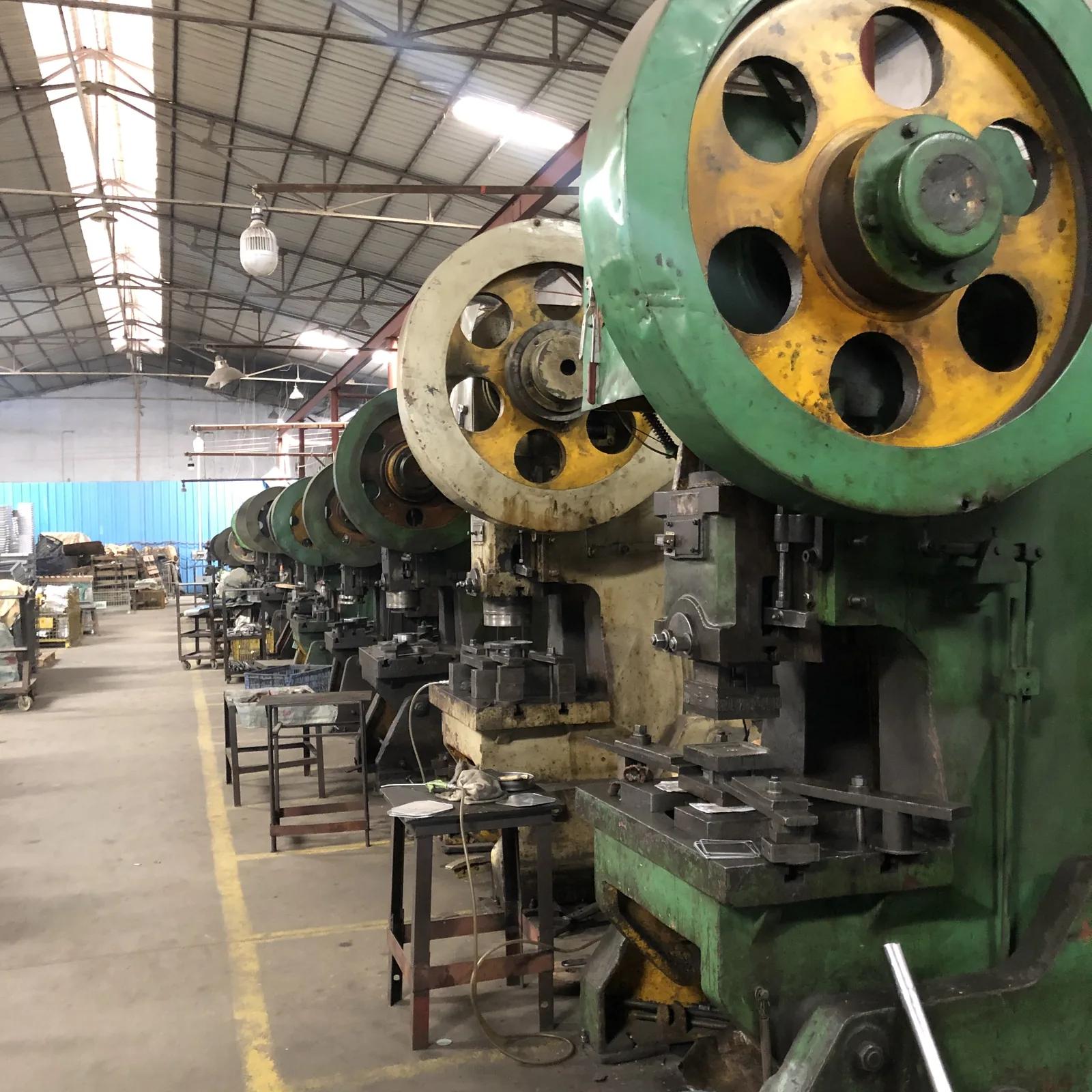
The most useful comparison framework is a side-by-side review of manufacturing fit, quality discipline, tolerance capability, finish control, lead time credibility, and commercial flexibility. This makes supplier differences visible before the order is placed.
| Comparison Area | What to Ask | Strong Supplier Signal | Risk Signal |
|---|---|---|---|
| Process fit | Which steps are in-house vs outsourced? | Clear routing and ownership | Vague subcontract chain |
| Tolerance control | How are critical dimensions measured? | Inspection method and records | Only verbal assurance |
| Finish consistency | How are color, gloss, and surface defects controlled? | Approved standard samples | No visual criteria defined |
| Lead time | What is the timeline by stage? | Stage-based schedule | Single headline promise |
| MOQ and batch size | What quantity supports stable yield? | Explains economic run size | MOQ changes after approval |
| Engineering support | Can they review manufacturability before tooling? | Specific DFM comments | Quotes without review |
| Communication | Who owns project updates and issue escalation? | Named contact and cadence | Slow or fragmented replies |
| Corrective action | How are defects contained and closed? | Structured root cause process | Only sorting and replacement |
This comparison is especially useful when reviewing suppliers that appear similar on paper. In practice, one may be stronger in metal forming but weaker in finishing control, while another may communicate well but rely too heavily on outsourced secondary processes. The best choice depends on your product risk profile, not only on nominal capability.
What factory capability evidence should buyers request?

Buyers should request evidence that matches the actual risk of the part. For a hidden bracket, the priority may be dimensional repeatability and thread quality. For a visible lighting trim or decorative hardware component, the priority may be finish uniformity, scratch prevention, and packaging discipline. Asking for generic company presentations is not enough.
Useful factory capability evidence includes:
- Recent first article or dimensional inspection reports for similar parts.
- Process flow showing where forming, machining, welding, polishing, plating, coating, and final inspection occur.
- Photos or records of gauges, calipers, thread gauges, coating thickness tools, and visual inspection stations.
- Examples of approved finish panels or master samples for color and surface acceptance.
- Packaging method for scratch-sensitive or plated parts.
- Tooling maintenance approach and replacement plan for wear-critical production.
- Nonconformance handling records or corrective action examples.
- Production capacity by machine type, shift pattern, and bottleneck process.
The key is to ask for proof tied to your part family. A supplier may be fully capable in steel stamping but not in stainless cosmetic polishing. Another may machine accurately but struggle with external plating schedule control. Evidence should reduce uncertainty about the exact combination of operations your product requires.
| Part Risk | Evidence to Request | Why It Matters | Warning Sign |
|---|---|---|---|
| Tight tolerances | Measured sample report | Confirms repeatability | No actual data |
| Visible finish | Approved finish panel | Sets appearance standard | Color judged by photo |
| Assembly fit | Functional test method | Reduces line issues | Only dimensional check |
| Plated or coated parts | Coating thickness record | Supports durability | No finish verification |
| Scratch-sensitive parts | Packaging sample | Protects transit quality | Packaging decided later |
Practical checklist for QC, tolerances, and lead time review
Before placing an order, procurement and engineering teams should confirm a short list of production-readiness points. This prevents the common gap between a good quote and a weak launch.
| Checkpoint | Owner | What to Confirm |
|---|---|---|
| Drawing revision locked | Engineering | Latest file and critical dimensions marked |
| Critical tolerances agreed | Engineering + Supplier | Measurement method and acceptance criteria |
| Finish standard approved | Quality + Product | Color, gloss, texture, defect limits |
| Inspection plan defined | Quality | Incoming, in-process, and final checks |
| Packaging approved | Procurement + Quality | Protection against dent, scratch, corrosion |
| Lead time broken down | Procurement | Tooling, sample, mass production, shipment |
| MOQ and batch logic reviewed | Procurement | Commercial quantity matches process stability |
| Issue escalation path set | Supplier + Buyer | Named contacts and response timing |
If even two or three of these items remain unclear, the sourcing risk is still high. In factory practice, ambiguity usually becomes delay, sorting, or rework.
How to reduce sourcing risk before order confirmation
The best time to reduce risk is before the first production PO, when changes are still inexpensive. Buyers should use a staged approval approach rather than moving directly from quote to full release.
- Start with a manufacturability review covering material choice, tolerance stack-up, finish sensitivity, and packaging needs.
- Approve a dimensional sample and, where appearance matters, a separate cosmetic reference sample.
- Confirm whether any key process is outsourced and who controls that supplier.
- Ask for a pilot run if the part combines tight fit and visible finish requirements.
- Review lead time assumptions against actual bottlenecks such as tooling, plating queue, or polishing capacity.
- Clarify how shortages, defects, and engineering changes will be communicated.
For metal hardware and lighting accessories, finish consistency deserves special attention. Buyers often focus on dimensions first, but appearance variation can become the real cause of rejection. This is especially true for mixed-batch orders, decorative trims, and components assembled next to painted or plated surfaces from other suppliers.
Another practical control is to align MOQ with process economics. A supplier may accept a low trial quantity, but the process may only stabilize at a larger batch size. If the first order is too small, the unit cost may be misleading and the yield may not represent normal production performance.
Conclusion: choose contract manufacturing partners based on proof, not promises
A strong contract manufacturing decision in metal hardware and lighting accessories comes from disciplined comparison. Buyers should evaluate not only price and capacity, but also how the supplier controls tolerances, manages finish quality, structures lead times, and responds when production conditions change.
If you are comparing suppliers for custom metal hardware, fabricated components, or lighting accessory production, the next practical step is to review relevant Services capability and prepare an RFQ package that clearly defines critical dimensions, finish standards, and delivery expectations. If your project includes OEM/ODM or process-transfer requirements, a direct sourcing discussion with the team can help identify risks before tooling and order release.
If your project involves finish, tolerance, or custom production questions, the next useful step is to review lighting hardware sourcing support and rfq before finalizing drawings, samples, or mass-production requirements.
 Floor Lamp Sets
 Wall Lamp Sets
 Table Lamp Sets
 Custom Hotel Parts
 Custom Made Parts
 Panels
 Tubes
Tubes Universal joints
 Machined Parts