

-
 Phone:+86 189 2494 9366
-
 E-mail:info@zsshengshi.com
-
 No.5, north of the first road, Guyi Changweiyong manufacturingdistrict, Guzhen, Zhongshan, Guangdong, P.R.C
Metal Hardware Supplier Comparison: A Buyer Checklist for QC and Tolerances

Metal Hardware Supplier Comparison: A Buyer Checklist for QC and Tolerances
Key Takeaways: A practical buyer checklist for metal hardware sourcing should go beyond price and include tolerance control, finish consistency, inspection methods, communication speed, and production readiness. Reliable suppliers should prove process capability with drawings review, sample records, inspection reports, and clear control plans before an order is released.
For procurement teams buying stamped parts, brackets, fasteners, housings, threaded components, and lighting metal accessories, supplier comparison often fails for one reason: factories are judged on quotation speed and unit price, while the real commercial risk sits in QC discipline and tolerance control. Two suppliers may both claim they can make the same part, but their ability to hold flatness, hole position, thread quality, plating thickness, or cosmetic finish can be very different.
This is where a disciplined buyer checklist becomes useful. It helps sourcing managers, engineers, and product teams compare factories on evidence instead of assumptions. In metal hardware and lighting accessory processing, that means checking not only whether a supplier has the machine, but whether it can repeatedly deliver the required dimension, finish, packaging standard, and lead time at production scale.
Why this decision matters commercially and operationally
A weak supplier comparison process usually shows up later as hidden cost. The part price may look competitive, but the total sourcing cost rises when incoming inspection rejects batches, assembly lines stop due to fit issues, plating color varies between lots, or urgent rework is needed to meet customer shipment dates.
In hardware programs, tolerance and QC problems are rarely isolated. A burr problem can affect coating adhesion. Poor hole position can create assembly stress. Inconsistent polishing can turn into a customer-facing cosmetic complaint. Long response times during pre-production usually become longer response times during corrective action.
That is why supplier selection is both a commercial and operational decision. Buyers are not only choosing a production source. They are choosing a process control system, a communication rhythm, and a risk profile.
Common mistakes buyers make when comparing metal hardware suppliers
Many sourcing teams use an informal comparison method: collect three quotes, check lead time, and review a few sample photos. That approach is too weak for parts with tolerance, finish, or assembly-critical features. The most common mistakes include:
- Comparing quoted price without aligning drawings, tolerances, finish specs, and inspection standards first.
- Assuming a supplier that can make prototypes can also control mass production variation.
- Accepting “within tolerance” claims without asking how dimensions are measured and recorded.
- Ignoring secondary process control such as plating, anodizing, polishing, tapping, welding, or laser marking.
- Overlooking MOQ logic, which can affect cash flow, stock risk, and change flexibility.
- Failing to test communication quality during the quotation and sample stage.
A reliable supplier comparison should separate sales confidence from factory evidence. The right question is not “Can you make this?” but “How do you control this feature, and what proof can you provide?”
What should buyers compare between suppliers?
When comparing suppliers for metal hardware and lighting accessory parts, buyers should use the same technical package for all factories: drawing revision, material grade, surface finish requirement, critical dimensions, appearance standard, packaging method, forecast volume, and target inspection level. Once the RFQ basis is aligned, comparison becomes more meaningful.
| Comparison Area | What to Ask | Strong Supplier Signal | Buyer Risk if Weak |
|---|---|---|---|
| Drawing review | Did they identify critical features? | Feedback on tolerance and manufacturability | Late engineering issues after PO |
| Tolerance control | How is each key dimension measured? | Defined gauges, records, and frequency | Assembly failure and batch variation |
| Surface finish | How is color or texture controlled? | Approved samples and finish standard | Inconsistent appearance between lots |
| Material traceability | Can they link parts to material lots? | Mill certs and batch records | Spec disputes and compliance risk |
| Secondary processes | In-house or outsourced? | Qualified subcontractor control | Lead time slippage and quality escapes |
| Capacity and MOQ | What is the efficient batch size? | Clear MOQ and scale-up plan | Excess stock or unstable pricing |
| Communication | Who owns technical follow-up? | Fast, specific, documented replies | Delay in issue closure |
| Corrective action | How are defects handled? | Root cause and containment process | Repeat defects and poor accountability |
This comparison should be done at RFQ stage, not after samples fail. The strongest suppliers usually raise technical questions early. That is a positive signal, not a delay tactic. It shows they are reviewing manufacturability and risk before committing.
What factory capability evidence should buyers request?
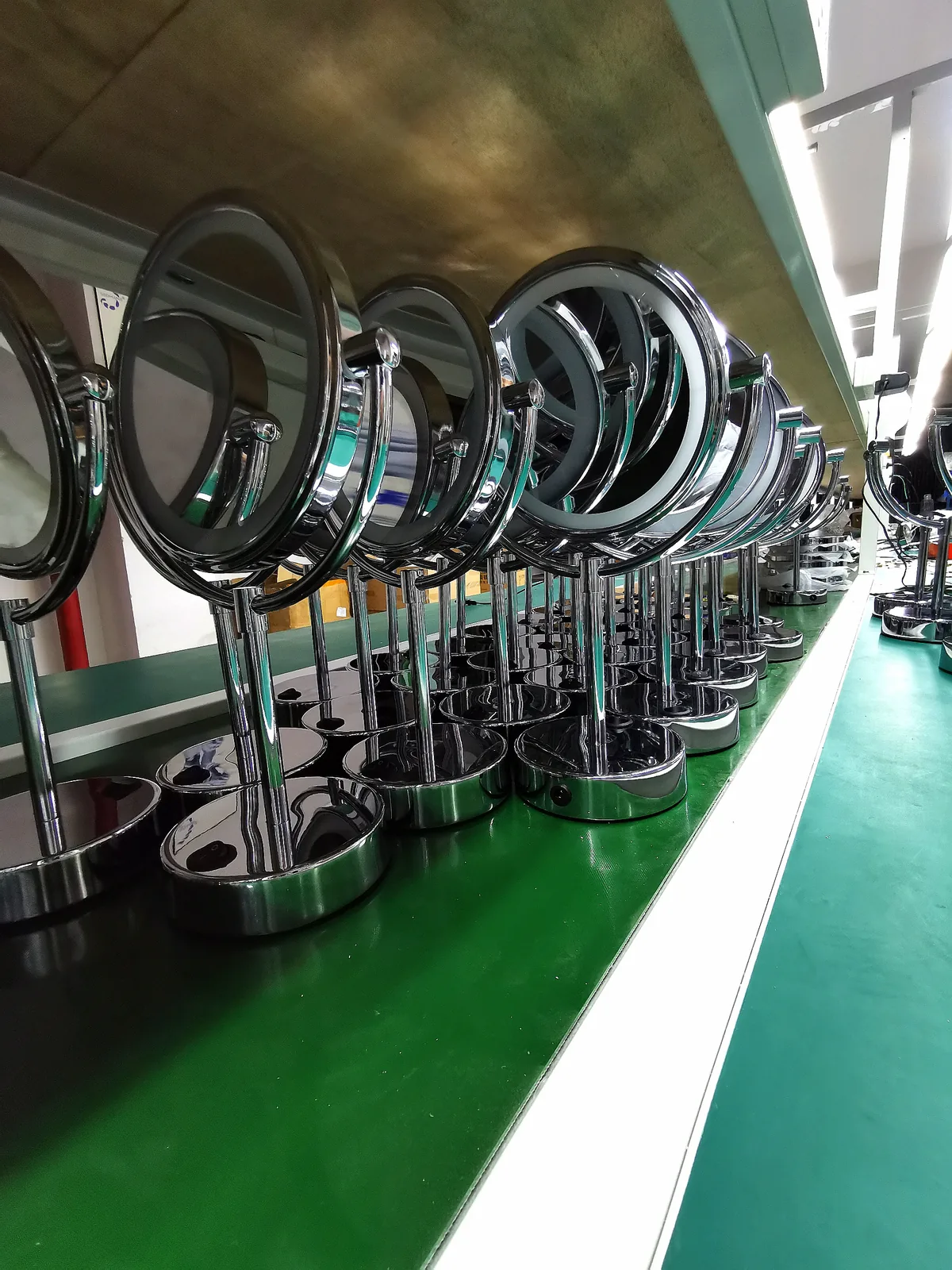
Buyers should ask for proof tied to the actual part family being sourced. A general company profile is not enough. If the project involves precision sheet metal brackets with powder coating, or turned parts with tight thread requirements, the evidence should match that process route.
Useful factory capability evidence includes:
- Sample inspection reports showing actual measured values against drawing tolerances.
- First article records for comparable parts.
- Photos or videos of relevant equipment, tooling, fixtures, and gauges.
- Process flow chart from raw material to packing.
- Control plan for critical dimensions and cosmetic checkpoints.
- Material certificates and finish test records where applicable.
- Nonconformance and corrective action examples with closure method.
- Packaging validation for scratch-sensitive or plated components.
For lighting accessories in particular, finish consistency matters as much as dimensional compliance. Buyers should confirm how the factory manages color reference samples, gloss variation, edge preparation, weld cleanup, and packing separation. A supplier may hold dimensions well but still create commercial problems if visible parts arrive with shade mismatch or transit marks.
If a supplier cannot provide basic inspection records or process documentation for similar products, buyers should assume the real control level is lower than claimed.
A practical buyer checklist for QC and tolerance comparison

The checklist below is designed for procurement and engineering teams comparing metal hardware suppliers before sample approval or purchase order release.
| Checklist Item | Confirm | Why It Matters |
|---|---|---|
| Drawing revision and spec package aligned | Yes/No | Prevents quote mismatch |
| Critical dimensions identified | Yes/No | Focuses control on fit features |
| Measurement method defined | Yes/No | Avoids inspection disputes |
| Finish standard approved by sample | Yes/No | Reduces cosmetic variation risk |
| Material grade and cert requirement agreed | Yes/No | Protects compliance and performance |
| Secondary process owner identified | Yes/No | Clarifies accountability |
| Pilot sample or first article reviewed | Yes/No | Checks production readiness |
| AQL or inspection level agreed | Yes/No | Sets acceptance criteria |
| Packaging method approved | Yes/No | Prevents transit damage |
| Lead time and buffer assumptions documented | Yes/No | Improves schedule reliability |
| MOQ and price break logic understood | Yes/No | Avoids inventory pressure |
| Corrective action path agreed | Yes/No | Speeds issue containment |
This checklist works best when procurement and engineering review it together. Purchasing can validate commercial fit, while engineering confirms that tolerance, finish, and process controls are realistic.
How to reduce sourcing risk before order confirmation
Before releasing a production order, buyers should close the gap between sample success and batch reliability. That means confirming not just that one sample passed, but that the supplier can repeat the result under normal production conditions.
A practical risk-reduction approach includes:
- Approve a golden sample for both dimension and appearance.
- Ask for a first article or pilot lot produced with intended tooling and process flow.
- Review inspection records for critical dimensions, not only pass/fail statements.
- Confirm subcontracted finishing sources and their quality controls.
- Define acceptable cosmetic limits for visible hardware and lighting parts.
- Clarify response time for deviations, rework, and replacement decisions.
- Align packaging count, labeling, and protection method before shipment.
If the part has tight fit requirements, request a mating test with your assembly or a gauge approved by your team. If the part is appearance-sensitive, approve finish under the same lighting conditions used for incoming inspection. These small steps reduce disagreement later.
Buyers should also be realistic about tradeoffs. Tight tolerances, premium finish standards, low MOQ, and short lead time can all be achieved, but usually not at the lowest price simultaneously. A good supplier will explain the tradeoff clearly instead of overpromising during quotation.
Final decision: choose evidence over claims
In metal hardware sourcing, the best supplier is not always the lowest quote or the fastest responder. It is the factory that can prove process control, communicate risks early, and deliver repeatable quality within agreed tolerances and finish standards. A disciplined buyer checklist helps teams compare suppliers on the factors that affect total cost, not just purchase price.
If you are comparing manufacturing partners for hardware or lighting accessory projects, the next useful step is to review relevant Services capability, prepare a complete technical package, and submit an RFQ for a like-for-like evaluation. For custom OEM/ODM requirements, a focused discussion around drawings, tolerances, finish expectations, and production volumes will usually identify sourcing risks before they become order problems.
If your project involves finish, tolerance, or custom production questions, the next useful step is to review lighting hardware sourcing support and rfq before finalizing drawings, samples, or mass-production requirements.
 Floor Lamp Sets
 Wall Lamp Sets
 Table Lamp Sets
 Custom Hotel Parts
 Custom Made Parts
 Panels
 Tubes
Tubes Universal joints
 Machined Parts