

-
 Phone:+86 189 2494 9366
-
 E-mail:info@zsshengshi.com
-
 No.5, north of the first road, Guyi Changweiyong manufacturingdistrict, Guzhen, Zhongshan, Guangdong, P.R.C
How to Order Swivel Joints for B2B Buyers: Specs, Tolerances, and Inspection Checklist

Key Takeaways: Order against finished-part dimensions, defined load and torque requirements, and an agreed inspection plan—not appearance. Approve samples in the actual assembly and verify that production tooling, finishing, and assembly controls reproduce them.
This guide covers mechanical swivel joints for lighting accessories and metal hardware, not fluid rotary unions. Bench-smooth samples may slip under load, bind after plating, or damage wiring. Define movement, holding performance, mounting fit, finish, and inspection before requesting comparable quotations.
Why Swivel Joint Specifications Matter in Production
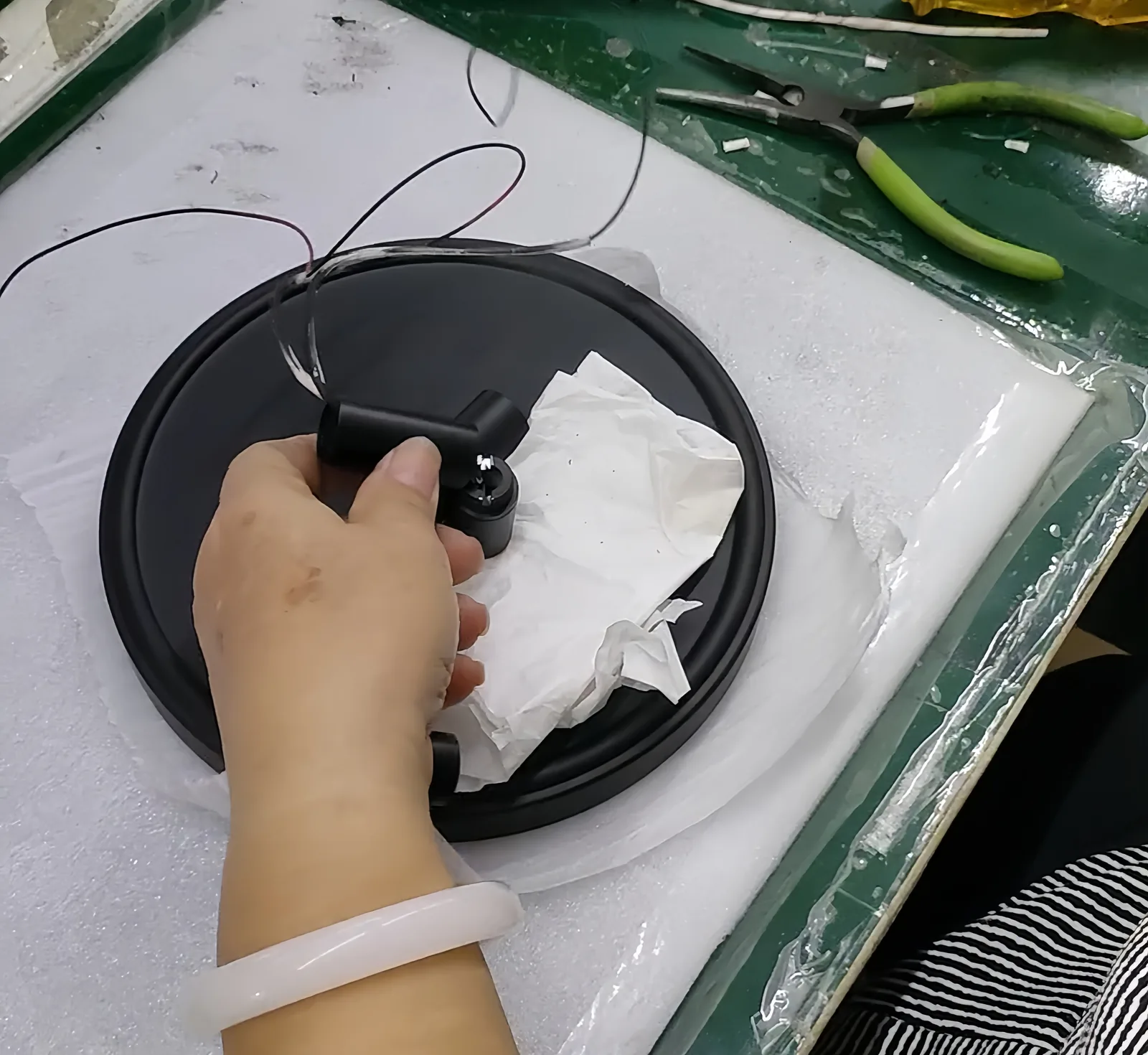
Joint performance depends on the body, pivot, friction washers, spring elements, retainers, lubrication, and assembly preload. Small changes can substantially affect adjustment and retention.
A 0.35 kg lamp head with its center of gravity 180 mm horizontally from the pivot creates approximately 0.62 N·m of static gravitational moment. Also account for cable forces, handling, operating position, temperature, and application safety margin. Require a defined moment and test arrangement, not an unexplained “maximum load.”
Extra sorting, washer changes, or manual tightening can outweigh component savings, especially when rework damages decorative finishes.
What Should Buyers Include in a Swivel Joint RFQ?
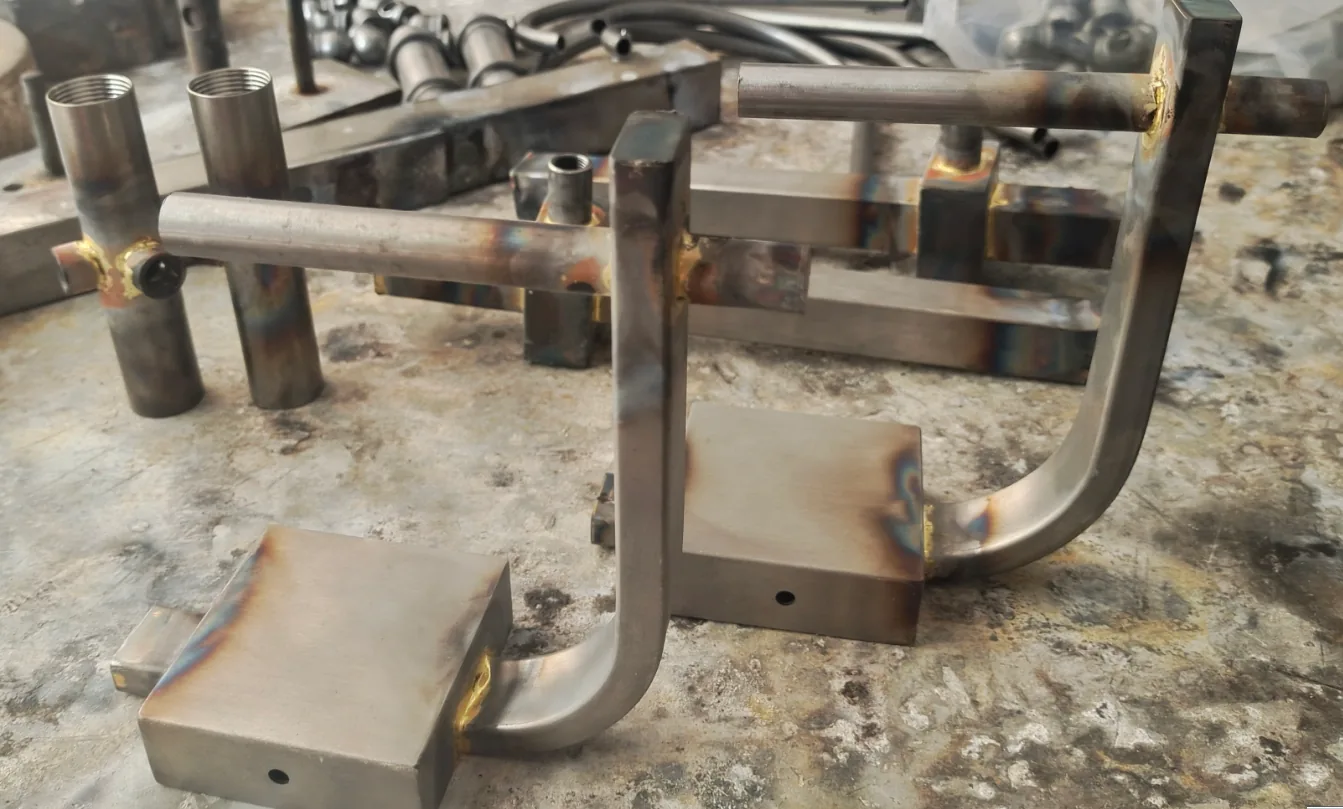
Provide a revision-controlled drawing, mating interface, and functional specification. Identify friction-held, positively locked, or loosen-and-retighten operation; each needs different acceptance criteria.
- Supported mass, center-of-gravity offset, mounting orientation, and external forces.
- Travel angle, stops, permitted play, and continuous-rotation allowance.
- Thread designation, pitch, engagement length, and mating clearance.
- Wire passage dimensions, bundle size, edge requirements, and protective-earth provisions.
- Finish, visible surfaces, environmental exposure, forecast quantities, and packaging.
Distinguish mandatory requirements from preferences: cosmetic housing diameter may be negotiable, unlike thread engagement or wire clearance. Allow process proposals without silent interface changes.
Common Defects and Hidden Assembly Risks
Inconsistent washer thickness, surface condition, or tightening preload causes torque variation that carefully assembled samples may conceal. Require controlled assembly and a measured output range, not “tighten until suitable.”
Plating can reduce bore clearance, obstruct threads, or change contact-face friction; powder coating can bridge openings or interfere with seating. Show masking and critical after-finishing dimensions on drawings.
Wire-passage burrs can escape external visual checks and cut insulation during movement. Inspect internal edges and test the intended bundle throughout permitted travel; hollowness alone does not ensure safe routing.
Check loose retainers, axial play, and moving-interface finish wear. Stops may fail through insufficient contact area or forced overtravel. Test realistic adjustment, not merely unloaded hand rotation.
Inspection Checkpoints: Measure the Finished Assembly
Avoid universally tight tolerances. Identify fit, movement, and safety controls; agree on instruments, fixtures, limits, datums, and measurement methods. Calibrated equipment alone cannot prevent measurement disagreements.
| Checkpoint | Inspection method | Acceptance basis |
|---|---|---|
| Mounting threads | Specified GO/NO-GO gauges after finishing | Thread class, usable depth, and engagement |
| Mounting geometry | Datum-based measurement and mating fixture | Finished dimensions and alignment limits |
| Adjustment torque | Torque measurement at defined speed and position | Separate breakaway and running ranges |
| Load retention | Applied moment for an agreed dwell time | Maximum permitted angular drift |
| Play and travel | Indicator and angle checks under defined force | Axial/radial play and stop-angle limits |
| Wire passage | Internal edge inspection and routed-wire trial | No pinching, abrasion, or excessive twisting |
| Surface finish | Visual standard and suitable thickness measurement | Approved appearance, thickness, and adhesion criteria |
| Cycle durability | Loaded cycling followed by functional checks | Agreed cycles and post-test performance limits |
Breakaway torque initiates movement; running torque applies during movement. Neither proves long-term holding. Specify friction-joint conditioning cycles and control temperature where washers or lubricants are affected. Define locking input and separately verify locking-joint retention.
Sample Approval and Production Release Checklist
Test samples in your product with production-intent mating parts, fasteners, and wiring; prototype tolerances can hide assembly stack-up problems. For the full testing sequence, see the swivel joint approval process.
- Confirm production material, finish system, and internal components.
- Record dimensional and functional results against the drawing revision.
- Check full travel under actual load; inspect wiring afterward.
- Agree cosmetic viewing conditions; retain an approved reference sample.
- Document cycle-test conditions and post-test performance limits.
- Approve inspection frequency, defect classifications, traceability, and protective packaging.
- Require written approval for material, washer, lubricant, tooling, or finishing-subcontractor changes.
For new designs, use a pilot lot to review variation across units and applicable tooling cavities. Agree routine statistical sampling; safety characteristics require risk-based controls, not AQL alone.
What a Reliable Factory Should Be Able to Provide
Request process flow, inspection plan, sample measurement report, material identification, and applicable finish records. Reports must identify tested parts, methods, limits, and results—not just “QC passed.” For a structured comparison, see how to choose a swivel joint supplier.
Request controlled-preload and functional-verification evidence. For capability claims, ask which characteristic, observation count, and measurement-system suitability; another product’s capability does not establish yours.
Identify machining, finishing, and assembly providers, including outsourcing. Confirm nonconforming-lot responses and change notification: these controls matter as much as machine capacity for repeat-order fit.
When to Involve the Factory Early
Before design freeze, review compact wire passages, high holding moments, unusual threads, thin walls, and finish-sensitive bearing surfaces; these constrain tooling access, deburring, masking, and assembly.
Specify material grade, not “metal” or “stainless.” Verify material/process suitability for thread strength, wall geometry, and finish. Assess lamp-temperature effects on lubricants and polymer friction elements before committing tooling or bulk material.
Frequently Asked Questions
What drawings should I provide when ordering swivel joints?
Provide a revision-controlled drawing showing the mating interface, thread designation, pitch, engagement, wire passage, and critical finished dimensions. Identify masking requirements and accompany the drawing with load, travel, torque, finish, and inspection requirements. Separate mandatory interfaces from cosmetic preferences so the supplier can propose a workable process without changing essential fit.
How should I approve a swivel joint sample?
Approve the sample in your actual product using production-intent mating parts, fasteners, and wiring. Confirm its material, finish system, and internal components match production proposals. Record dimensional and functional results against the drawing revision, test full travel under load, inspect wiring afterward, and retain an approved reference sample with agreed cosmetic viewing conditions.
What should I discuss when reviewing cost and lead time?
Discuss the drawing, load case, finish, forecast quantities, packaging, and whether an existing joint or custom design suits the application. Review tooling access, deburring, masking, assembly, and outsourced operations before committing tooling or material. Compare quotations against the same requirements, remembering that sorting, washer changes, tightening, and finish-damaging rework can outweigh component savings.
How can I compare swivel joint suppliers?
Compare suppliers against the same drawing, functional requirements, and inspection plan rather than appearance or component price alone. Request process flow, sample measurement reports, material identification, finish records, and evidence of controlled preload. Check that reports identify methods, limits, and results, and confirm responsibility for outsourced operations, nonconforming lots, and change notification.
What change controls should my swivel joint order require?
Require written approval before changes to materials, washers, lubricant, tooling, or finishing subcontractors. Keep drawings revision-controlled and record sample measurements and functional results against the applicable revision. Confirm the supplier’s change-notification process and retain an approved reference sample, so repeat orders remain tied to the agreed interfaces, finish, and performance requirements.
What should I do before releasing mass production?
Complete assembly-based sample approval and agree inspection frequency, defect classifications, traceability, protective packaging, and cycle-test conditions. For a new design, review a pilot lot for variation across units and applicable tooling cavities. Confirm production materials and components, agree routine statistical sampling, and establish risk-based controls for safety characteristics rather than relying on AQL alone.
Turn the Specification into a Repeatable Order
Knowing how to order swivel joints for B2B buyers means purchasing verified interfaces and performance, not shapes. Define finished fit, retention, adjustment, wiring protection, and inspection before production approval.
Review the product category or discuss custom hardware with the manufacturing team. Share drawings, load case, finish, and annual volume to evaluate existing versus custom joints.
For finish, tolerance, or custom production questions, review lighting hardware sourcing support before finalizing drawings, samples, or mass-production requirements.
 Floor Lamp Sets
 Wall Lamp Sets
 Table Lamp Sets
 Custom Hotel Parts
 Custom Made Parts
 Panels
 Tubes
 Universal joints
 Machined Parts