

-
 Phone:+86 189 2494 9366
-
 E-mail:info@zsshengshi.com
-
 No.5, north of the first road, Guyi Changweiyong manufacturingdistrict, Guzhen, Zhongshan, Guangdong, P.R.C
Patents and R&D: What Buyers Should Verify Before Supplier Approval

Patents and R&D: What Buyers Should Verify Before Supplier Approval
Key Takeaways: Buyers should treat patents and R&D as verification topics, not marketing claims. The right supplier can show how its engineering work, process development, testing discipline, and IP controls reduce quality risk, improve launch readiness, and support stable production for metal hardware and lighting accessories.
In metal hardware and lighting accessories processing, many suppliers mention patents and R&D when presenting their factory profile. For buyers, that language only matters if it translates into better tooling decisions, faster sample correction, stronger finish consistency, and lower production risk. A patent certificate or an R&D team slide does not automatically mean a supplier is ready for your project.
Procurement teams and product managers usually face a practical question: does this supplier have real technical problem-solving capability, or are they only using IP and engineering language to appear more advanced than they are? Before supplier approval, buyers should verify whether the factory can prove design understanding, process control, test discipline, and cross-functional support from quotation through mass production.
This matters especially for custom brackets, lamp body hardware, stamped parts, die-cast accessories, threaded fittings, decorative metal trims, and surface-finished components where small engineering gaps can create large downstream costs.
Why this decision matters commercially and operationally
When buyers assess supplier capability, patents and engineering resources should be linked to commercial outcomes. A capable factory usually shortens development loops, identifies drawing risks earlier, and controls repeatability better. That directly affects total landed cost, not just unit price.
For example, in lighting accessories processing, an R&D-capable supplier should be able to flag issues such as plating thickness affecting thread fit, welding distortion changing assembly alignment, or polishing methods altering visual consistency across batches. If the supplier cannot translate technical knowledge into preventive action, buyers may face:
- Longer sample approval cycles
- Frequent engineering change confusion
- Finish mismatch between approved sample and bulk goods
- Unexpected MOQ increases due to process limitations
- Lead-time slippage caused by tooling rework or unclear specifications
- Weak communication between sales, engineering, and production teams
In other words, supplier approval is not only about whether a factory can make a part once. It is about whether they can make it repeatedly, communicate clearly, protect buyer designs, and support future revisions without creating avoidable cost.
Common mistakes buyers make when reviewing patents and engineering claims
The most common sourcing mistake is treating patents as a shortcut for technical credibility. Buyers may see several utility patents or design patents and assume the factory is strong in process development. That is not always true. Some patents are relevant to production capability; others have little connection to your product category or manufacturing risk.
Another weak comparison habit is reviewing only front-end documents. A supplier may provide a polished capability deck but fail to show how engineering supports production. In metal hardware processing, buyers should go beyond paperwork and verify whether the factory can demonstrate real execution through tooling records, sample revisions, fixture design, inspection plans, and defect-response history.
Other frequent mistakes include:
- Comparing patent quantity instead of relevance to the buyer’s product
- Accepting generic claims like “strong R&D team” without team structure or project examples
- Ignoring process engineering capability for secondary operations such as polishing, plating, anodizing, powder coating, or assembly
- Failing to confirm who owns tooling modifications and design optimization output
- Not checking how engineering changes are controlled between sample and production
- Overlooking whether technical staff can communicate directly and clearly during project ramp-up
These gaps often lead to supplier approval based on image rather than proof.
What should buyers compare between suppliers?
A practical comparison should focus on whether patents and R&D strengthen manufacturing reliability. Buyers should compare not only documents, but also how each supplier uses engineering capability to improve manufacturability, quality control, and delivery stability.
| Criteria | Supplier A: Strong Evidence | Supplier B: Weak Evidence | Buyer Interpretation |
|---|---|---|---|
| Patent relevance | Related to tooling, fixtures, assembly, or process control | Mostly unrelated design filings | Prefer process-linked IP, not vanity counts |
| R&D team structure | Named engineers by function | Only a total headcount | Clear roles support faster issue resolution |
| DFM support | Provides tolerance, finish, and process feedback | Quotes only to print | DFM reduces launch and cost risk |
| Sample iteration control | Revision records and root-cause feedback | Informal email updates only | Traceability matters before mass production |
| Finish engineering | Defines plating or coating specs and test method | Uses visual approval only | Finish consistency requires measurable controls |
| Change management | Formal ECN or revision approval flow | Changes handled verbally | Weak control creates quality drift |
| IP protection | Access control and NDA process | No clear document control | Critical for OEM and ODM projects |
This type of side-by-side review helps buyers separate technical marketing from actual production readiness.
What factory capability evidence should buyers request?
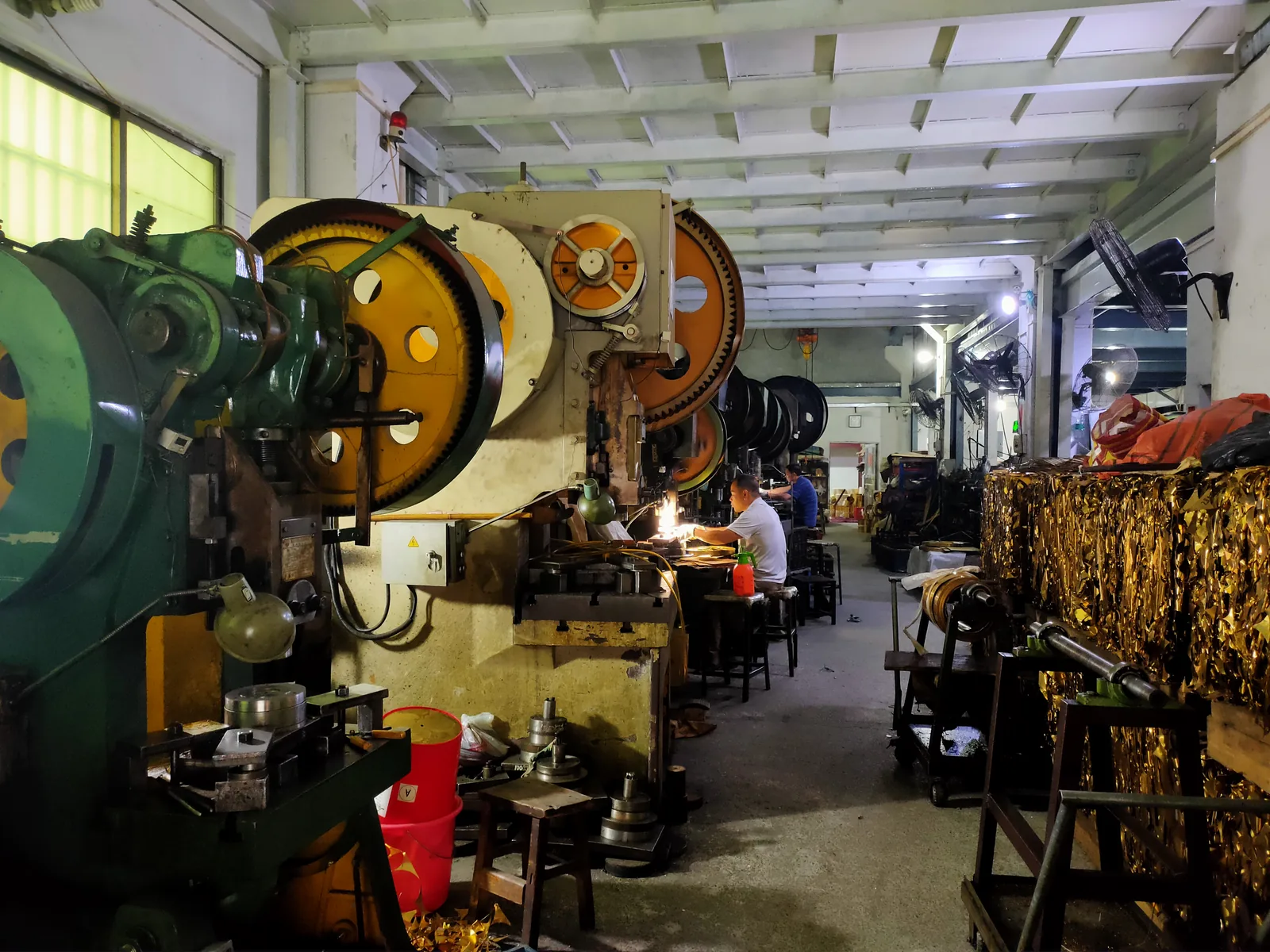
If a supplier highlights patents and R&D, ask for evidence that directly supports your sourcing decision. The goal is not to collect more brochures. The goal is to confirm whether the factory can solve the specific manufacturing problems your product is likely to encounter.
Useful evidence typically includes:
- Patent list with short explanation of each patent’s production relevance
- Engineering organization chart showing product, tooling, process, and quality support roles
- DFM examples for similar metal hardware or lighting accessory projects
- Sample revision history with issue, corrective action, and result
- Fixture, gauge, or tooling improvement records
- Surface finish validation reports, salt spray reports, adhesion tests, or color consistency controls where applicable
- First article inspection format and critical dimension control plan
- Engineering change control workflow from drawing update to shop-floor release
- Confidentiality and document-access procedures for OEM or ODM work
For stamped, machined, die-cast, or fabricated parts, ask the supplier to explain one previous case where engineering intervention improved yield, reduced deformation, stabilized finish, or shortened assembly time. A reliable factory should be able to describe the issue, the process adjustment, and the production result in practical terms.
If the supplier cannot provide examples beyond general statements, buyers should question how much usable engineering depth is actually available.
Buyer checklist before supplier approval
Before approving a supplier, use a simple verification framework. This keeps internal teams aligned across procurement, engineering, and quality.
| Verification Item | Confirmed? | What Good Looks Like |
|---|---|---|
| Patent relevance checked | Yes/No | IP links to process or product category |
| R&D roles verified | Yes/No | Technical contacts are identifiable and responsive |
| DFM capability reviewed | Yes/No | Supplier gives actionable cost-risk feedback |
| Finish control method confirmed | Yes/No | Standards, samples, and tests are defined |
| Sample-to-mass-production control checked | Yes/No | Revision and release process is documented |
| MOQ and tooling assumptions clarified | Yes/No | Commercial terms match process reality |
| IP and confidentiality controls reviewed | Yes/No | Buyer drawings and changes are protected |
| Pilot run readiness confirmed | Yes/No | Factory can support controlled ramp-up |
This checklist is especially useful when comparing two suppliers with similar pricing but different levels of technical maturity.
How to reduce sourcing risk before order confirmation
Before placing an order, buyers should convert supplier claims into measurable pre-production controls. This is where sourcing confidence is built. If a supplier truly has strong engineering support, they should welcome a structured approval process rather than avoid it.
Recommended actions before PO release include:
- Freeze the latest drawing and revision level across both teams
- Confirm critical-to-quality dimensions and appearance standards
- Approve finish samples with test criteria, not visual judgment alone
- Clarify tooling ownership, maintenance responsibility, and modification approval
- Agree on pilot run quantity and acceptance method
- Define packaging standards to protect cosmetic metal surfaces
- Confirm who handles technical questions after order placement
- Document lead time assumptions for tooling, sampling, finishing, and assembly
For OEM and ODM projects, buyers should also confirm whether the supplier’s engineering team can support cost-down reviews, alternate material suggestions, or assembly simplification without compromising performance or appearance. That is where real R&D value appears over time.
A supplier with credible technical depth should help you avoid hidden costs, not create them. If communication becomes vague when you ask for test records, revision logs, or process evidence, treat that as an approval warning sign.
Conclusion: verify patents and R&D through production proof
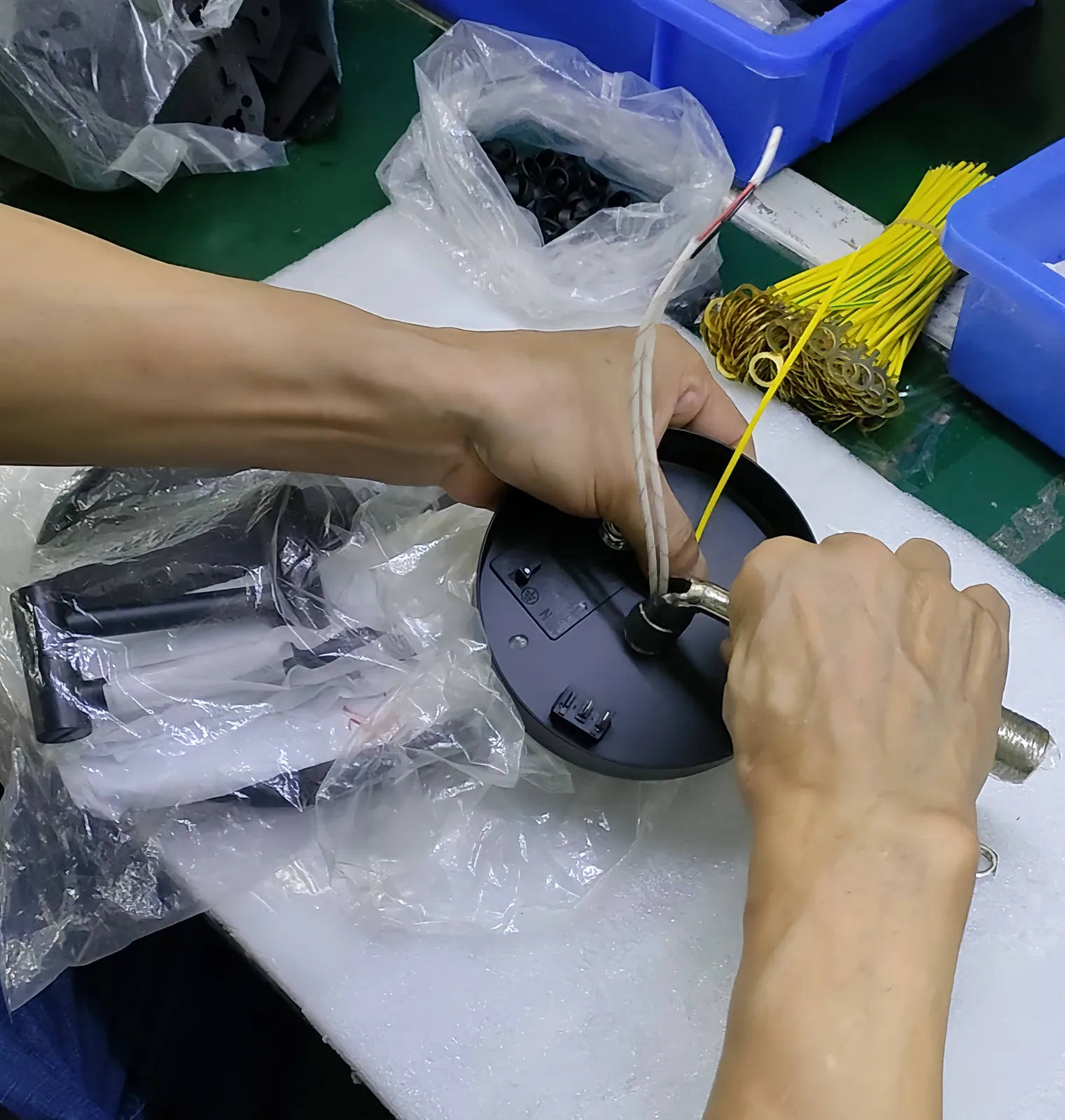
For buyers in metal hardware and lighting accessories processing, patents and R&D should be evaluated as proof of execution, not decoration in a supplier presentation. The best manufacturing partners can show how engineering capability improves DFM, supports finish consistency, controls revisions, protects buyer IP, and reduces risk before scale-up.
If you are comparing suppliers, the next practical step is to review the factory’s actual service scope and technical support process, then discuss your OEM or ODM requirements with the team responsible for engineering and production coordination. You can also learn more about the company background through the About Us section or review relevant manufacturing support in the Services section before moving to supplier qualification.
If your project involves finish, tolerance, or custom production questions, the next useful step is to review factory capability overview and lighting hardware sourcing support before finalizing drawings, samples, or mass-production requirements.
 Floor Lamp Sets
 Wall Lamp Sets
 Table Lamp Sets
 Custom Hotel Parts
 Custom Made Parts
 Panels
 Tubes
Tubes Universal joints
 Machined Parts