

-
 Phone:+86 189 2494 9366
-
 E-mail:info@zsshengshi.com
-
 No.5, north of the first road, Guyi Changweiyong manufacturingdistrict, Guzhen, Zhongshan, Guangdong, P.R.C
Cost Optimization in Metal Hardware Sourcing: What Suppliers to Compare

Cost Optimization in Metal Hardware Sourcing: What Suppliers to Compare
Key Takeaways: Cost optimization in metal hardware sourcing is not about choosing the lowest quote; it depends on comparing suppliers across tooling, process control, finish quality, MOQ flexibility, and delivery reliability. Buyers should ask for factory evidence, compare total landed cost drivers, and confirm production-readiness details before placing an order.
For procurement teams buying metal hardware and lighting accessory components, cost optimization usually becomes difficult at the exact point where quotations start to look similar. One supplier offers a lower unit price but has long tooling lead times. Another promises faster delivery but adds cost through outsourced finishing. A third looks competitive on paper yet cannot prove stable quality on repeat orders.
In this category, buyers are rarely sourcing a simple commodity. They are evaluating stamped parts, brackets, housings, clips, threaded components, decorative metal pieces, and lighting accessory hardware where dimensional tolerance, finish consistency, packaging, and assembly fit all affect downstream cost. A quote that appears cheaper can quickly become more expensive if it creates rework, delayed launches, line stoppages, or customer complaints.
That is why supplier comparison should focus on total supply performance, not just nominal price. The practical question is: which supplier can deliver the right process fit, stable quality, and commercial flexibility at the lowest real cost over time?
Why This Decision Matters Commercially and Operationally
In metal hardware sourcing, small cost differences can multiply across annual volume, but small supply failures can multiply even faster. If a supplier misses plating adhesion requirements, sends mixed finishes, or struggles to hold critical dimensions, the impact extends beyond replacement cost. Buyers may face inspection burden, delayed assembly, emergency freight, excess safety stock, and internal engineering time spent containing supplier issues.
For product managers and engineers, supplier choice also affects development speed. A factory with in-house tooling adjustment, sample iteration capability, and practical DFM feedback can reduce launch risk and shorten approval cycles. For procurement, the best sourcing result often comes from balancing five variables together:
- piece price
- process capability
- lead time stability
- quality consistency
- commercial responsiveness
When these are compared correctly, cost optimization becomes a supply-chain decision rather than a price-only negotiation.
Common Mistakes Buyers Make When Comparing Metal Hardware Suppliers
Many weak sourcing decisions come from incomplete comparisons rather than poor negotiation. Buyers often request quotes from multiple factories but do not normalize the scope. As a result, they compare prices built on different assumptions.
The most common mistakes include:
- Comparing unit price without separating tooling, finish, packaging, and secondary-process cost
- Approving samples without confirming mass-production controls
- Ignoring whether key processes are in-house or outsourced
- Accepting broad tolerances in quotation stage and discovering tighter functional requirements later
- Overlooking MOQ and batch-size impact on actual annual cost
- Assuming finish appearance on first samples will match repeat production lots
- Failing to test communication speed and engineering response before order placement
In metal hardware and lighting accessories, finish quality is a common hidden risk. Powder coating, plating, anodizing, brushing, polishing, and passivation can all affect appearance, corrosion resistance, and assembly performance. If the supplier cannot control color tone, gloss, thickness, or surface preparation consistently, the cheapest quote may become the most expensive source.
What Should Buyers Compare Between Suppliers?
A practical comparison should cover process fit, commercial fit, and production-readiness fit. Buyers should not ask only, “Can you make this part?” They should ask, “Can you make this part repeatedly, at target quality, with the right finish and lead time, at the expected annual volume?”
| Comparison Area | What to Check | Buyer Risk if Weak | Strong Supplier Signal |
|---|---|---|---|
| Process capability | Stamping, CNC, bending, welding, die casting, assembly match | Poor yield or unstable dimensions | Clear process route and tolerance understanding |
| Finish control | Plating, coating, polishing, color consistency, adhesion | Appearance rejects and corrosion issues | Finish specs, sample panels, inspection criteria |
| Tooling approach | Tool ownership, maintenance, change lead time | Slow revisions and rising hidden cost | Defined tooling plan and maintenance record |
| Quality system | Incoming, in-process, final inspection, traceability | Repeat defects and weak containment | Control plan and inspection reports |
| Lead time reliability | Sampling, production, finishing, shipment timing | Launch delays and premium freight | Realistic schedule with bottleneck visibility |
| MOQ flexibility | Pilot run, low-volume support, replenishment terms | Excess stock and cash tied up | Volume ladder pricing and batch options |
| Engineering response | DFM feedback, drawing review, issue handling | Slow corrections and unclear accountability | Fast technical answers and revision control |
| Commercial transparency | Quoted assumptions, surcharge logic, payment terms | Unexpected cost creep | Itemized quote with validity and exclusions |
This type of side-by-side comparison helps procurement teams move from quote collection to supplier qualification. It also gives engineers and sourcing managers a common review structure when selecting between technically acceptable factories.
Which Supplier Profile Usually Supports Better Cost Optimization?
The right answer depends on part complexity, annual volume, finish requirements, and change frequency. A low-price job shop may work for simple hardware with loose tolerances. A more integrated factory may create better economics for parts that require multiple processes, cosmetic consistency, or repeat engineering changes.
| Supplier Type | Best Fit | Potential Advantage | Watch-Out |
|---|---|---|---|
| Small job shop | Simple parts, low volume, fast prototypes | Flexible and low overhead | Limited capacity and weak systems |
| Process-specialist factory | Tight-tolerance or finish-sensitive parts | Better technical control | May outsource secondary steps |
| Integrated OEM supplier | Multi-process assemblies, recurring orders | Lower coordination cost and better consistency | Higher MOQ on some programs |
| Trading-led source | Multi-category sourcing consolidation | Broader supplier access | Less process visibility and slower issue closure |
For many lighting accessories and metal hardware programs, an integrated manufacturing partner creates better total cost when the product needs stamping, machining, welding, finishing, and packaging coordination. The buyer may not get the lowest single-line quote, but often gains lower defect cost, fewer delays, and simpler communication.
What Factory Capability Evidence Should Buyers Request?
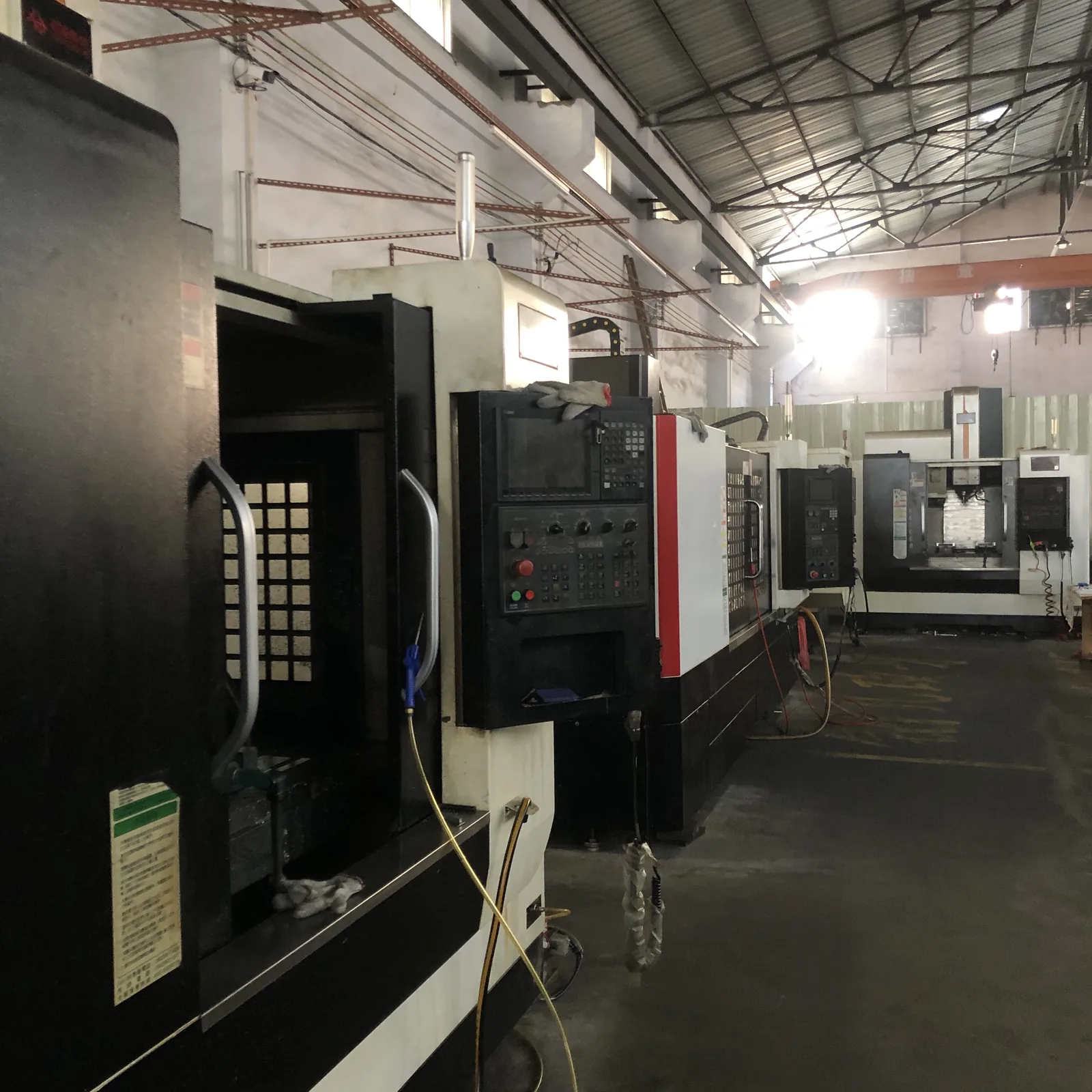
Reliable suppliers should be able to prove capability with evidence, not only claims. This is especially important when the parts include visible finishes, functional threads, mating dimensions, or customized packaging for OEM programs.
Before nomination, buyers should request evidence such as:
- Process flow chart for the quoted part or a similar product family
- Inspection plan covering critical dimensions and finish checks
- Sample inspection reports, including first article or in-process records
- Photos or videos of relevant equipment, tooling, and production lines
- Material certificates and finish compliance records where required
- Examples of previous OEM or ODM projects with similar complexity
- Packaging method validation for transit protection and part separation
- Lead time breakdown from raw material to shipment
If plating, coating, or polishing is outsourced, buyers should ask who controls that process, how lots are tracked, and what acceptance standard is used. Finish inconsistency is one of the most frequent causes of dispute in hardware and lighting components because visual deviation may not appear in a simple dimensional report.
A capable factory should also explain what is controlled in-house, what is subcontracted, and how responsibility is managed when defects occur. That clarity matters more than a polished sales presentation.
Practical Supplier Evaluation Checklist
Procurement teams can use a simple scoring framework to compare candidate suppliers before RFQ award or final selection. The goal is to make commercial and technical tradeoffs visible.
| Evaluation Item | Weight | Questions to Ask | Pass Signal |
|---|---|---|---|
| Quoted total cost structure | 20% | Are tooling, finish, scrap, and packaging clear? | Transparent itemization |
| Process and equipment fit | 20% | Is the process matched to part geometry and volume? | Clear technical route |
| Quality assurance | 20% | How are critical dimensions and finishes controlled? | Documented inspection system |
| Delivery performance | 15% | Can they support sample and mass-production timing? | Realistic schedule commitment |
| Engineering communication | 10% | Do they answer technical questions quickly and clearly? | Fast, precise feedback |
| MOQ and flexibility | 10% | Can order size align with demand planning? | Reasonable volume ladder |
| Corrective action discipline | 5% | How do they handle nonconformance? | Structured containment process |
This framework helps teams avoid overvaluing a low quote that carries execution risk. It also supports internal alignment when procurement, engineering, and operations have different priorities.
How to Reduce Sourcing Risk Before Order Confirmation
Before releasing a purchase order, buyers should close the gap between approved sample and repeat production. Many supply problems start when assumptions remain undocumented.
Confirm the following points in writing:
- Final drawing revision, tolerance standard, and material grade
- Approved finish standard, color reference, gloss range, or plating requirement
- Critical dimensions or functional characteristics requiring special control
- Golden sample or reference sample status
- Tooling ownership, maintenance responsibility, and modification process
- Packaging format, labeling, carton quantity, and protection method
- Pilot run quantity, first mass-production lot size, and acceptance criteria
- Lead time milestones for raw material, production, finishing, and shipment
- Nonconformance response timing and replacement or rework responsibility
If the order involves custom hardware for lighting products, it is also worth confirming assembly-fit validation. A part that passes dimensional inspection may still create problems in final product assembly if hole alignment, thread engagement, edge condition, or cosmetic orientation is not tested in real use conditions.
Buyers seeking cost optimization should treat this confirmation stage as a cost-control activity. Every unresolved detail before order release tends to become a larger cost after shipment.
Conclusion: Better Supplier Comparison Leads to Better Cost Optimization
In metal hardware and lighting accessory sourcing, cost optimization comes from disciplined supplier comparison, not from chasing the lowest initial number. Buyers should compare process capability, finish control, lead time realism, MOQ flexibility, and communication quality alongside quoted price. Reliable suppliers should be able to prove how they will control production, not just promise that they can.
If you are reviewing potential manufacturing partners, the next practical step is to compare service capability against your part requirements, then prepare a clear RFQ package that lets suppliers quote on the same basis. For custom OEM or ODM hardware programs, a direct sourcing discussion can help identify cost drivers and qualification risks before tooling or production commitment.
If your project involves finish, tolerance, or custom production questions, the next useful step is to review lighting hardware sourcing support and rfq before finalizing drawings, samples, or mass-production requirements.
 Floor Lamp Sets
 Wall Lamp Sets
 Table Lamp Sets
 Custom Hotel Parts
 Custom Made Parts
 Panels
 Tubes
Tubes Universal joints
 Machined Parts